How we engineered visibility in AI search

As buyers shifted from traditional search to AI search, we needed to prove we could engineer AI visibility and generate real high-intent leads and pipeline from this emerging channel. The result: we systematically doubled our AI visibility and turned it into real revenue.

slim-hero-desktop-turquoise
0 %

increase in AI presence

0 %

increase in AI-sourced high-intent MQLs

$ 0 k+

pipeline from AI search in 90 days

The AI search revolution

Over 850 million people now use ChatGPT every month. Add Perplexity's 100+ million users, Claude's growing base, and Google's Gemini integration, and you're looking at over a billion people using AI to research, evaluate, and make decisions.

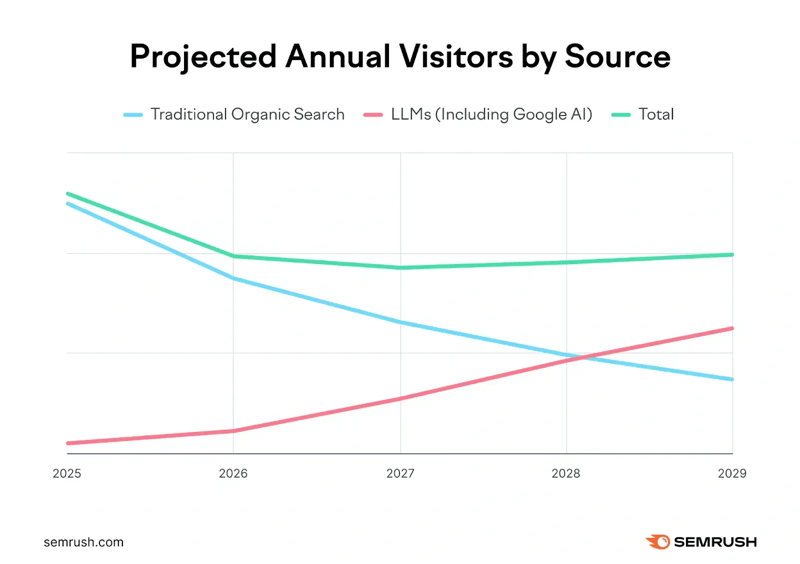
But here's what made it urgent: 80% of all searches now end without a click. Google's AI Overviews, featured snippets, and knowledge panels answer questions directly on the results page. People get what they need without ever visiting a website.

For B2B marketers like us, this created an existential problem. If buyers are asking AI to evaluate vendors and we're not present in those answers, we simply don't exist to them.

This wasn't about traffic declining. This was about visibility vanishing entirely.

projected-search-visitors

Why traditional SEO wasn't enough

We'd built our growth on SEO. We understood how to rank. Position 1 on Google used to mean guaranteed visibility.

But large language models don't work like search engines. They don't have a "top 10." They synthesise answers from hundreds of sources, and only 12% of their citations come from Google's traditional top rankings. Domain authority doesn't guarantee visibility. Being "ranked" doesn't mean being "seen", users get their answer inside the AI interface and never click through.

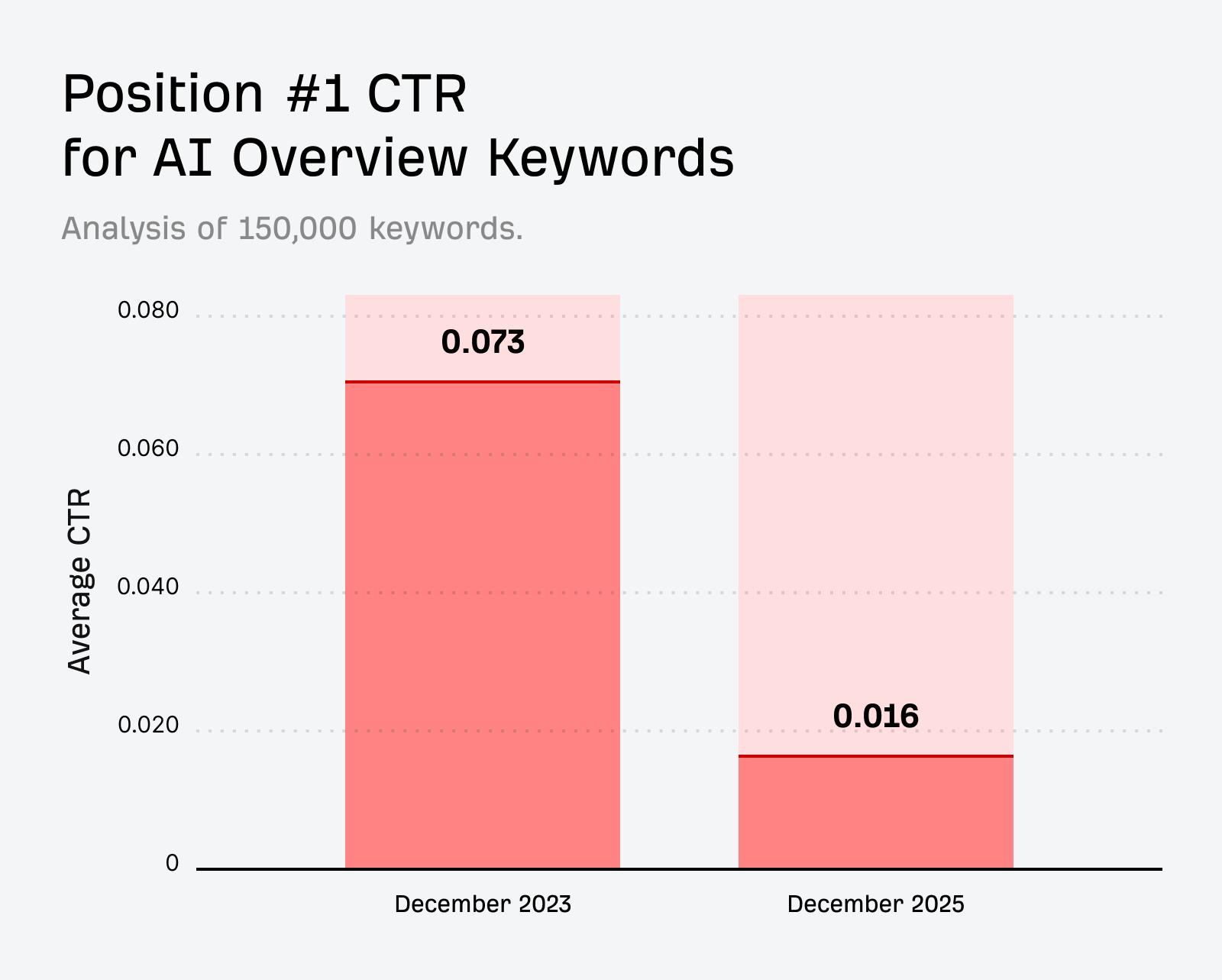
An Ahref study showed that clicks on Google's #1 position had nearly halved for informational keywords. AI Overviews now appeared in 47% of search queries. The playbook was changing, fast.

Google CTR Decrease - Ahrefs Study

Our objective

We needed to answer a critical question: Can you engineer visibility in AI search? And more importantly, could it generate real pipeline?

Not just "Can we get mentioned occasionally?" But: Can we systematically increase our presence in AI-generated answers, track that visibility, and measure its impact on revenue?

As a B2B demand generation agency, we live by a simple principle: if we can't make something work for ourselves, why would you trust us to make it work for you?

We don't sell theories. We don't package up best practices we've read about. We test, validate, and prove strategies on our own business first, then bring those results to our clients.

So, we decided to become our own test case. We needed to prove AEO could generate measurable pipeline before we'd position it as a service.

We wanted to validate whether we could improve our visibility and presence in AI-driven search engines by combining structured technical enhancements—schema, content hierarchy, entity clarity—with high-volume, intent-specific content generation.

Specifically, we wanted to observe increased citations in LLMs (tracked via Scrunch), traffic from AI referral sources like ChatGPT and Perplexity, early signals of user attribution through self-reported discovery, and most importantly: real pipeline.

This wasn't about vanity metrics. We needed to prove AEO could generate measurable, high-intent pipeline. Not just visibility. Revenue.

What we did

We broke our approach into seven key phases, each designed to systematically improve our AI visibility while maintaining the ability to track and measure impact. The goal wasn't just to appear in AI answers, it was to build a repeatable, scalable framework that could consistently drive high-intent leads and pipeline.

"This is a repeatable model that we found here. We produce the content, we get visibility, we see the lagging indicator of high-intent leads to our website. It's systematic and it works."

Phil Vallender, Co-Founder at Blend

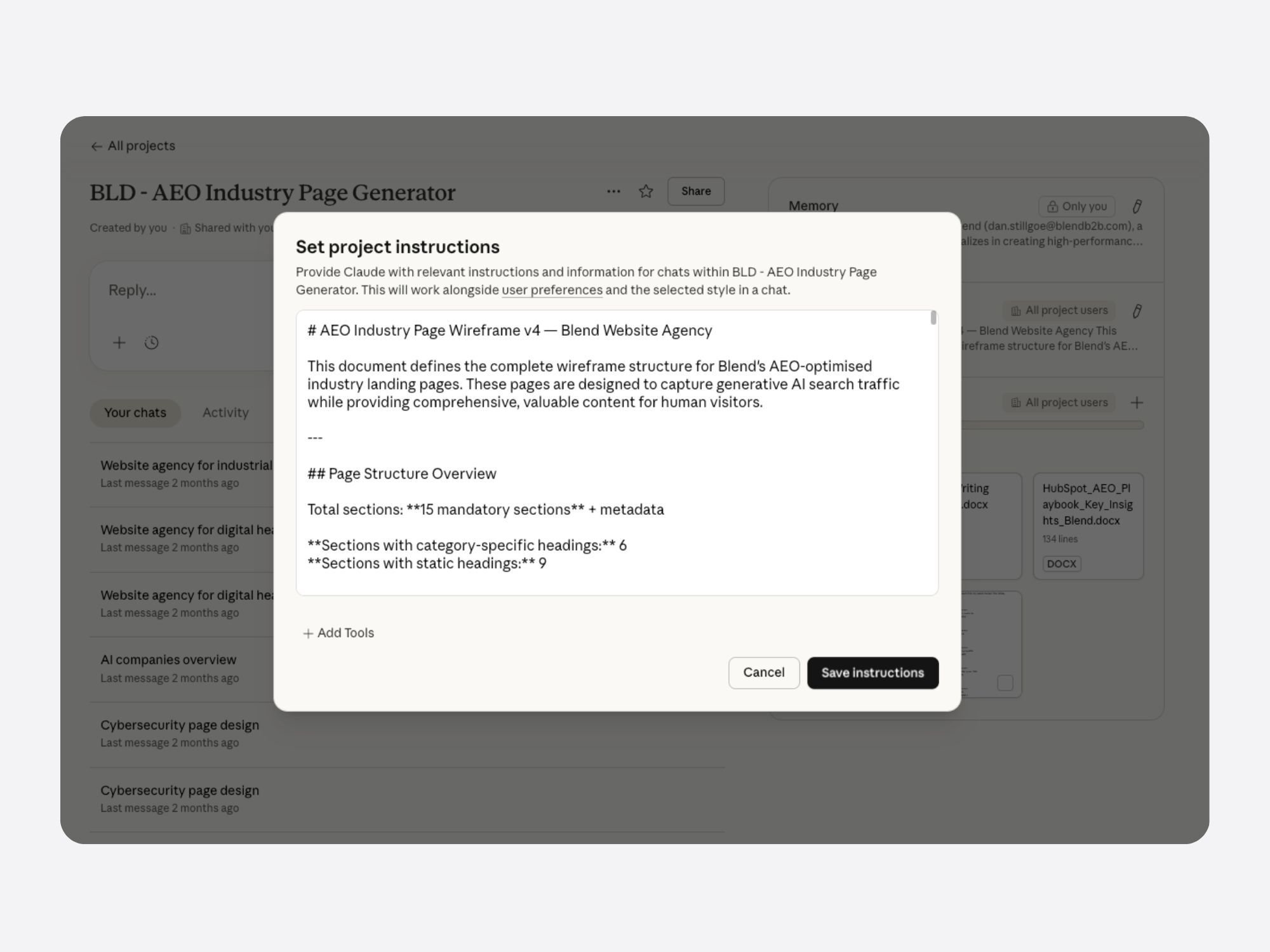
  • AEO - Claude Project
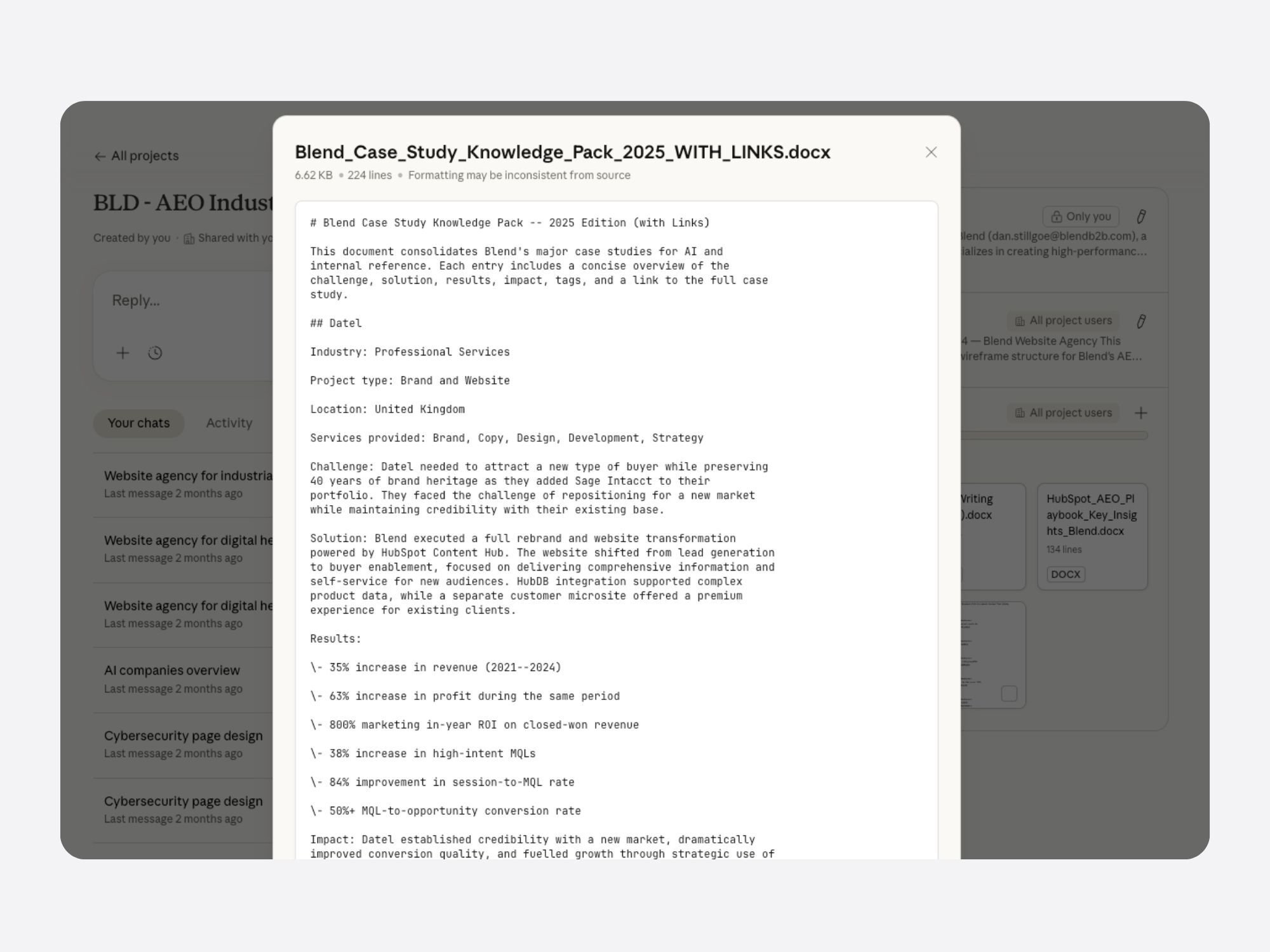
  • AEO - Claude Project - Case Studies
  • AEO - Claude Project - Schema (1)
  • AEO - Citations (1)

The method

1. Built our ICP and persona foundations

Before creating any content, we needed to ensure the AI models we used had the right context about our audience. We compiled our persona documentation and customer insight library, real data on how our ICPs think, search, and evaluate agencies. This ensured that when we generated content through AI, it would be grounded in authentic audience behaviour, not generic language.

2. Created an AI-powered prompt simulation engine

Using those insights, we built a Claude project for persona synthesis, an intelligent prompt engine capable of thinking like our ICPs. This system allowed us to input a topic or industry and generate realistic, human-like search prompts that reflected how our target buyers would query AI engines. It effectively acted as a bridge between traditional keyword research and modern AI prompt simulation.

3. Set up tracking to measure AI visibility

Once our personas and prompt models were in place, we configured our AEO tool, Scrunch, to track the prompts that mattered most. We created a formulaic tracking framework with consistent prompt structures across our key industries. This gave us a scalable, repeatable way to monitor which prompts we appeared for and measure progress as we deployed more content.

4. Reverse-engineered how AI retrieves and cites content

Before producing content, we analyzed how AI engines source and prioritise information. From hundreds of test prompts, we identified clear patterns: AI prefers structured, answer-first content with clear lists, entities, and supporting context.

Using these insights, we created standardised wireframes for AEO content. The content outlines were designed for maximum AI retrievability, built so large language models could easily parse, cite, and reference Blend's content in answers.

5. Built an AI content engine for scale

Next, we developed dedicated Claude projects for content creation at scale. To ensure quality and consistency, we created an enhanced instruction guide, effectively our internal AEO playbook, which included the relevant wireframe structure, brand and tone guidelines, and a curated knowledge base of Blend's case studies, portfolio pieces, and proof points. This ensured the AI not only wrote in our voice but also embedded real data, links, and results, which are critical for citation and credibility in AI retrieval systems.

6. Produced content with embedded technical optimisation

With our framework in place, we began generating and publishing content. Tens of pages across key industries, each built with precise, persona-driven copy, inline case study references, and embedded schema markup. This further strengthened our site's structured data profile and helped AI systems better understand the relationships between Blend's services, industries, and results.

7. Monitored, measured, and iterated continuously

Once live, all content and schema were indexed for Scrunch tracking and cross-checked against AI results. We monitored which prompts began surfacing Blend content or citations, traffic from AI referral sources in HubSpot, canges in self-reported attribution mentioning AI tools, and pipeline generated from those leads. These signals provided concrete data on the direct link between AEO optimisation and measurable AI visibility.

The results

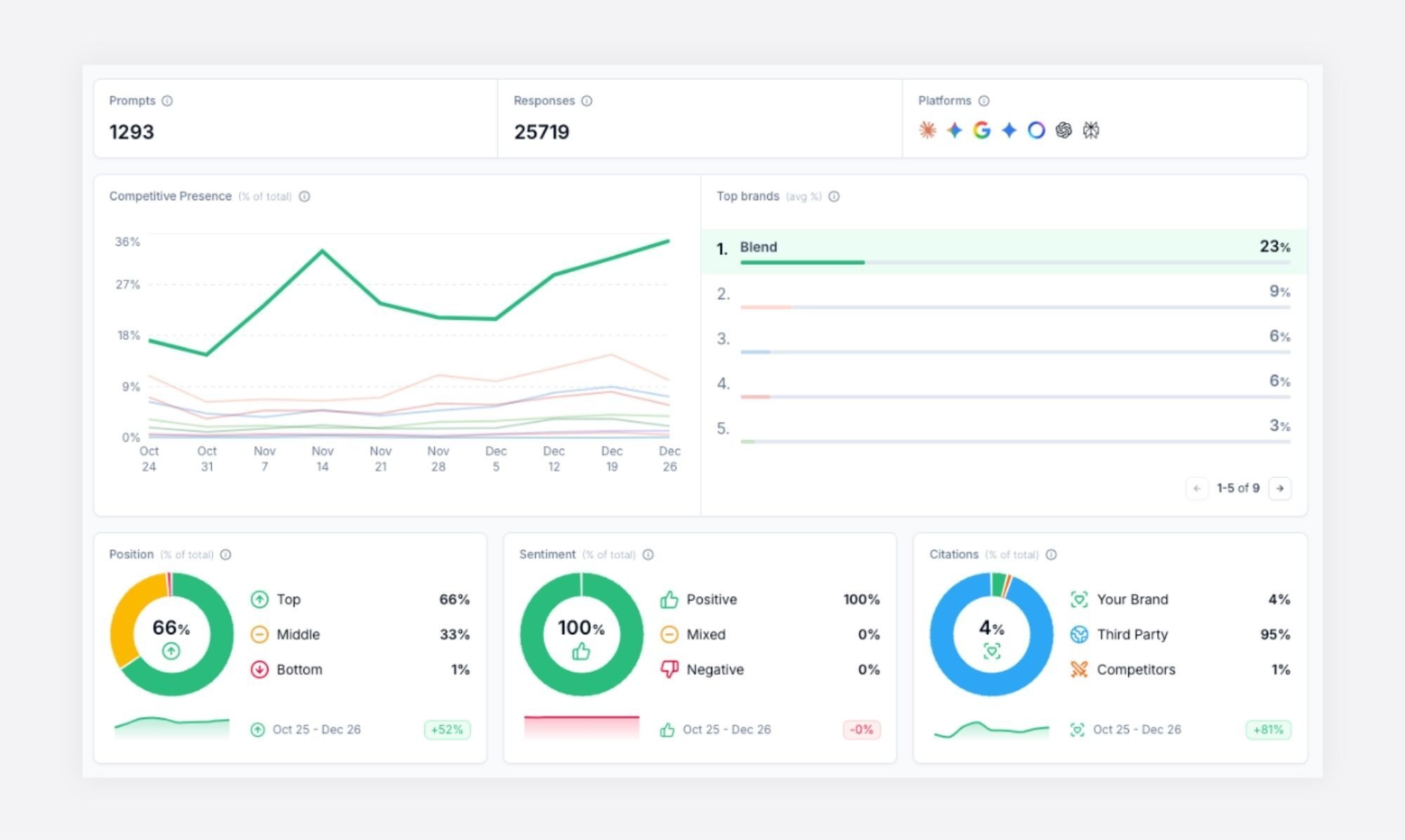
Presence in LLMs increase 103%

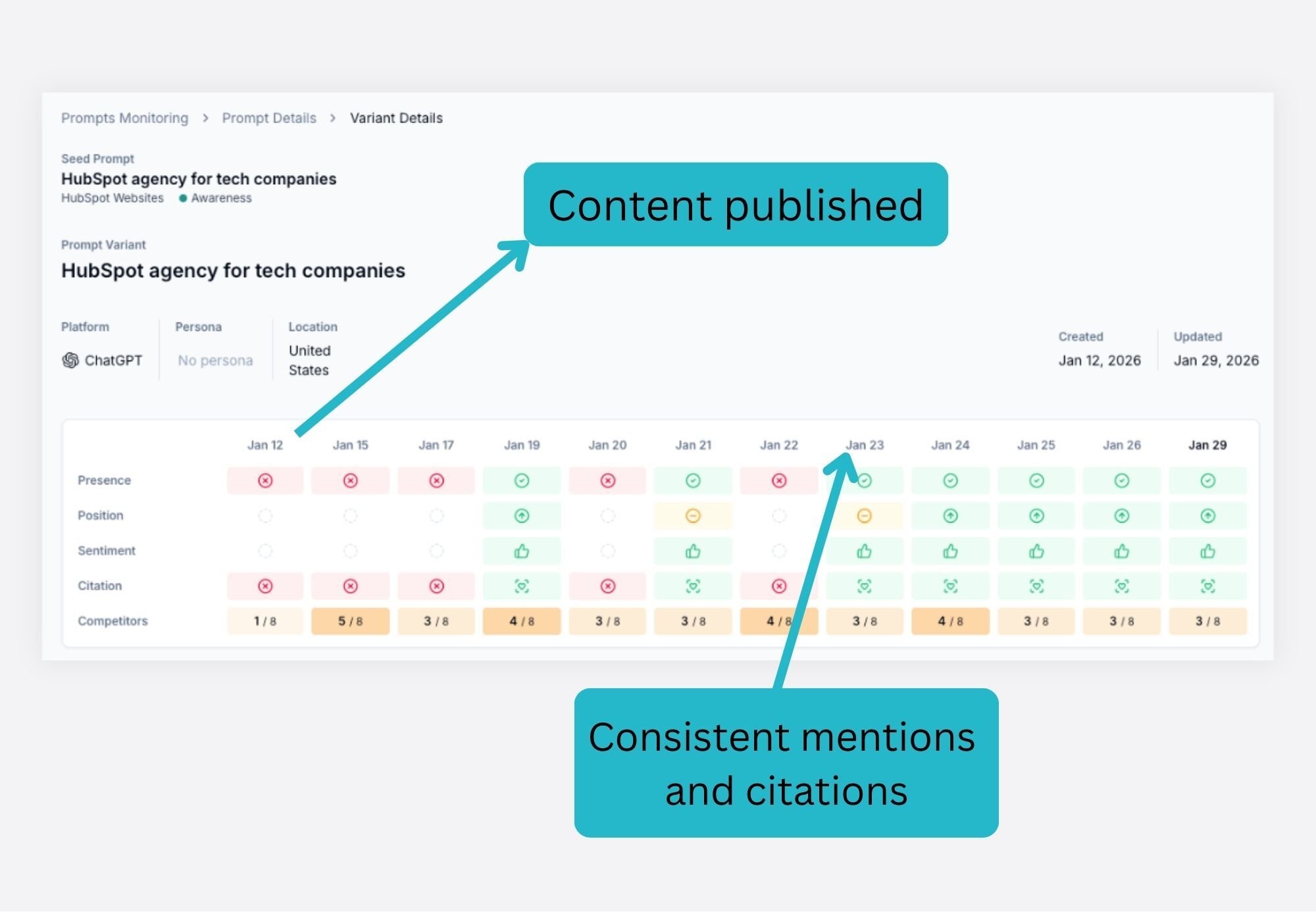
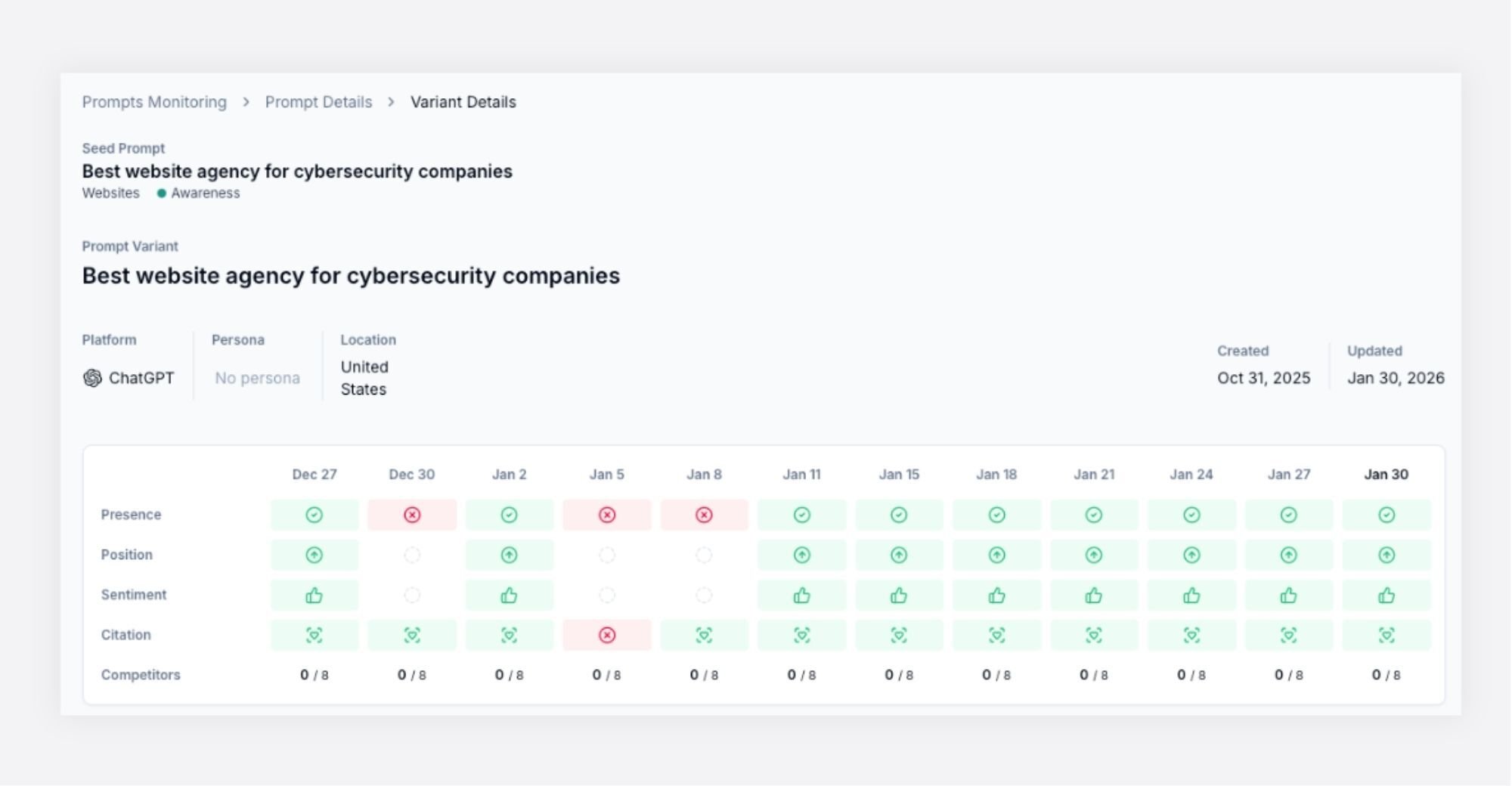
Over a 90 day period, we improved our total presence from 17.1% to 34.7% across more than 500 high-value commercial prompts, a 103% increase in visibility.

Within that, we achieved over 500 high-value prompt appearances with an 80% citation rate when appearing in results.

AEO - Claude Project - Visbility
AEO - Visibility 2
AEO - Visbility 1

AI-sourced MQLs increased 133%

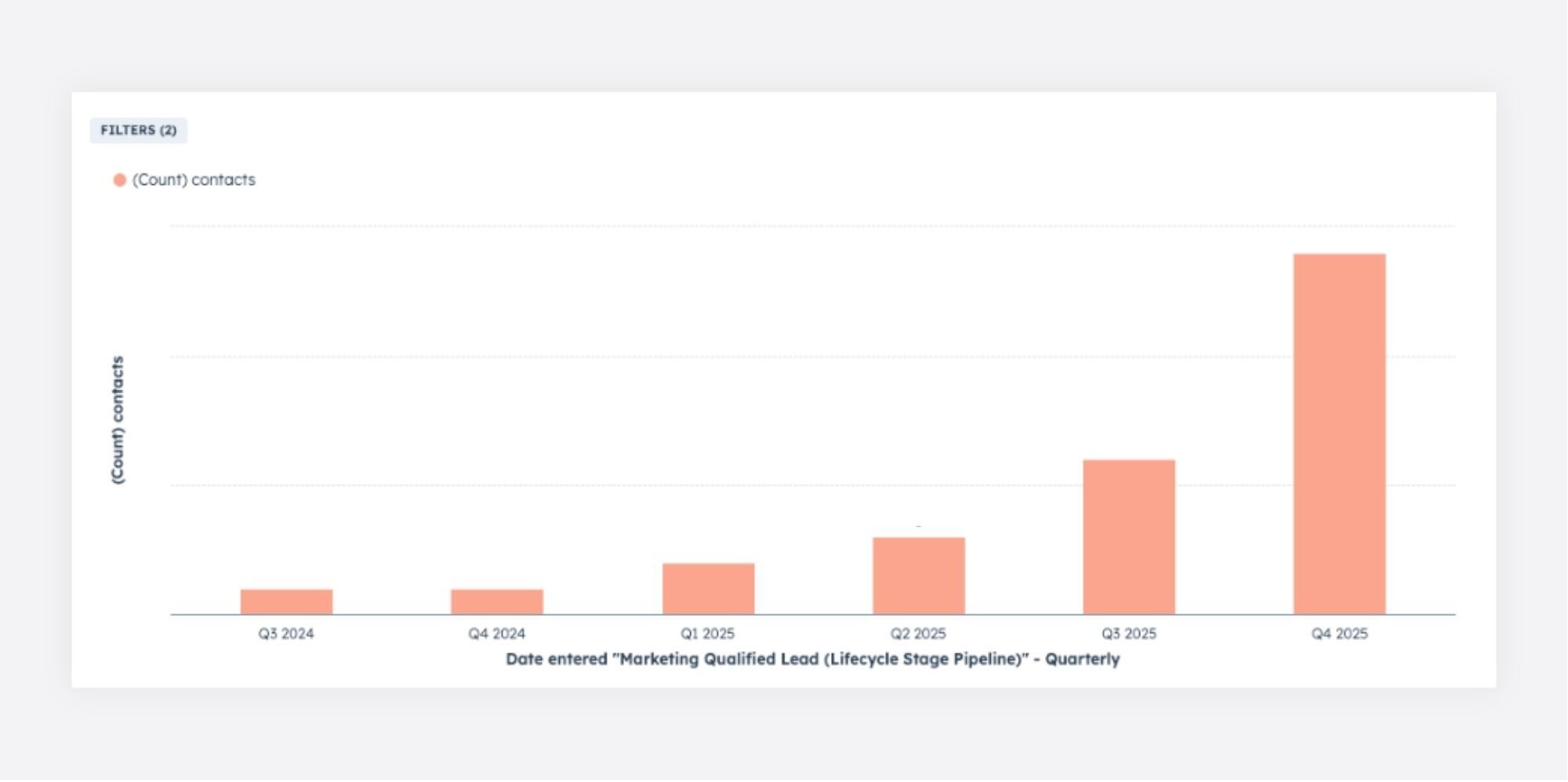
As AEO investment ramped up in Q3–Q4 2025, AI-driven discovery became a consistent source of high-intent demand. AI-sourced MQLs grew 133% in Q4. These were high-intent prospects who'd already researched agencies via AI, shortlisted options, and were coming inbound with specific requirements.

AEO - Claude Project - MQL from AI

Over $500k in AEO-driven pipeline in 90 days

Improved visibility and citation across AI engines translated directly into over $500k in pipeline.

Given our typical 90+ day sales cycle, we expected pipeline results to follow visibility improvements. Early signs were positive, and visibility was trending in the right direction. Then Q4 hit, and the impact became undeniable.

What we learned

AEO is not SEO

Only 12% of citations in AI answers come from Google's top 10 results. AI engines bypass traditional domain authority to find the most specific, most relevant content, no matter where it sits in the index. This levels the playing field. You don't need thousands of backlinks or years of SEO history. You need content optimised for AI retrieval.

Commercial intent matters more than informational content

Informational queries receive synthesised answers with minimal brand visibility. Commercial querie generate answers with clear brand mentions, citations, and links. That's where you want to be.

Dual content formats increase coverage

LLMs probabilistically vary which content formats they cite. Sometimes they prefer comparison-style listicles. Other times, they reference service-specific industry pages. By maintaining both formats, we ensured Blend appeared across a wider range of possible AI responses.

First-party data drives credibility

Case studies, proof points, and specific results signal expertise and relevance. When embedded in content, they increase the likelihood of citation and improve positioning within answers.

Schema strengthens entity understanding

Schema markup makes content machine-readable. It helps AI systems understand relationships between your brand, services, industries, and outcomes, improving both accuracy and retrievability.

Results are probabilistic, not fixed

AI answers vary from user to user, day to day. You won't appear in every result, every time. The goal is directional improvement: increasing your presence in the pool of probable responses over time.

Scale matters

One or two pages won't move the needle. We produced dozens of industry pages and listicle blogs across multiple personas and categories. That volume, combined with quality and structure, drove visibility.

The impact

We proved what we set out to prove: You can engineer visibility in AI search. And that visibility generates real, high-intent pipeline.

AEO is more than a new channel. It's how brands build future visibility. This approach ensures we're seen, cited, and discovered as buying behavior shifts toward AI-driven search. And we're now helping other B2B brands do the same.