RMS Cloud
Creating a unified global brand, website, and HubSpot infrastructure that connect technology, people, and purpose.
The project delivered 48% growth in pipeline within the first year of launch.
Creating a unified global brand, website, and HubSpot infrastructure that connect technology, people, and purpose.
The project delivered 48% growth in pipeline within the first year of launch.
Project type
Brand
Website
Industry
SaaS
Location
Australia
Services provided
Design
Copy
Development
Strategy
RMS is a property management system used by hotels, resorts, and holiday parks across the globe. With 40 years in the industry and a rapidly expanding presence in Europe and North America, RMS had the product, the reputation, and the ambition to compete at the highest level.
What they didn't have was a brand, website, or technology infrastructure that reflected any of it.
They came to Blend to change that, entirely.
more pipeline in the first twelve months post-launch
surpassed in transactions by RMS Pay since global launch
increase in website conversion rate (qualified leads)
RMS faced a set of interconnected problems that were limiting their ability to grow internationally.
Their brand lacked consistency and clarity, making it difficult to communicate their strengths across new markets. Their website suffered from poor user experience, weak performance, and content that was feature-heavy and buyer-unfriendly. And behind the scenes, they were running two separate HubSpot portals, one for North America and one for Australia and global markets, creating unnecessary duplication, fragmented data, and operational inefficiency.
The business was well-established. The perception wasn't keeping pace.
Their CMO, Sandrine Zechbauer, recognised the risk clearly. The market was moving, competitors were growing aggressively, and RMS needed to move with it. She chose Blend as the partner to lead the transformation, specifically for our ability to combine brand strategy, website delivery, and HubSpot expertise in a single engagement.
Blend took on the full transformation as a single connected programme of work, brand strategy, website, and HubSpot infrastructure. Rather than treating each as a separate project, we built them as an integrated system: a brand that informed the website, a website built on the HubSpot platform that would power their CRM consolidation, and a unified data foundation that meant results could be properly measured from day one.
RMS operates across three verticals, hotels, parks, and service departments, and across multiple continents and time zones. The brand needed to reflect that global, always-on reality while staying human and approachable. Because while the product is sophisticated, the people behind it are what customers consistently value most.
Through a series of workshops with the RMS leadership team, we identified the central tension the brand needed to hold: technology and people, in equal measure. Not a cold SaaS vendor. Not a legacy software company. Something between the two, confident, reliable, and genuinely warm.
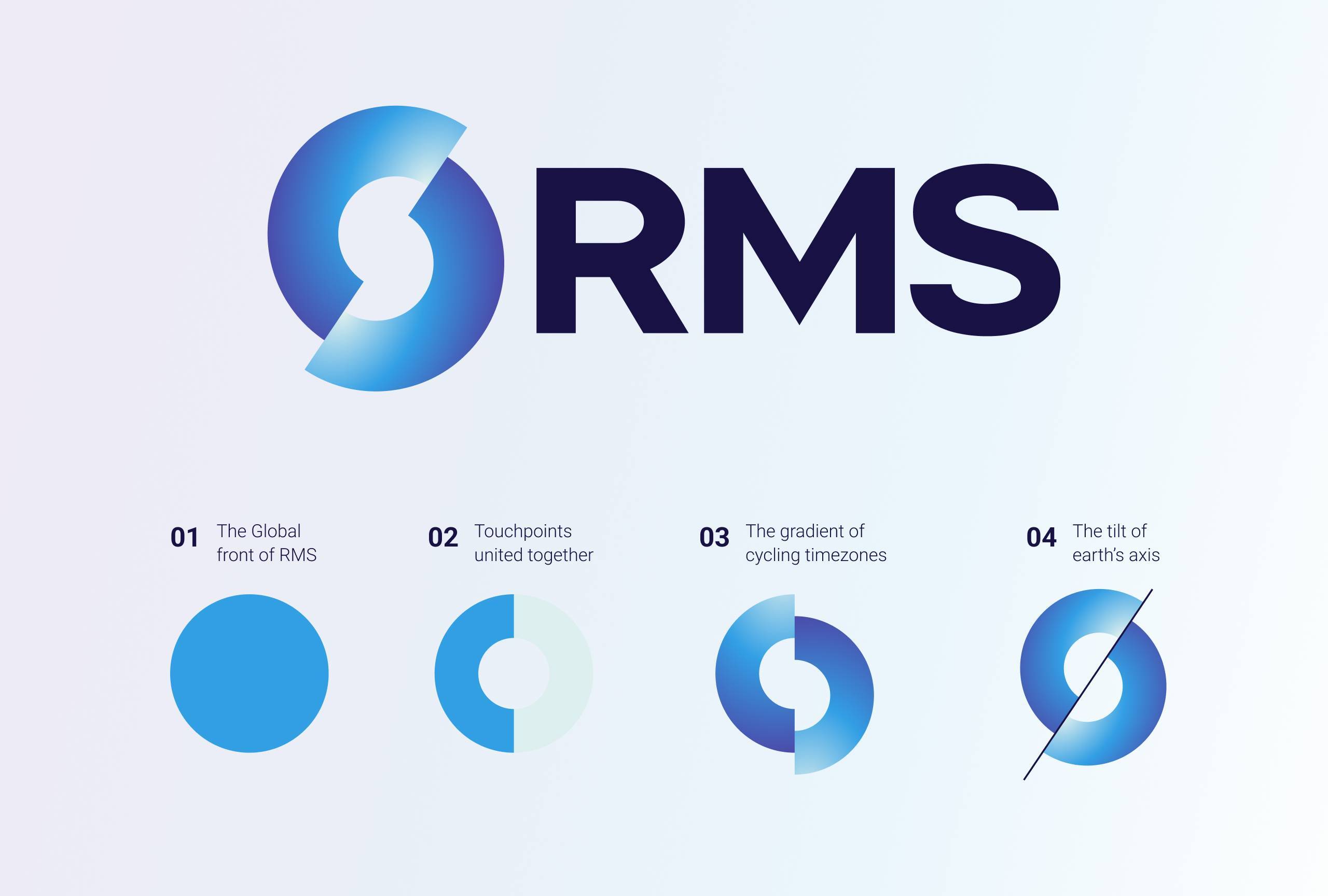
We developed multiple creative concepts for the RMS team to consider. The one that landed was built around the idea of day and night around the world, a reflection of RMS's global presence and the way their teams connect across time zones. The brand mark was inspired by the Earth's axis: constant movement, global reach, and the human connections that make it work.
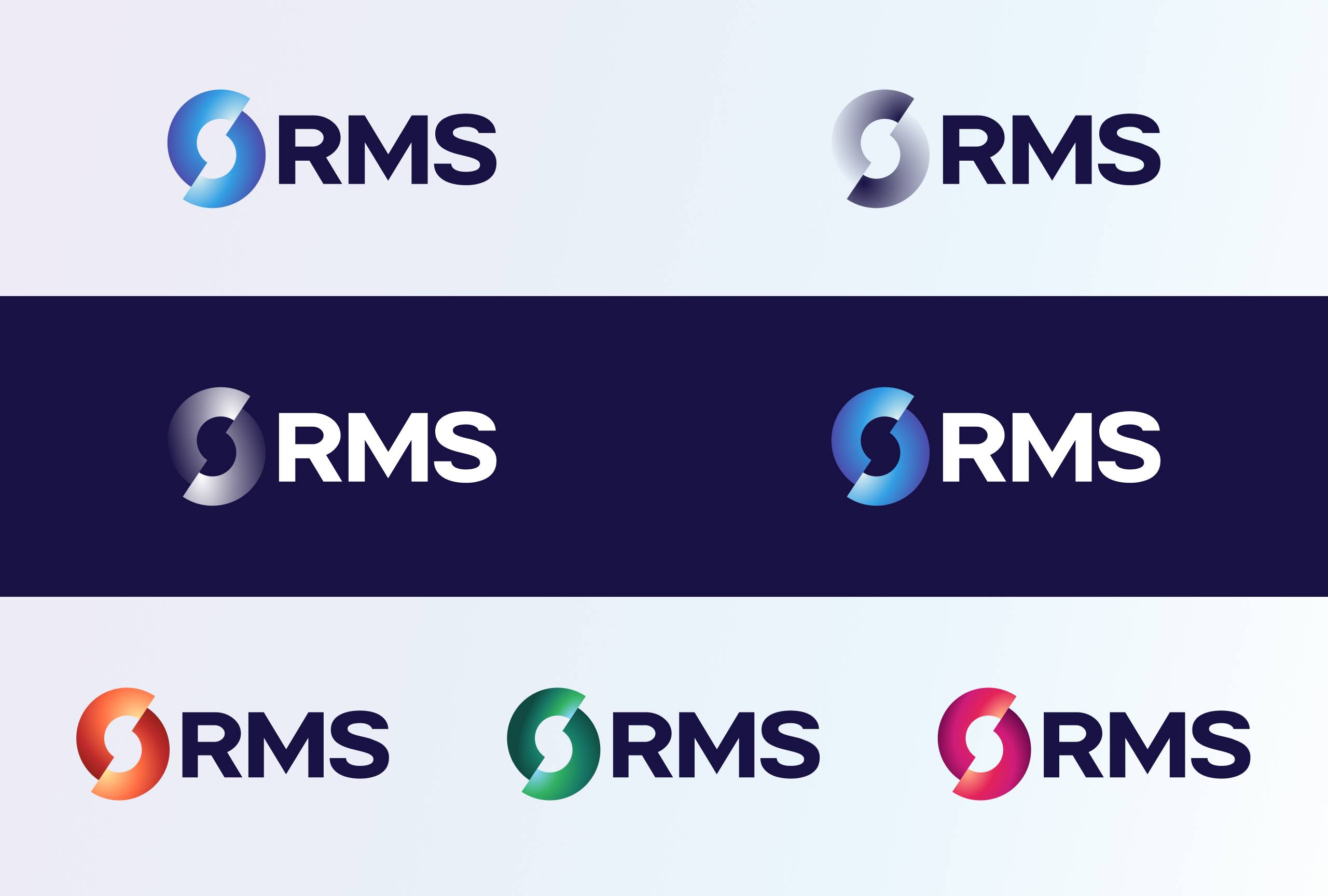
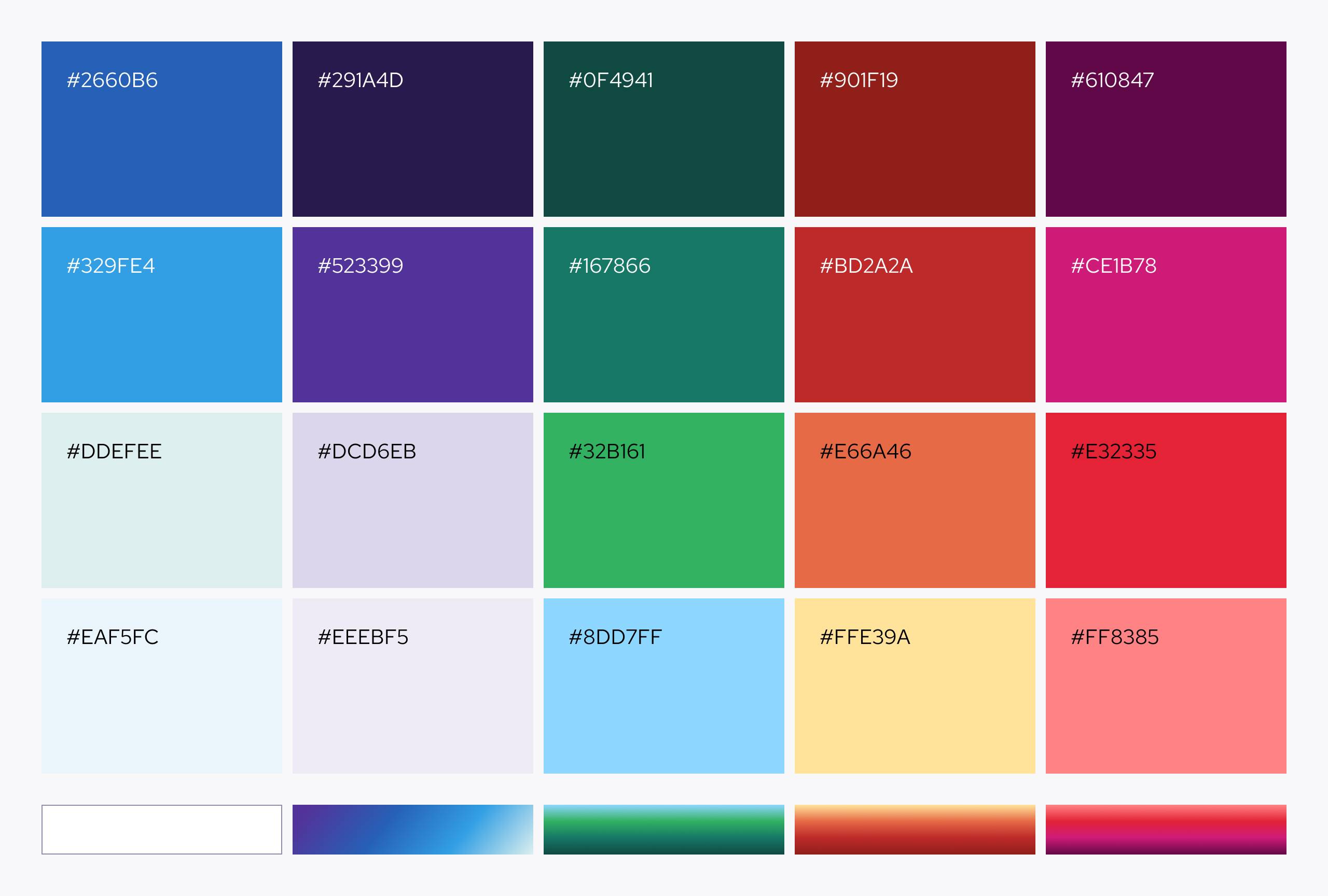
From that foundation we developed a complete design system: colour, typography, iconography, photography direction, and a flexible visual identity that could adapt across regions, verticals, and digital touchpoints. The result was a brand that felt modern and international, but never cold.
A strong visual identity needs equally strong words behind it. We ran a dedicated messaging workshop to define how RMS talks about itself, their value proposition, their positioning across each of the three verticals, and the core messages that needed to land consistently whether a prospect was landing on the website, receiving a sales email, or picking up a piece of collateral.
The messaging house gave the RMS team a single reference point for how to communicate their strengths: the depth of their platform, the flexibility of their approach, and the quality of their customer relationships. It moved them away from feature-led descriptions toward outcome-focused language that spoke directly to buyers.
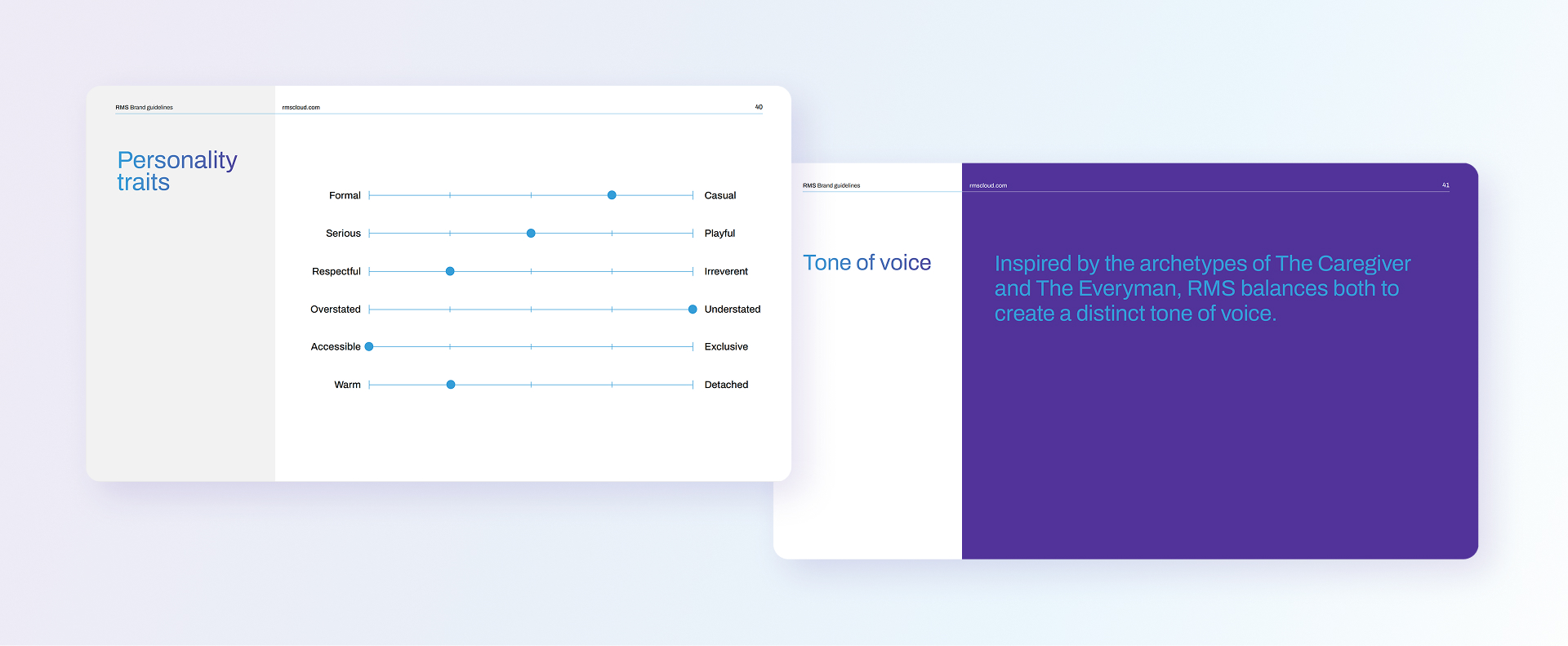
Alongside the messaging framework, we developed a full tone of voice guide. Prior to this work, RMS had no documented TOV, communications were inconsistent, overly corporate in places, and didn't reflect the warmth that customers actually experienced when they worked with the team.
The new TOV was built around three core personality traits: reliable, approachable, and quietly confident. It gave RMS a clear, usable framework for how to write, across the website, email, social, and beyond, with enough flexibility to adapt for different contexts while staying recognisably RMS.
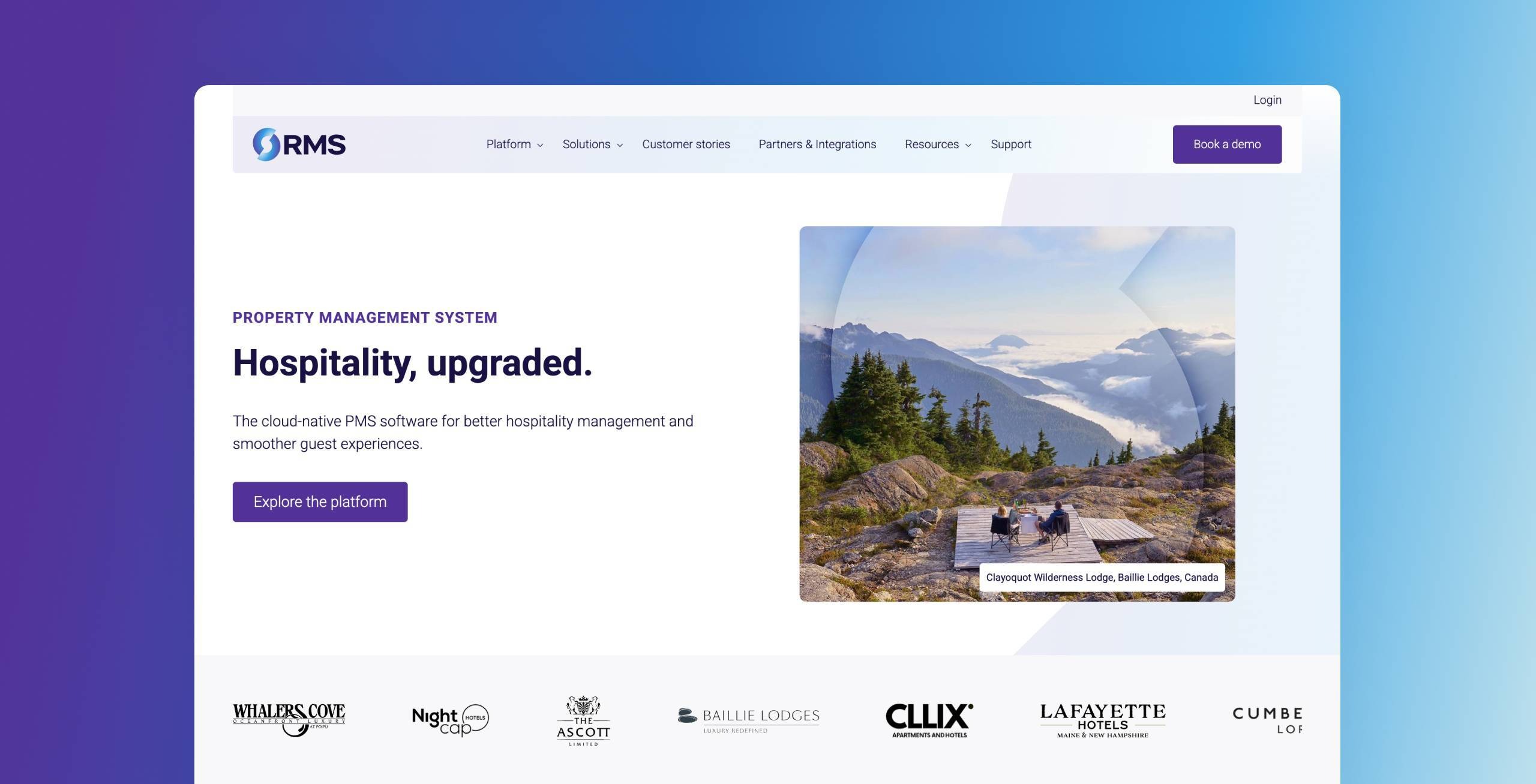
With a new brand in place, we rebuilt RMS Cloud from the ground up on HubSpot Content Hub.
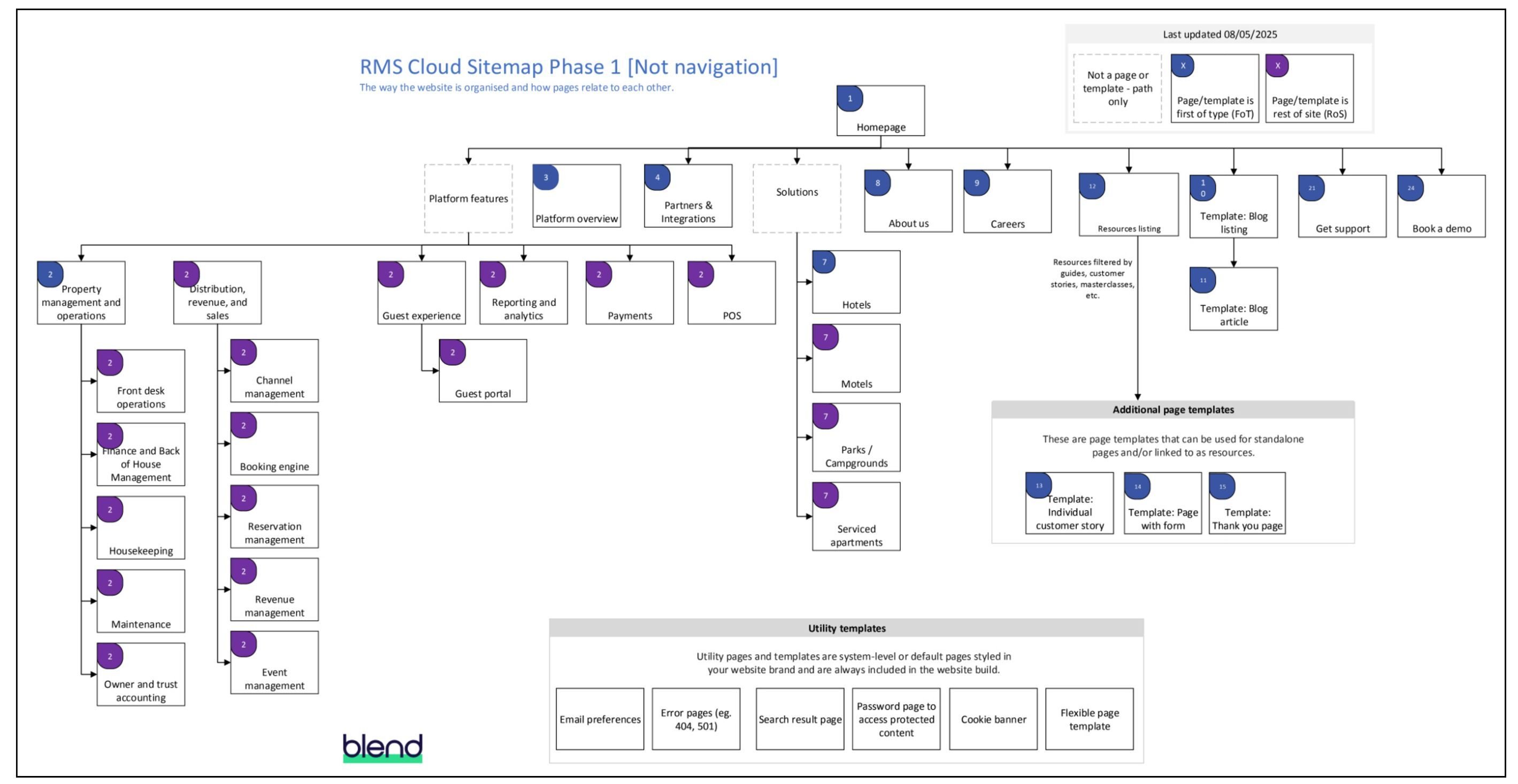
Our approach started with a full strategic audit. We conducted commercial keyword research, analysed existing page performance, and mapped the site architecture around buyer journeys rather than product structure. Pages that weren't earning their place were culled. The handful of high-traffic, high-authority URLs were preserved and redirected correctly to protect the SEO equity RMS had built over decades. The strategy also built in multi-language architecture from the outset, future-proofing the site for RMS's continued international expansion.
The design brought the new brand to life online. We created a clean, modern layout built around strong visual storytelling — combining people-focused photography with structured geometry, clear hierarchy, and simple, purposeful interactions. Every page was designed as a potential entry point, with conversion pathways built in from the start rather than bolted on.
The design system ensured consistency across every page and gave the RMS team the flexibility to adapt layouts for new regions, campaigns, and services without starting from scratch each time.
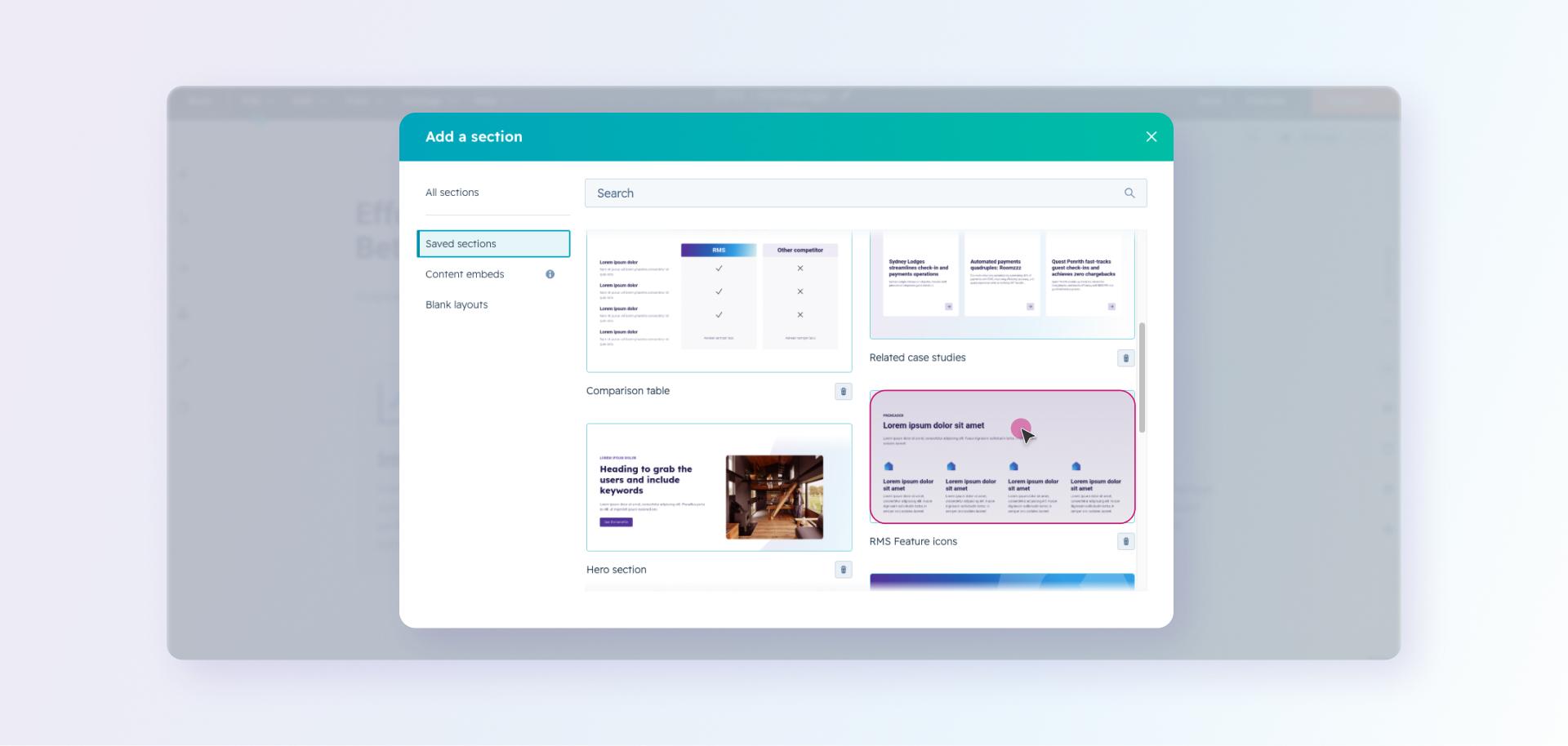
The site was built on HubSpot Content Hub, giving RMS a CMS that connects directly to their CRM and marketing operations. Development focused on performance, flexibility, and ease of management, the RMS team needed to be able to own and evolve the site without technical dependencies slowing them down.
Copy was rewritten across every commercial page: reduced in length, restructured around buyer outcomes, and aligned to the new tone of voice. Proof points were sharpened, CTAs were clarified, and the overall experience moved from feature catalogue to buyer enablement tool.
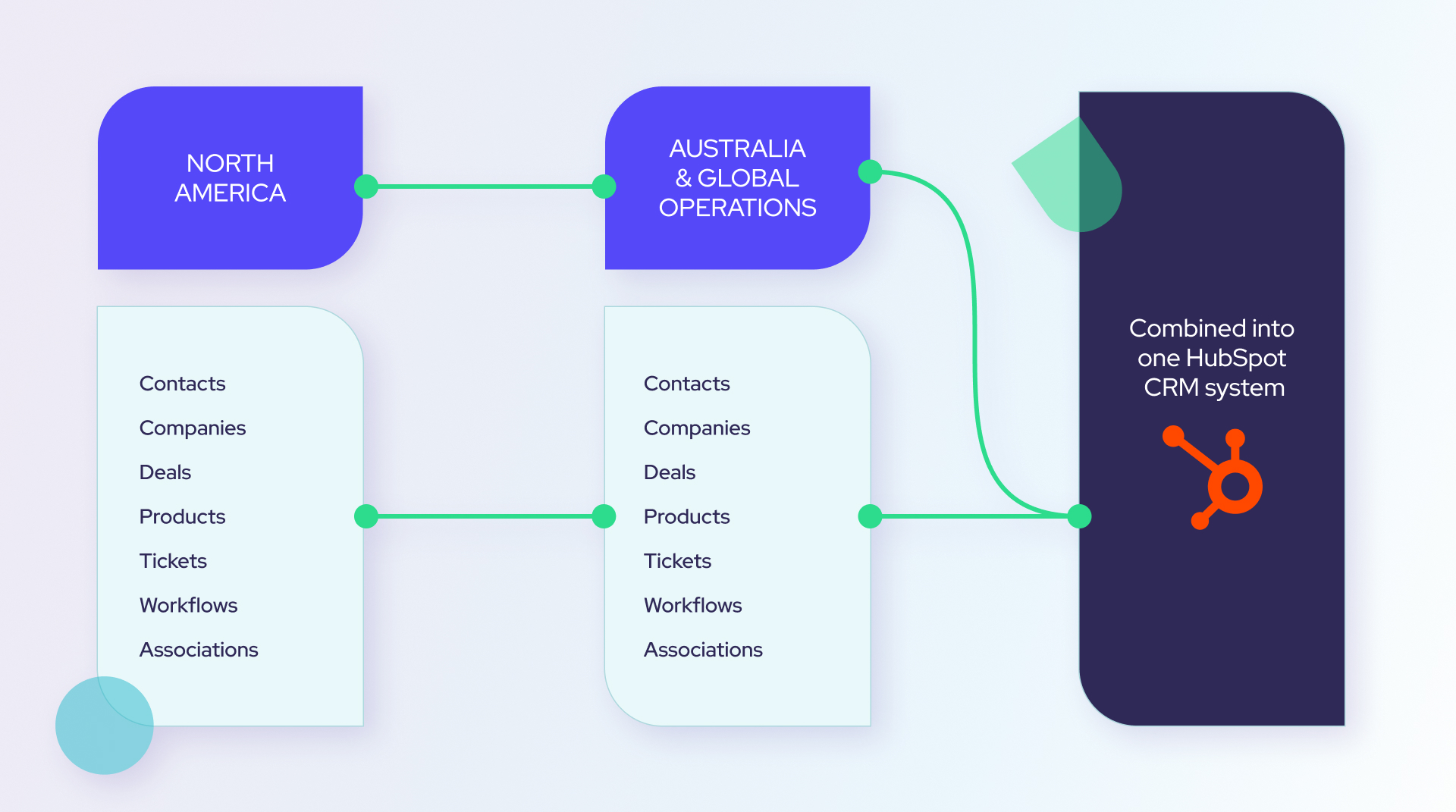
Alongside the brand and website work, RMS needed to resolve a structural problem in their marketing technology. They had been running two separate HubSpot portals, one for North America, one for their Australia and global operations, and the duplication was creating friction across their marketing and sales teams.
We audited the North American portal in full, mapping every asset and data object before a single migration step was taken.
The migration consolidated everything into a single, unified HubSpot instance, giving the RMS team one source of truth for their CRM, marketing, and sales operations.
Cleaner data, cleaner reporting, and a foundation from which demand generation activity could be properly attributed and measured for the first time.
With RMS's data consolidated into a single HubSpot instance, the team is now able to take full advantage of HubSpot's Breeze AI capabilities in ways that simply weren't possible when their data was split across two portals.
With clean, unified CRM data, the RMS team can use Breeze Assistant to query their entire CRM in seconds. Rather than manually pulling reports or cross-referencing spreadsheets, sales and marketing can ask natural language questions directly, surfacing account intelligence, pipeline status, and engagement history, and take action without leaving the interface. The consolidation work is what makes this possible. Fragmented data across two portals would have produced fragmented, unreliable answers.
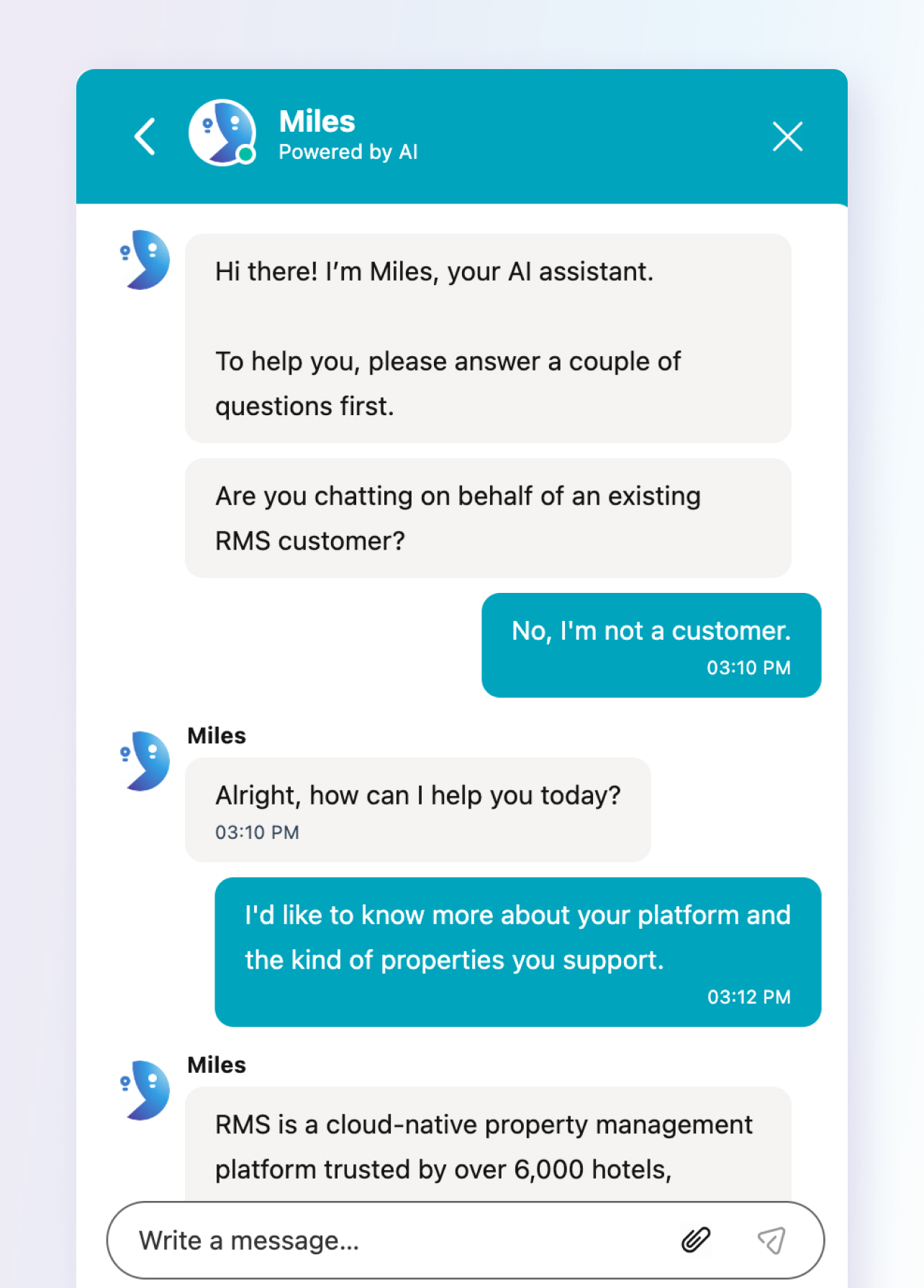
RMS have deployed a Breeze Customer Agent on their website, their AI assistant Miles, powered by knowledge drawn directly from their HubSpot content and wider knowledge base.
Miles can answer detailed questions about the platform, its capabilities across hotels, parks, and service departments, pricing, integrations, and support, giving every visitor an immediate, accurate, and brand-consistent response at any time of day. For a global business operating across multiple time zones, it means no prospect or customer ever hits a dead end on the website.
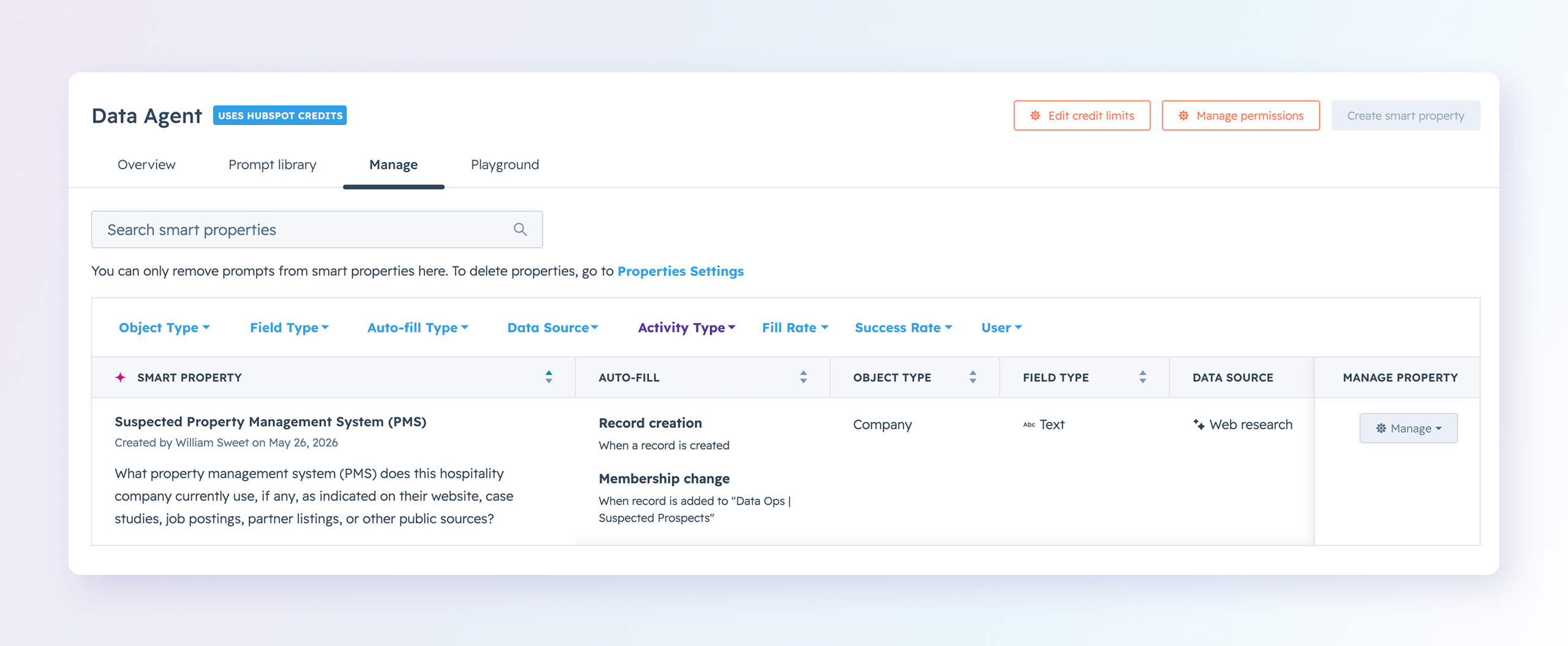
RMS are also using Breeze's Data Agent to enrich company records as they enter the CRM. Using web research as a data source, the agent automatically identifies what property management system a hospitality company currently uses, pulling from their website, case studies, job postings, and partner listings. Competitive intelligence, baked directly into every new account record, without any manual research required.
Pipeline generated in the twelve months following launch grew 48% year on year, a direct reflection of a stronger brand, a higher-converting website, and marketing activity that could finally be properly attributed and measured.
Prior to launch, marketing-sourced pipeline was effectively unmeasurable — almost all pipeline was either unattributed or sales-led. Post-launch, marketing-attributed deals became a consistent, material presence every month. The attribution improvement itself is a signal: the new website and brand created a measurable commercial engine where one didn't previously exist.
Since the new brand and website went live, RMS Pay, their fully integrated payment solution, surpassed €1 billion in processed transactions within a year of its global launch. While not directly attributable to the website alone, it reflects a business operating with greater clarity, confidence, and commercial momentum than before the transformation began.
Despite a year-on-year decline in overall traffic, consistent with broader AI-driven shifts in search behaviour, the website delivered more leads on fewer visits. The conversion rate improved by 10% in the twelve months post-launch compared to the equivalent prior period, a clear signal that the new site was doing its job.
For a business with 40 years of product excellence, RMS had been operating without the brand, website, or data infrastructure to show for it. This programme of work changed that across every dimension.
The rebrand gave RMS a unified identity that could travel — across three verticals, multiple international markets, and every customer touchpoint. For the first time, the way RMS looked and communicated reflected the quality of the product and the strength of the relationships behind it.
The new website turned that foundation into measurable commercial performance. With a buyer-focused structure, a conversion-optimised design, and copy that finally spoke the language of their customers, the site began working as a genuine demand generation asset rather than a digital brochure. Traffic declined, as it has across the industry, but conversion improved, pipeline grew, and marketing earned its seat at the revenue table.
The HubSpot portal consolidation removed a structural blocker that had been limiting marketing effectiveness for years. With a single, unified instance, the RMS team gained a clean CRM, reliable data, and the ability to properly track and attribute marketing activity, connecting what they were doing to what it was generating in pipeline and revenue.
That unified foundation also unlocked something beyond cleaner reporting. With all their data in one place, RMS are now running Breeze AI across the business, giving their sales team instant account intelligence through Copilot, enriching records automatically through the Data Agent, and serving buyers and customers on the website around the clock through their AI assistant Miles. The infrastructure isn't just cleaner. It's actively working.
Taken together, the work didn't just modernise RMS. It gave them the infrastructure, identity, and insight to grow with confidence, and the results reflect it. RMS Pay has surpassed €1 billion in total processed transactions since global launch, and the RMS Booking Engine was named Online Booking Innovation of the Year at the 2026 TravelTech Breakthrough Awards. These are signals of a business that has moved beyond transformation and into momentum.