We help B2B teams get more from HubSpot, from first implementation to full-scale optimization. More visibility, more efficiency, and a platform that actually works the way your business does.
The types of HubSpot integrations we build
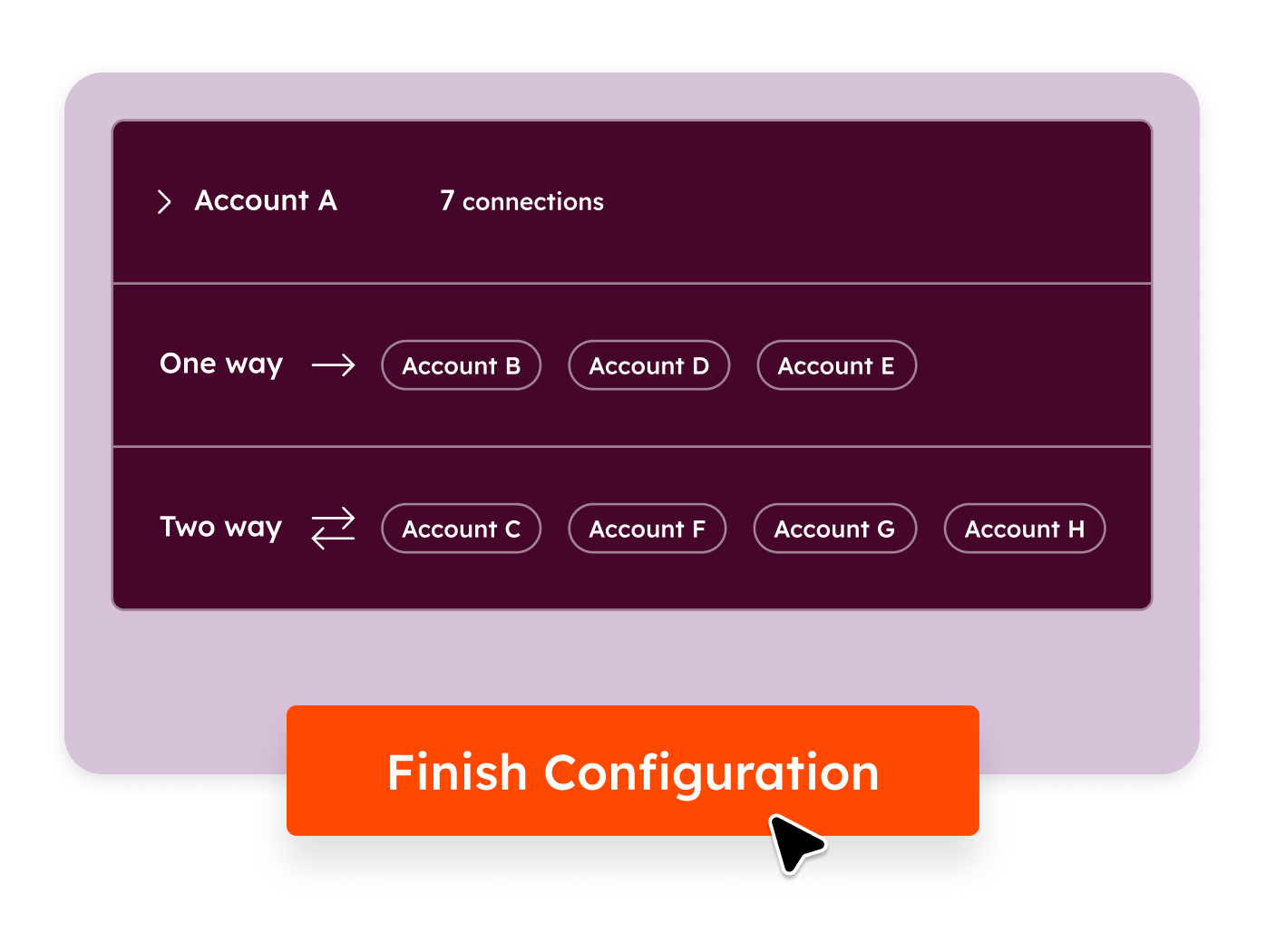
Not every integration needs the same approach. Some of your tools connect to HubSpot natively, so the work is configuring them properly. Others need something custom-built, because there's no native option, or because your setup calls for more than the standard connector gives you. Here's how we handle both.
Standard marketplace integrations
Many of the tools you already use connect to HubSpot natively. We configure these standard integrations properly, mapping the right fields and building the workflows around them, so they work the way your business actually operates rather than out of the box.
Common standard integrations we deliver include:
- Salesforce
- Microsoft Dynamic
- Zoho
- Shopify
- Xero
- Zendesk
Custom integrations
When there's no native connector, or your requirements go beyond what one offers, we build a custom-built solution. Our in-house developers work with iPaaS platforms and custom code to connect almost any system to HubSpot, including tools with no public API.
This covers:
- Custom apps for complex, multi-system integrations
- HubSpot custom code workflow actions
- Integrations built on HubSpot workflow webhooks
- Middleware for easier integration management and maintenance
A clear process, from first conversation to live integration
01
Scope
We map your systems, your data, and the exact outcome the integration needs to deliver. This includes assessing whether a native, custom, or combined solution is the right fit.
02
Design and build
We architect the data flows, field mappings, and sync logic, then our in-house developers build and configure the integration against your real systems and data.
03
Test and handover
Every integration is tested against live data before rollout, with documentation, monitoring, and training handed over so your team can manage it with confidence.
01
Scope
We map your systems, your data, and the exact outcome the integration needs to deliver. This includes assessing whether a native, custom, or combined solution is the right fit.
02
Design and build
We architect the data flows, field mappings, and sync logic, then our in-house developers build and configure the integration against your real systems and data.
03
Test and handover
Every integration is tested against live data before rollout, with documentation, monitoring, and training handed over so your team can manage it with confidence.
HubSpot integrations we've delivered

What our customers say

Partnering with Blend gave us confidence at every stage of the project. Their communication was consistent, their process was clear, and they brought genuine expertise to every phase. We came away with a website that truly represents who we are — and a platform built to support where we're headed.
Marketing Director at Kriete
Blend took the time to really understand how we work, what we value, and where we were trying to go, not just in HubSpot, but as a business. What stood out most was how thoughtfully they approached every part of the implementation. Blend dug into our processes, asked the right questions, and built a HubSpot setup that genuinely supports the way our teams operate.
Digital Transformation Manager at CPL
Blend's deep Content Hub expertise combined with their firsthand experience as contributors to the Inspire platform made them a perfect, strategic partner for redesigning the Inspire website. Blend didn't just give us a fresh, functional design that matched our rebrand; they built smart automation, member dashboards, and quality checks that actually solved the workflow problems that were holding the site back.
Principal Product Marketing Manager at HubSpot

We’re an accredited HubSpot partner
Accreditations are only useful if they mean something for your project, so here's what ours translate to.
Our CRM Implementation accreditation means your system gets built right the first time, without the costly rework that comes from a rushed setup. Our Content Experience accreditation means your website and marketing run on HubSpot exactly as it's designed to work, so nothing pulls in different directions.
Our Onboarding accreditation means adoption is built into delivery, so your team actually uses what we build rather than reverting to old habits. And winning eight HubSpot Impact Awards isn't just recognition from HubSpot itself, it's proof that the results we deliver for clients hold up against the best in the partner ecosystem.
Why choose Blend for your HubSpot integrations?
Connecting HubSpot to the rest of your stack takes more than a native app install. Here's what sets our approach apart.
We handle both standard and custom integrations, properly
Many of your tools, like Salesforce, Shopify, or Xero, connect to HubSpot natively, and we configure those properly rather than leaving them on default settings.
Built by developers, not just configured
Where there's no native option, an in-house development team builds custom integrations using iPaaS platforms, custom code, and middleware, so almost any system can connect to HubSpot, even ones with no public API.
Fixed scope, fixed price
Once we understand what you're trying to connect, we'll recommend the right approach, native, custom, or a combination, along with a fixed scope and price.
100% in-house team
Every strategist and developer working on your integration is part of the Blend team. No outsourcing, no freelancers, no handoffs between different specialists for different parts of the same build.

The team behind your
HubSpot integration
FAQs
The most common questions we get asked about HubSpot integrations and connecting it to the rest of your tech stack.
Salesforce is one of the standard marketplace integrations delivered regularly, connecting natively without needing a bespoke build. The work is properly configuring that native connection, mapping the right fields and building workflows around it, rather than left running on default settings.
That's where custom integration work comes in, built by an in-house development team using iPaaS platforms and custom code to connect almost any system to HubSpot, including tools with no public API. Custom apps, HubSpot workflow actions, webhook-based integrations, and middleware all sit within that capability.
Middleware specifically helps with ongoing management and maintenance too, so a custom integration doesn't end up something only the original developer understands.
That decision happens during scoping, mapping the systems involved, the data, and the exact outcome the integration needs to deliver. Assessing whether native, custom, or a combined solution fits best is part of that same stage, rather than assumed upfront.
CRM Implementation accreditation means a system gets built right the first time, avoiding the costly rework that comes from a rushed setup. Onboarding accreditation means adoption is built into delivery, so a team uses what's built rather than reverting to old habits once the project's finished.
Yes. One integration synced dealer management and product data directly into HubSpot's Products object, powering a live digital showroom with real-time inventory, well beyond a standard field-mapping exercise.
Ready to connect HubSpot to the rest of your stack?
Tell us what you're trying to connect, and we'll recommend the right approach, native, custom, or a combination, along with a fixed scope and price.