We help mid-market B2B companies close deals faster, compress sales cycles, and build the revenue infrastructure that compounds over time.
Sales as part of your growth system
Sales is the most commercially critical stage of the growth cycle, and the one most companies have never properly engineer.
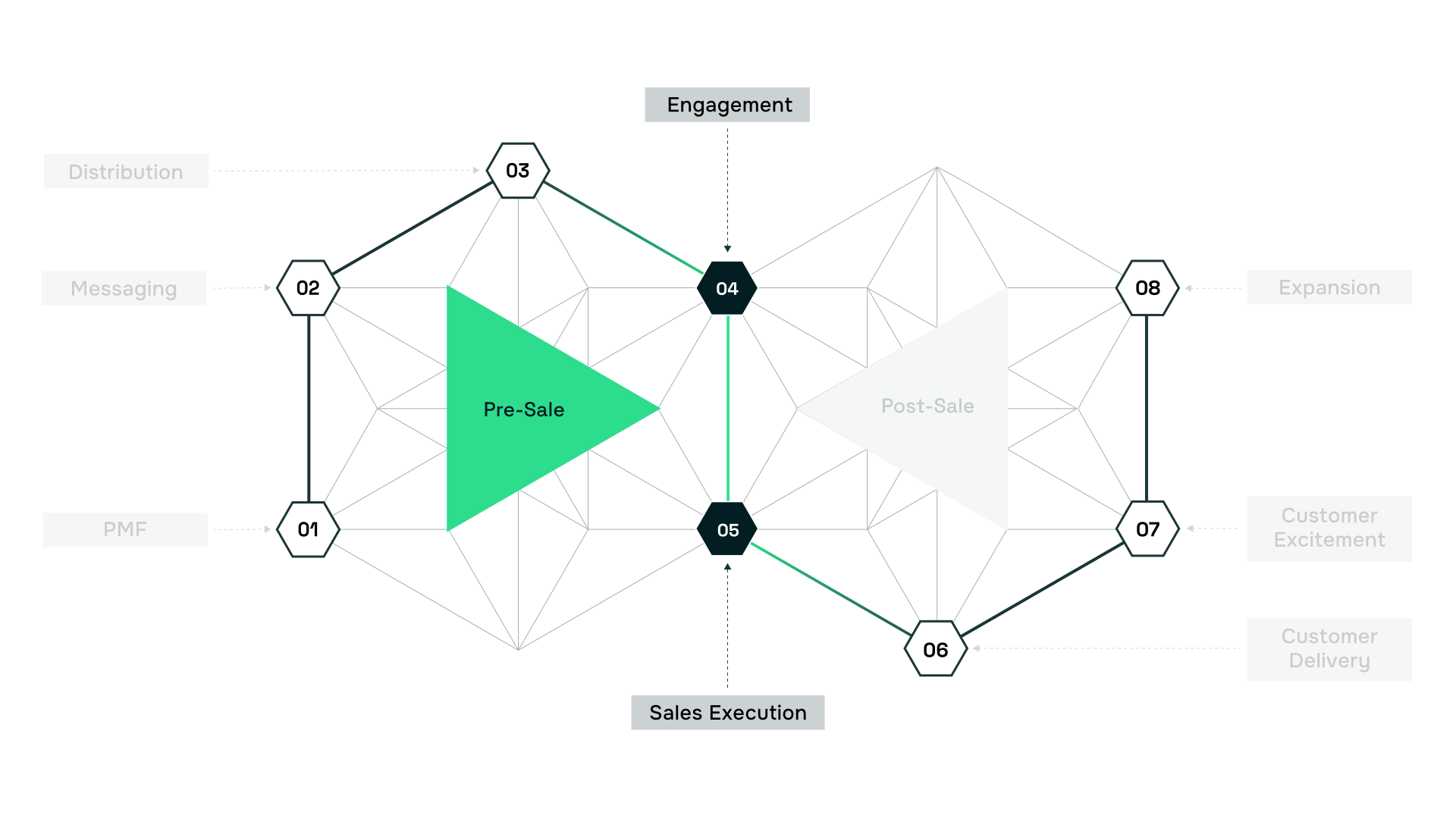
Our sales capability covers Stage 5 of the 8-Stage Growth Cycle: Sales Execution, and the Stage 4 Engagement handoff that feeds it, where buyer intent is first detected, scored, and routed. Stage 5 is where qualified demand becomes closed revenue, and where the buying process itself becomes either a competitive advantage or a reason to lose.
We design, build, and operate the sales infrastructure that removes friction at every point from first qualified opportunity to signed contract.
Every business needs something different. We shape sales consulting engagements around your stage, your market, and your growth goals. Here's what we cover.
What our customers say
Blend took the time to really understand how we work, what we value, and where we were trying to go, not just in HubSpot, but as a business. What stood out most was how thoughtfully they approached every part of the implementation. Blend dug into our processes, asked the right questions, and built a HubSpot setup that genuinely supports the way our teams operate.
Digital Transformation Manager at CPL
Most agencies want creative freedom but aren't up to the challenge when you give it to them. Blend was different. They owned the brief, challenged us back, and delivered something our entire team was proud of immediately. The brand has opened up conversations we simply couldn't have before. Blend didn't just deliver a brand, they delivered a vehicle for growth.
CEO at Ditto
Our three-stage approach to sales transformation
01
Assess
We begin with a structured diagnostic of your sales motion, typically six to eight weeks: pipeline data, methodology adherence, contracting cycle, enablement assets, and tooling. You get a Sales & Contracting Diagnostic Report and a sequenced roadmap: which services to deploy, in what order, and what depends on what.
02
Transform
We design, build, and deploy the connected sales infrastructure identified in the assessment. Typical transformation programs run six to twelve months, with parallel workstreams under a single program lead.
03
Operate
Most clients then move into a managed service: fractional RevOps for sales, ongoing AI orchestration, and continuous playbook tuning. Named senior operators, monthly business reviews, and a quarterly reset of priorities against your market, ICP, and commercial plan.
Why Blend?
Growth Engineering methodology
Most sales consultancies optimize the sales function in isolation. We treat it as a connected revenue system, which means every improvement we make to your sales motion is designed to compound with what's happening in marketing before it and customer success after it. The diagnostic, the build, and the ongoing operation are all part of the same system, not a standalone project.
AI built into the sales motion
We deploy and operate AI that runs alongside every rep on every deal: call intelligence, automated follow-ups, deal-stage progression triggers, and content generation, all governed by BlendCore so every output is accurate, on-brand, and calibrated to your ICP. Your reps spend more time selling and less time on admin.
We've sat in your seat
Our team has held CRO, VP Sales, and RevOps leadership roles in mid-market B2B businesses. We don't just understand the infrastructure, we understand the pressure, the board conversations, the forecast calls, and what it actually takes to compress a sales cycle. That experience is what separates a system that looks right on paper from one that works in practice.
HubSpot at the core
We are HubSpot-first by design, not by default. Sales process, pipeline management, AI tooling, contracting workflows, and RevOps reporting all run inside HubSpot as a single governed system of record. If you're not on HubSpot yet, we'll tell you whether it's the right move before we propose anything.
The team behind your growth
FAQs
What you need to know about our approach to sales, from process design through to AI and automation.
Sales covers Stage 5 of an 8-stage growth cycle, Sales Execution, along with the Stage 4 Engagement handoff feeding into it, where buyer intent first gets detected, scored, and routed. Stage 5 is where qualified demand becomes closed revenue, so the whole sales infrastructure gets designed around removing friction from first qualified opportunity through to signed contract.
That framing matters because it treats the buying process itself as something worth engineering deliberately, turning it into a genuine competitive advantage rather than leaving it to develop on its own over time.
Two groups of services. Process and operations covers RevOps, sales process design, sales enablement and deal rooms, and CPQ, quoting and contracting. AI and automation covers AI sales coaching and automation, alongside sales content automation.
Each engagement gets shaped around a business's specific stage, market, and growth goals, so the mix of services applied reflects what a given business genuinely needs rather than a fixed package applied the same way to every client.
With a structured diagnostic called Assess, typically running six to eight weeks, covering pipeline data, methodology adherence, contracting cycle, enablement assets, and tooling. That produces a Sales & Contracting Diagnostic Report along with a sequenced roadmap showing which services to deploy, in what order, and what depends on what else.
That sequencing is genuinely useful in its own right, since it means priorities get set based on real findings from the diagnostic rather than guessing which piece of the sales motion to tackle first.
Most clients move into an ongoing Operate stage, including fractional RevOps for sales, ongoing AI orchestration, and continuous playbook tuning. Named senior operators, monthly business reviews, and a quarterly reset of priorities against the market, ICP, and commercial plan keep the system genuinely current as conditions change.
That ongoing rhythm means the infrastructure built during Transform keeps evolving with the business, rather than being treated as finished the moment it first goes live.
Treating sales as a connected revenue system means every improvement to the sales motion is designed to compound with what's happening in marketing beforehand and customer success afterwards. The diagnostic, the build, and the ongoing operation are all part of one continuous system, so gains in one area reinforce what's happening elsewhere in the business.
AI runs alongside every rep on every deal: call intelligence, automated follow-ups, deal-stage progression triggers, and content generation, all governed by BlendCore so every output stays accurate, on-brand, and calibrated to the ICP. That governance is what allows AI to operate at genuine scale while still reflecting exactly what the business says about itself everywhere else.
Not necessarily, though the approach is HubSpot-first by design rather than by default. Sales process, pipeline management, AI tooling, contracting workflows, and RevOps reporting all run inside HubSpot as a single governed system of record.
For a business not yet on HubSpot, that gets addressed directly and honestly upfront, confirming whether moving there is genuinely the right step before anything else gets proposed.
The best B2B companies grow by design, not by chance
They align their teams, eliminate friction, and build revenue infrastructure that compounds over time. That's what we engineer. Let's fix your revenue engine.