Rebuilding a growing ministry network's website as a system its own team can run
Watermark
United States
Watermark serves churches through six distinct ministries, alongside events, blogs, podcasts and a large library of resources. All of it lived in Contentful, where even small content and design changes needed technical support to make.
The brief was to redesign the site and give Watermark's marketing team a platform they could operate independently, flexible enough to hold six ministries with their own messaging and audiences without fragmenting into six different websites.
We redesigned and rebuilt the site in HubSpot, migrated the full content archive from Contentful, and trained the internal team to run it.
A system, not a set of pages
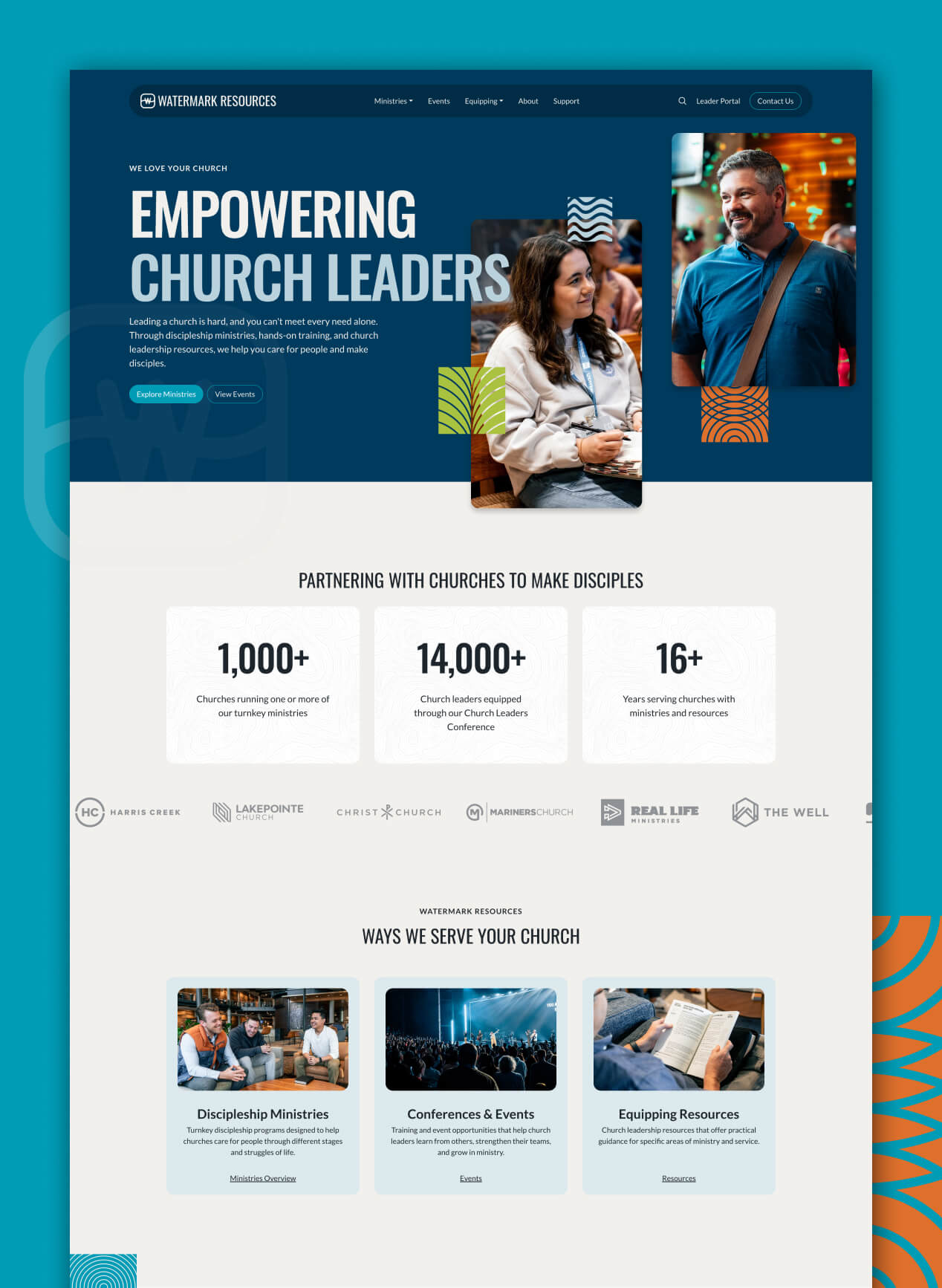
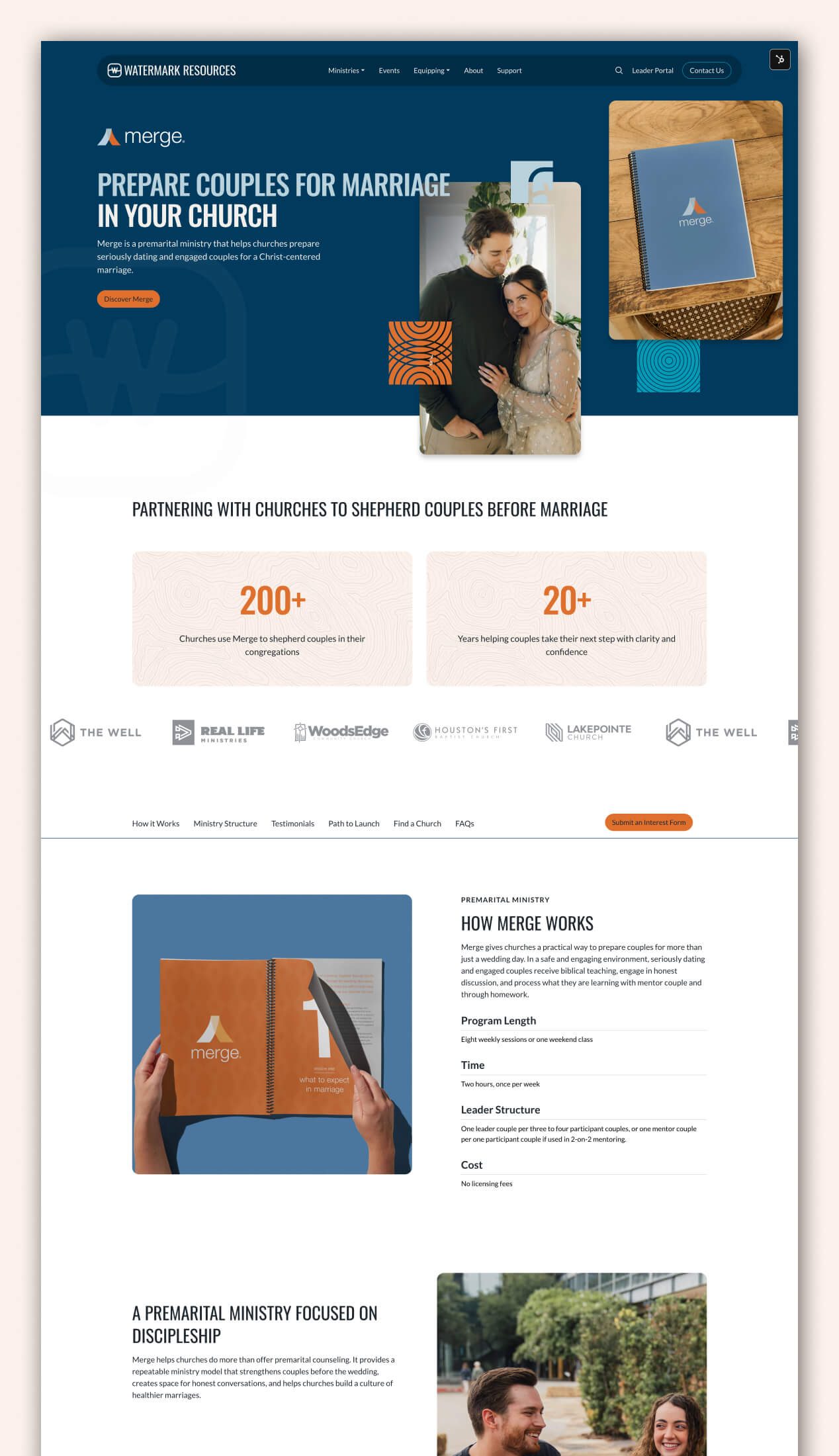
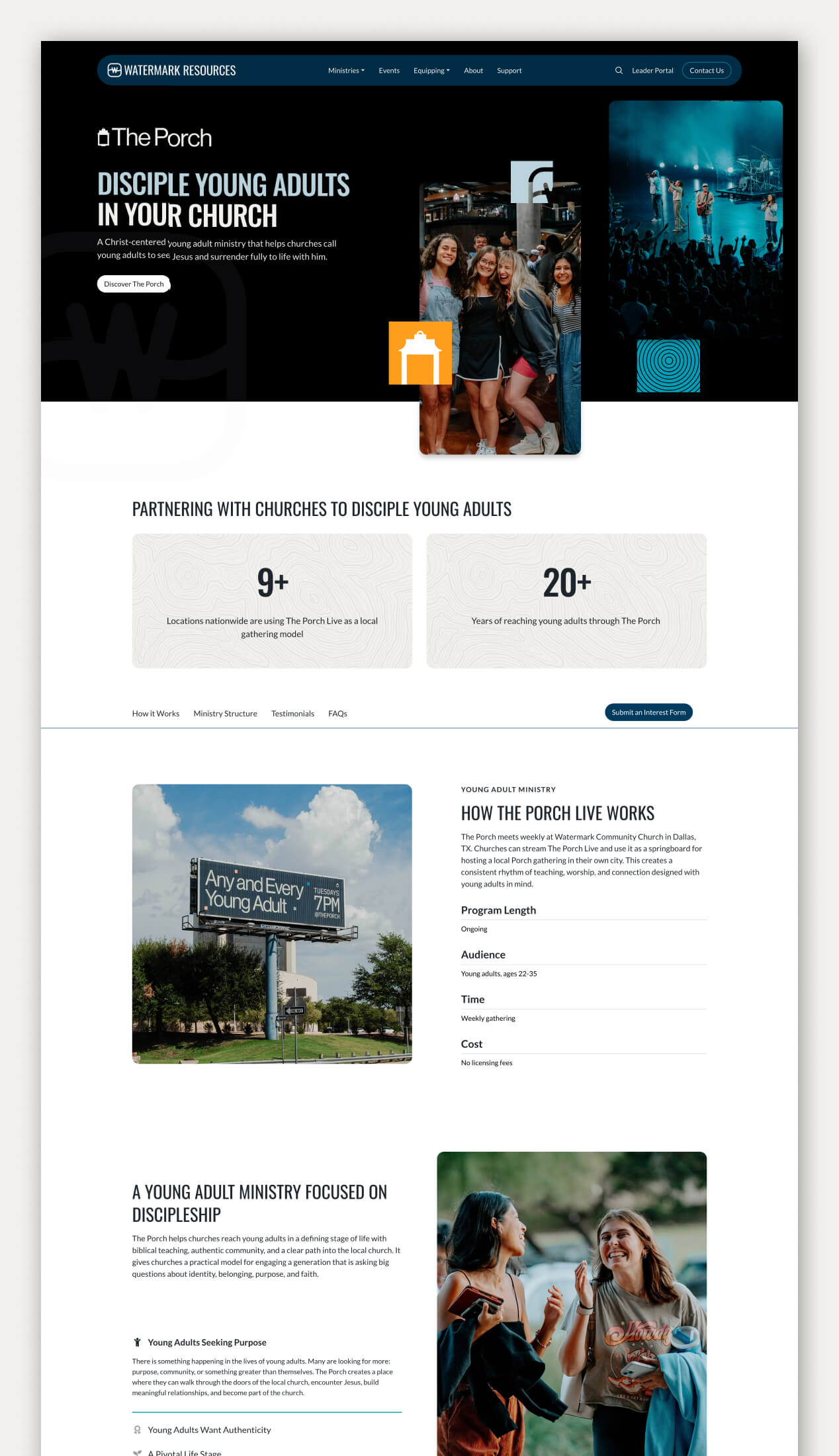
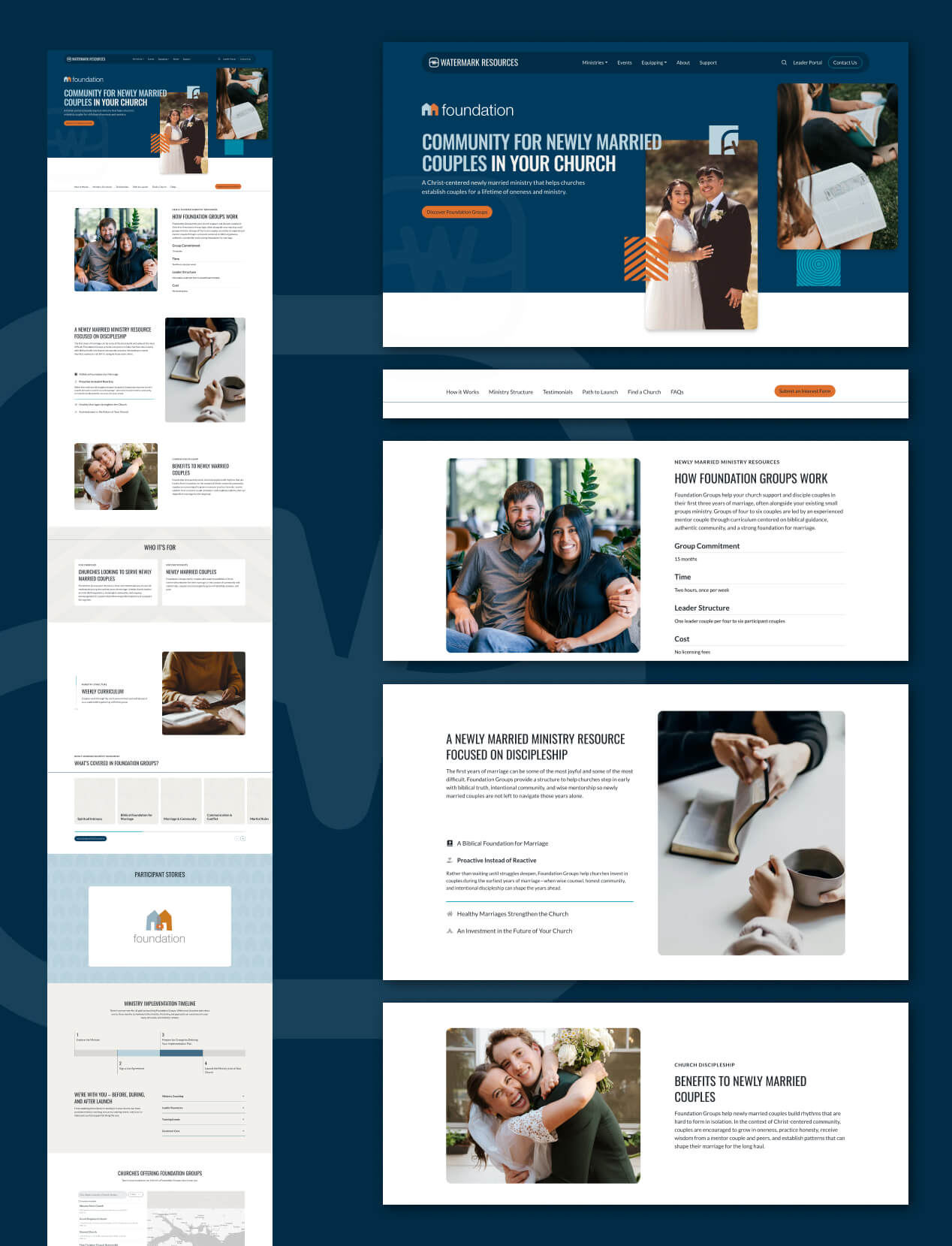
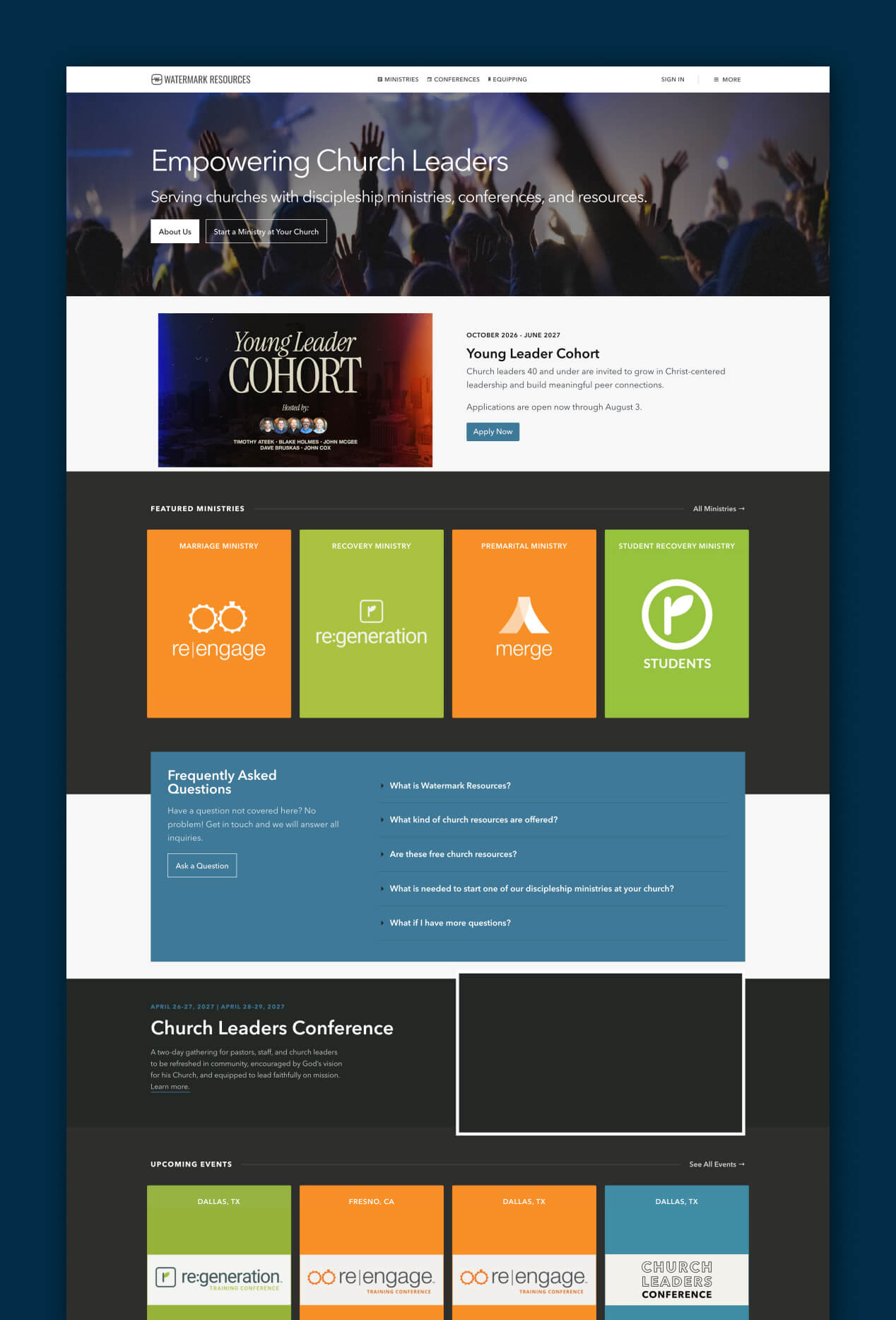
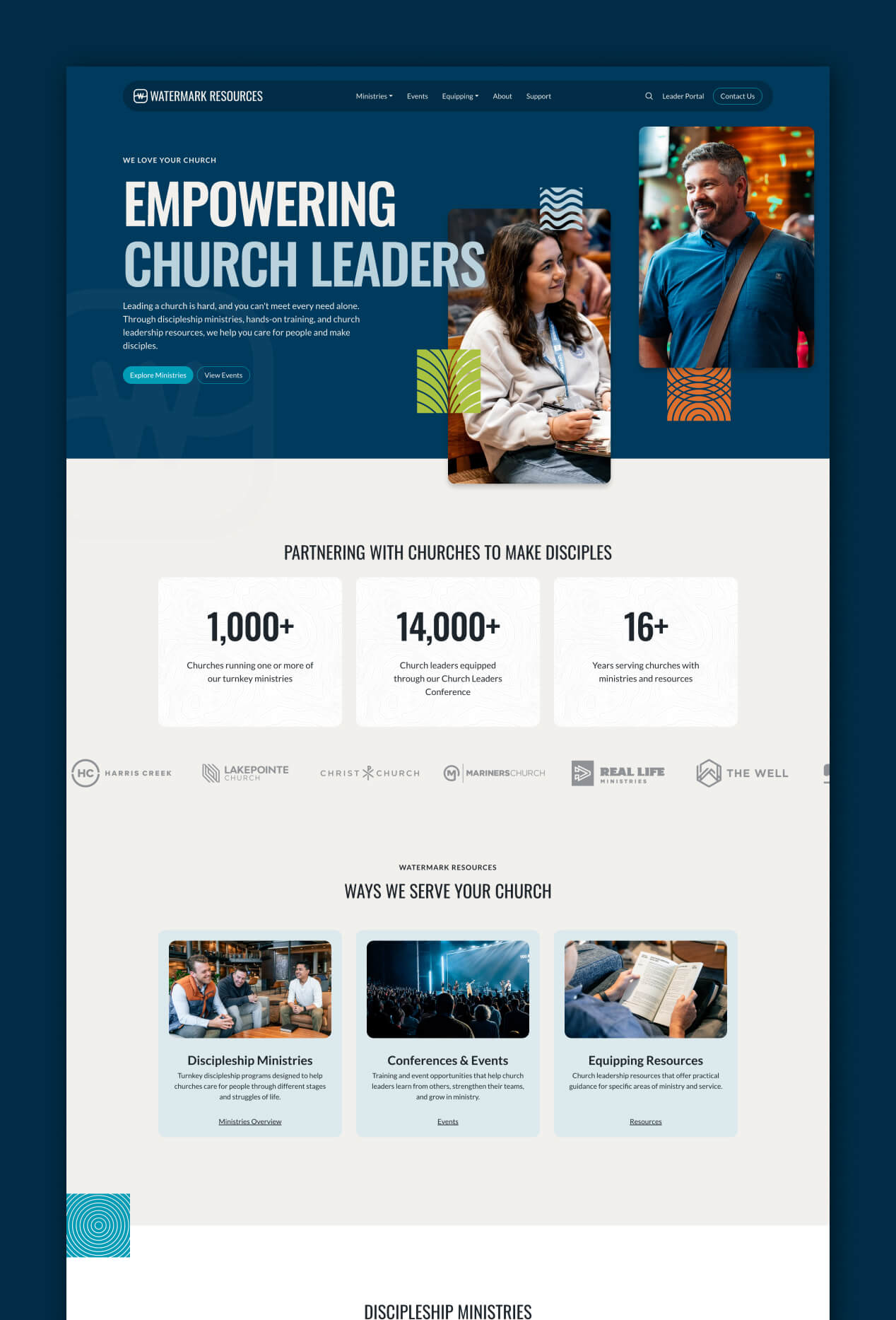
We started with "first-of-type" pages: one fully designed example of each page type, built entirely from modules that would be reused across everything else. Rather than designing several hundred pages individually, we designed the system that produces them.
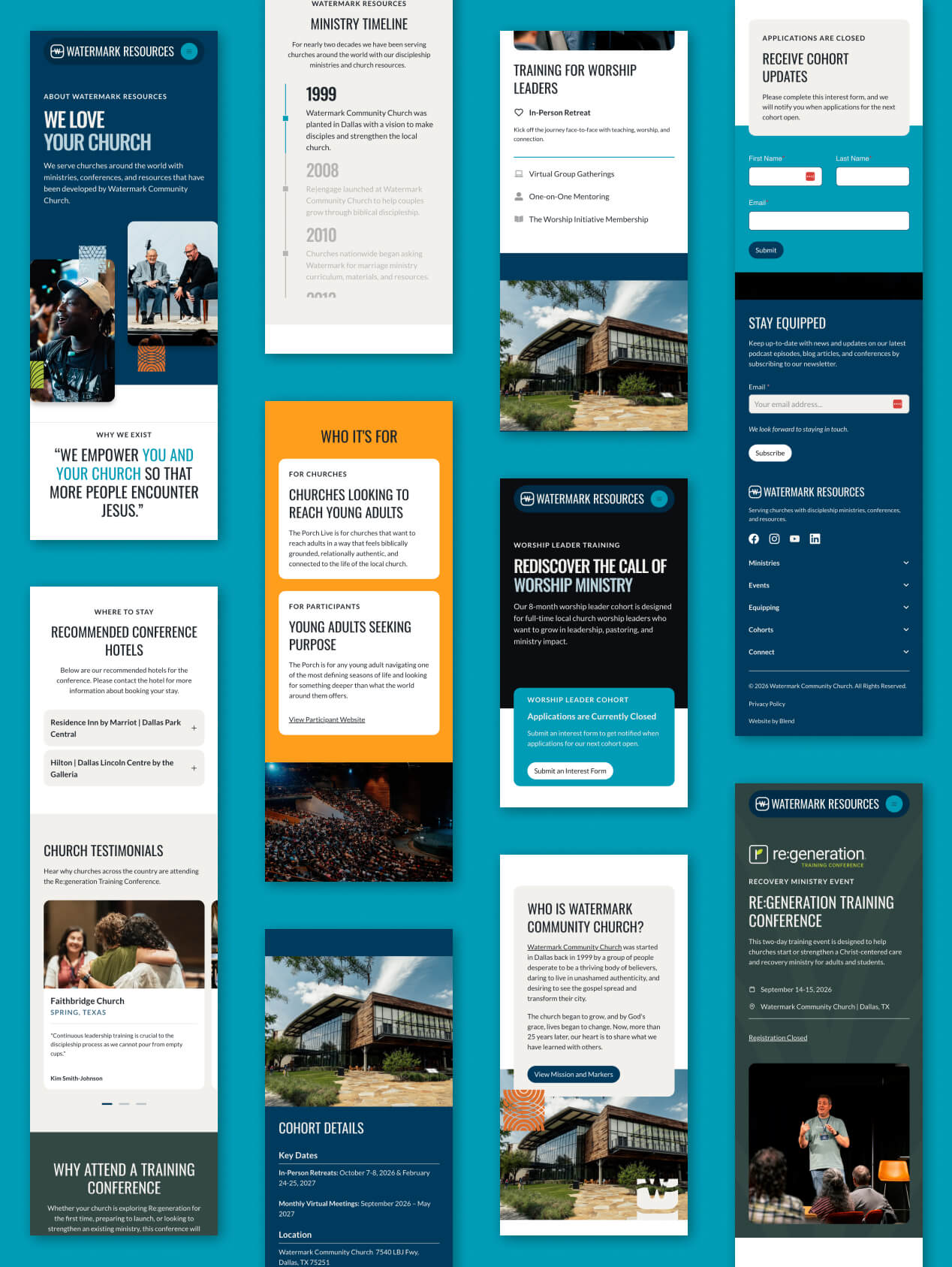
The module library covers hero areas, text and image layouts, accordions, testimonials, timelines and video sections, all pre-styled as saved sections. Watermark's team assembles pages from these blocks, or clones an existing page, swaps the content and publishes.
Flexibility needs limits to stay useful. Global spacing and style controls can quietly break mobile layouts and pull the wider design system out of alignment, so we set clear boundaries: which changes are safe to make internally, and which come back to us.
The result is one consistent visual system that still gives each ministry room for its own messaging and imagery.
Moving the archive across
The migration covered a substantial archive of blog and podcast content, gated resources and more than 1,000 URL redirects.
We built the redirect sheet into the development process, aligned new page URLs to Watermark's naming conventions, and validated everything with redirect checks and a full site crawl.
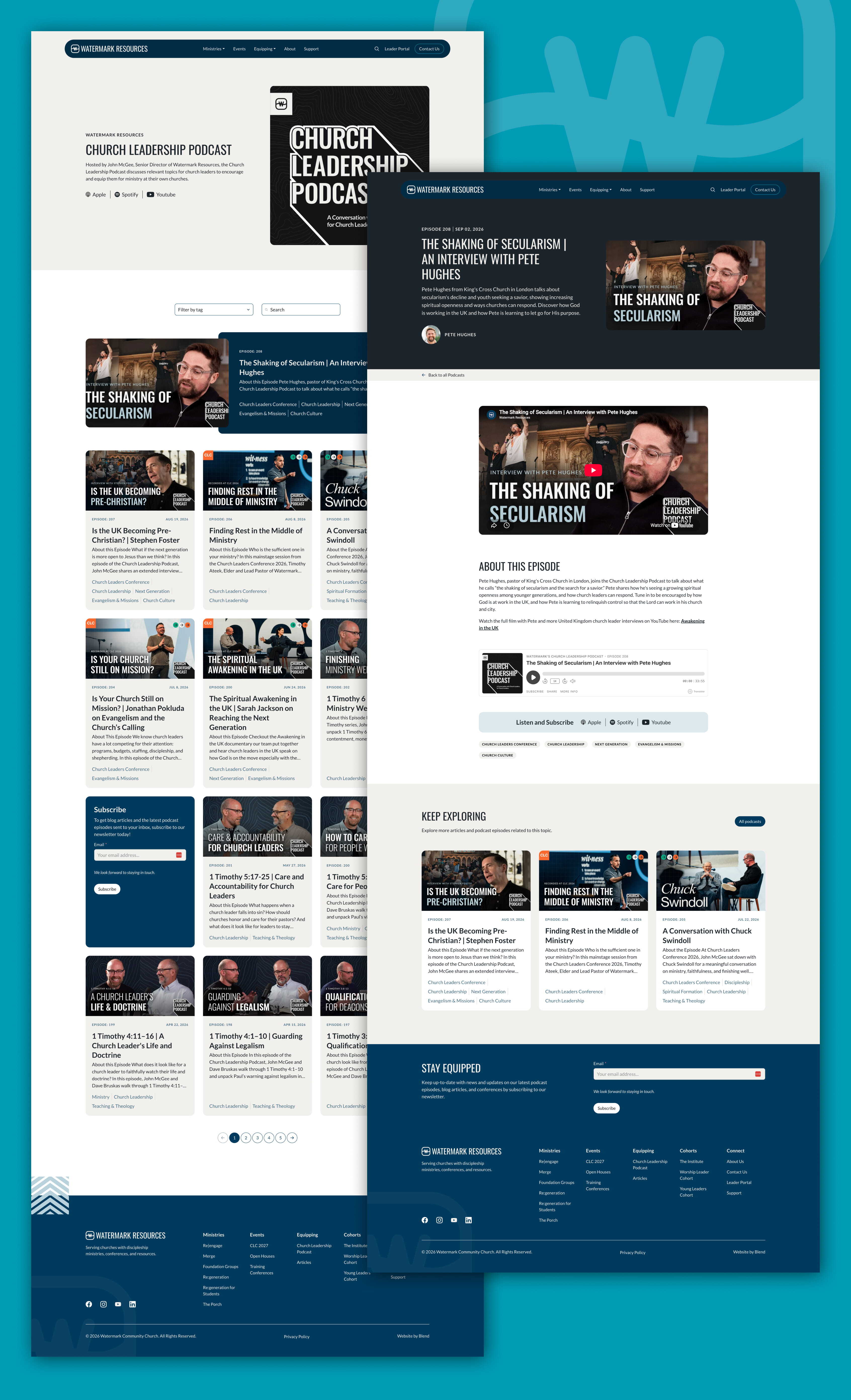
We solved the podcast migration by tracing the existing integration, working with the Transistor API and remapping the content programmatically. That allowed us to move the archive across without rebuilding hundreds of episodes by hand.
Built to be owned
Launch was coordinated across both teams — SSL, DNS, staging to production, and a live validation pass.
Then we handed it over properly. We trained the internal team to build pages from scratch, choose templates, set titles, URLs and metadata, add and rearrange sections, edit modules, control responsive layout, clone pages and preview before publishing.
Watermark's team now runs their own website. New pages, new campaigns and new content go live without a developer in the loop, which was the point of the project, not a side effect of it.