

Ready to build predictable pipeline for your logistics company?
Speak with our team to discover how we can help you navigate complex buying committees, extended evaluation periods, and the evidence buyers need to make confident decisions.
Logistics companies navigate one of the most complex B2B buying processes. Your customers aren't making quick decisions. They involve procurement teams, operations directors, finance stakeholders, and executive sign-off. A single deal takes 4 to 9 months, requires multiple vendor evaluations, and demands clear proof that a solution delivers ROI.
Most demand generation agencies don't get this. They'll push generic lead generation tactics that flood your inbox with unqualified prospects. They measure success by click-through rates and form submissions, not by pipeline quality or revenue impact. They treat logistics like any other industry, missing the reality of how 3PLs, freight companies, and supply chain operations actually make purchasing decisions.
This article identifies 6 demand generation agencies that understand the logistics sector and consistently deliver qualified pipeline. We've evaluated each agency based on their proven ability to navigate complex logistics buying processes, their approach to demand generation for multi-stakeholder decisions, and their capability to generate qualified opportunities rather than vanity metrics.
| Agency | Location | Best For | Starting Investment | Notable Clients |
|---|---|---|---|---|
|
UK & USA |
Complex B2B demand generation with multi-stakeholder buying |
From £10k |
Datel, Robin Radar, Viedoc |
|
|
USA |
Demand generation programs for 3PLs and freight companies |
Contact for pricing |
Sophos, Kaseya, commercetools |
|
|
USA |
Supply chain marketing and demand generation strategy |
Contact for pricing |
Solartis, Goddard, Sparks Group |
|
|
USA |
HubSpot-powered demand generation for industrial sectors |
Contact for pricing |
Vanguard Fire, Zeeland Lumber, Seal Bond |
|
|
UK |
Demand generation for transport, logistics, and warehousing |
Contact for pricing |
Manufacturing and logistics brands |
|
|
USA |
Account-based demand generation and lead acceleration |
Contact for pricing |
AgentSync, Endava, M-Files |
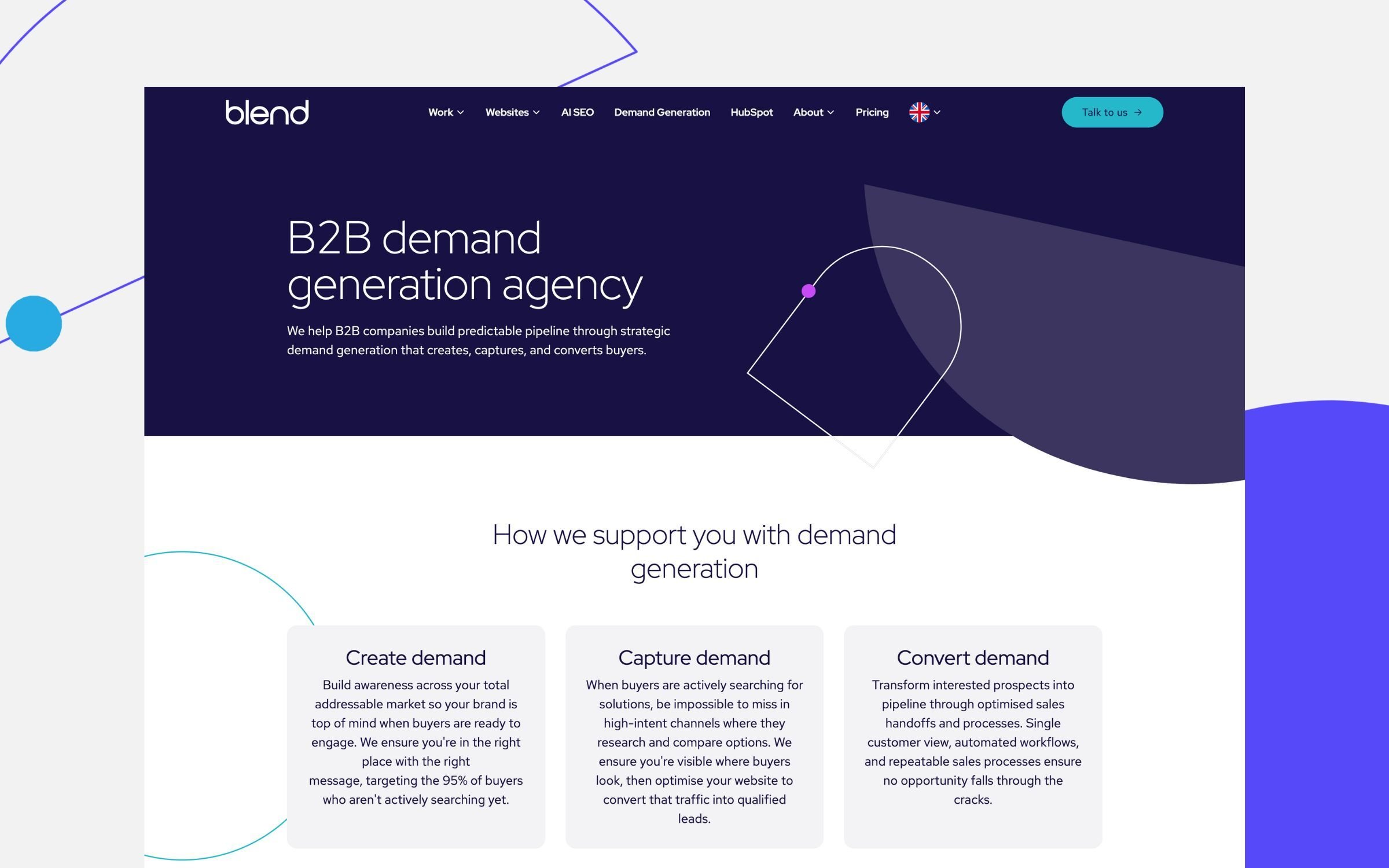
Blend is a B2B demand generation specialist for companies with complex, multi-stakeholder buying processes.
What makes Blend the best choice for logistics companies:
We understand that logistics buyers aren't rushing decisions. Most of your addressable market isn't actively searching yet. They're researching quietly, comparing options, and building consensus across procurement teams, operations managers, and finance directors. Most demand generation approaches treat all buyers the same, flooding inboxes with generic messaging that misses this reality. We take a buyer-centric approach: respecting how modern buyers control their journey while building comprehensive strategies that speak to each stakeholder's specific concerns. We're in the right place with the right message, ensuring your brand is top of mind when buyers are ready to engage.
Our demand generation engine combines three core functions. First, we create demand by building awareness across your total addressable market through educational content and strategic visibility. Second, we capture demand by becoming impossible to miss in high-intent channels where logistics buyers research and compare solutions. Third, we convert demand by transforming interested prospects into qualified pipeline through optimised sales handoffs and repeatable processes. Rather than chasing volume, we focus on creating experiences that buyers want to engage with, building trust and preference throughout their journey. This means fewer leads that matter more, not more leads that disappear in your pipeline.
Proven demand generation results:
Walker Sands is a B2B marketing agency with a dedicated logistics and transportation practice. They serve 3PLs, freight brokers, and supply chain companies with demand generation strategies that drive both lead volume and quality. Their team understands the specific challenges logistics operators face: educating buyers on carrier selection, explaining differentiation in crowded markets, and building trust in complex negotiations.
Ironpaper is a demand generation and B2B digital marketing agency with experience across industrial, supply chain, and logistics sectors. They build integrated demand programs combining content marketing, paid media, and marketing automation to generate qualified leads. Their approach emphasizes understanding buyer personas across multiple stakeholder groups and creating nurturing sequences that move deals forward through extended sales cycles.
Evenbound delivers B2B demand generation for industrial, manufacturing, and logistics companies. They create integrated programs spanning inbound marketing, sales enablement, and demand generation strategy. Their team helps logistics and transportation companies align sales and marketing efforts around qualified pipeline generation rather than vanity metrics.
Full Mix Marketing is a B2B marketing agency with experience in transport, logistics, and warehousing sectors. They create demand generation programs tailored to the specific nuances of logistics buying, including the multiple stakeholders involved and extended evaluation periods. Their experience working directly with logistics companies means they understand industry terminology, common objections, and the evidence buyers need to see before committing.
Madison Logic is an account-based demand generation platform serving enterprise companies across multiple sectors, including industrial and logistics. They deliver ABM (account-based marketing) and lead acceleration strategies for large-scale operations. Their team combines technology, data, and creative strategy to target high-value accounts and move them through complex decision-making processes faster.
Logistics purchasing involves multiple stakeholders with competing priorities. A procurement director cares about cost and compliance. Operations managers focus on reliability and integration. Finance executives demand ROI proof and budget justification. Great demand generation agencies understand these different perspectives and create messaging that speaks to each buyer's specific concerns and priorities. They don't treat all prospects the same. Instead, they build targeted content sequences that educate each stakeholder on why change matters and why your solution fits their specific needs.
Logistics sales cycles stretch across months. Buyers research quietly, evaluate multiple vendors, and move slowly toward decisions. Generic lead generation focused on fast conversions misses this reality. The best agencies understand that demand generation means creating sustained educational campaigns that build trust and authority over time. They measure success not by how many people clicked a link last week, but by how many qualified opportunities emerged from months of consistent engagement. They've demonstrated ability managing buyers through extended evaluation periods without losing momentum.
Most agencies report on activity: website visits, form submissions, email open rates. The best logistics demand generation agencies connect their work directly to pipeline and revenue. They show which campaigns generated actual sales opportunities, how many of those converted to closed deals, and what the actual ROI was on their investment. This matters because logistics companies operate on thin margins. You need demand generation partners who can prove their work drives measurable business results, not just activity metrics.
Ask for specific case studies from logistics, 3PL, freight, or supply chain companies they've worked with. Generic B2B experience isn't enough. You need an agency that understands your industry's unique language, common objections, and the specific way your buyers evaluate vendors. Request references from logistics companies of similar size and complexity to yours. Ask what results they achieved and how long the engagement lasted.
Many agencies conflate these terms. Demand generation builds awareness and interest among your target market. Lead generation captures contact information from people already interested in buying. The best logistics agencies understand the difference and excel at both. Ask how they balance creating new demand with capturing interest from ready-to-buy prospects. Their answer reveals whether they understand the full journey or just focus on immediate conversions.
Request sample reporting from their current logistics clients. Look for metrics like MQL generation, conversion rates through your sales pipeline, pipeline value attributed to their campaigns, and closed revenue. Avoid agencies that primarily report on top-of-funnel activity without connecting to pipeline or revenue outcomes. Ask specifically how they attribute revenue to their demand generation work and what tools they use for tracking.
Effective demand generation requires both content marketing and paid acquisition. Some agencies excel at one but struggle with the other. Ask about their in-house capabilities for content creation, copywriting, and paid media management. Do they have subject matter experts in logistics? Do they manage campaigns themselves or outsource to freelancers? The best agencies combine strategic content with targeted paid media to ensure your message reaches the right buyers at the right time.
Logistics companies need demand generation partners who understand your complexity and can scale with your growth. You might start with strategic planning to establish your messaging and ideal buyer profiles. Then expand into integrated campaigns combining content, paid media, and nurturing. As your business evolves, your demand generation approach should evolve too. The right partner supports you from initial strategy through full-scale execution without forcing vendor changes or costly platform migrations.
Blend specializes in demand generation for complex B2B companies with long sales cycles, exactly what logistics companies need. We've built comprehensive demand generation programs for businesses navigating multi-stakeholder buying processes, extended evaluation periods, and the need to prove ROI before buyers commit. Our approach combines strategic messaging development with integrated campaigns spanning content marketing, paid acquisition, and sales enablement. We measure success by pipeline generation and revenue impact, not vanity metrics like clicks or form submissions.
The results speak for themselves. Datel achieved 35% revenue growth, 63% profit increase, and a 50%+ MQL-to-opportunity conversion rate through our demand generation strategy. Robin Radar Systems saw 236% increase in website sessions and 48% monthly MQL growth by shifting from product-focused messaging to solution-focused demand generation. Viedoc achieved a 100% increase in MQL conversion rate and 14% increase in demo requests. These aren't one-time spikes. They're sustainable results from demand generation programs built specifically for how complex B2B buyers actually make decisions.
Focus on agencies demonstrating deep understanding of complex B2B buying processes involving multiple stakeholders and extended sales cycles. They should prove capability building long-term nurturing programs rather than optimizing for immediate lead volume. Look for clear pipeline attribution models showing how programs generate qualified opportunities that convert into revenue, not just contact submissions.
Investment varies significantly based on program scope and capabilities. Strategic planning typically starts around £10k, with full-service demand generation programs ranging from £5k to £20k monthly depending on channel mix, content production requirements, and campaign complexity. Expect higher initial investment establishing foundational strategy and messaging frameworks, with ongoing costs supporting campaign execution and optimization.
Initial results typically appear within 3 to 6 months as content gains traction and campaigns generate engagement. However, logistics companies with longer sales cycles should expect 6 to 12 months before seeing significant pipeline impact from demand generation efforts. This timeline reflects the reality of how your buyers research, evaluate, and make decisions. Agencies promising immediate results likely aren't focused on the right metric, which is qualified pipeline, not quick lead capture.
Results vary based on starting position, program scope, and market conditions. Demand generation clients have achieved significant improvements, with Datel seeing 35% revenue growth and an 84% improvement in session-to-MQL conversion rates, and Robin Radar Systems generating 236% increase in website sessions and 48% monthly MQL growth. These results came from comprehensive demand generation programs that ran for extended periods. Expect demand generation to improve your pipeline quality and volume, not overnight revenue spikes. The goal is consistent, qualified opportunity generation that your sales team can convert.
Demand generation builds awareness and interest among your target market before they're actively searching for solutions. It includes content marketing, thought leadership, and brand building that educates potential buyers on problems you solve. Lead generation captures contact information from people already interested. The best approach combines both: create demand through educational content and strategic visibility, then capture leads from people ready to engage.
Remember that demand generation is fundamentally different from traditional lead generation. You're not just capturing contacts who raise their hands. You're building sustained programs that educate your market, establish authority, and generate qualified pipeline from buyers working through complex evaluation processes. The agency you choose should understand your industry's specific buying process, demonstrate ability measuring results by pipeline and revenue impact, and have proven experience working with logistics companies navigating similar complexity to yours.
Logistics companies often underestimate how much their buying process shapes their marketing needs. Your customers need multiple touchpoints, different messaging for different stakeholders, and sustained engagement over months. The agencies in this list understand this reality. They've built demand generation programs that work with logistics buying processes, not against them.
We've spent over a decade building demand generation programs for companies with complex B2B buying processes. We understand that logistics companies need partners who recognize the challenge: your buyers are research-heavy, multi-stakeholder decision makers who move slowly but deliberately toward vendor selection.
Our approach combines strategic messaging development with integrated demand programs spanning content marketing, paid acquisition, and sales enablement. Rather than chasing volume, we focus on generating qualified pipeline that your sales team can actually convert. We measure success by pipeline generation and revenue impact, not vanity metrics. Your investment should drive measurable business growth, and we structure our work around proving that impact consistently.
Demand generation clients like Datel have transformed their pipeline and revenue through our demand generation strategy. Robin Radar Systems achieved 236% increase in sessions and 48% MQL growth by shifting from product-focused messaging to solution-focused demand generation. These results didn't happen overnight. They came from strategic, disciplined demand generation programs built specifically for how logistics buyers make decisions.
If you're ready to generate consistent, qualified pipeline for your logistics company, we should talk. Book a strategy call to discuss your logistics demand generation needs.
Speak with our team to discover how we can help you navigate complex buying committees, extended evaluation periods, and the evidence buyers need to make confident decisions.