

Ready to create a website that converts healthcare technology buyers?
Speak with our team to discover how we can help you build a website that balances technical credibility with commercial clarity.
Logistics companies operate in an industry where speed, reliability, and transparency aren't just marketing claims. They're operational imperatives that directly impact customer retention and contract renewals. Your website needs to demonstrate these same qualities while serving buyers at different stages of evaluation: some researching initial capabilities, others comparing specific service offerings, and decision-makers assessing strategic fit.
Most agencies treat logistics websites like standard B2B projects. They create generic service pages that fail to address the specific concerns of supply chain decision-makers. They either focus on flashy visuals that don't communicate operational capability, or they build dense specification sheets that overwhelm buyers trying to understand basic service offerings.
This article evaluates six agencies with demonstrated logistics expertise. We've verified their client portfolios, assessed their understanding of supply chain buyer journeys, and analysed their approach to the complex requirements of logistics marketing.
| Agency | Location | Best For | Starting Investment | Notable Clients |
|---|---|---|---|---|
|
UK & USA |
Multi-stakeholder B2B journeys |
From £30k |
Firstpoint Logistics, Transpoco, Kriete Truck Centers |
|
|
USA |
Digital marketing integration |
Contact for pricing |
FedEx, GEODIS, Port Jersey Logistics |
|
|
USA |
Brand-focused design |
From $25k |
NFI, Roadrunner Freight, Werner Enterprises |
|
|
USA |
Enterprise branding |
Contact for pricing |
DHL, XPO Logistics, CH Robinson |
|
|
USA |
Performance marketing |
From $12k |
UPS, Old Dominion Freight Line |
|
|
USA |
Conversion optimization |
Contact for pricing |
J.B. Hunt, YRC Worldwide |
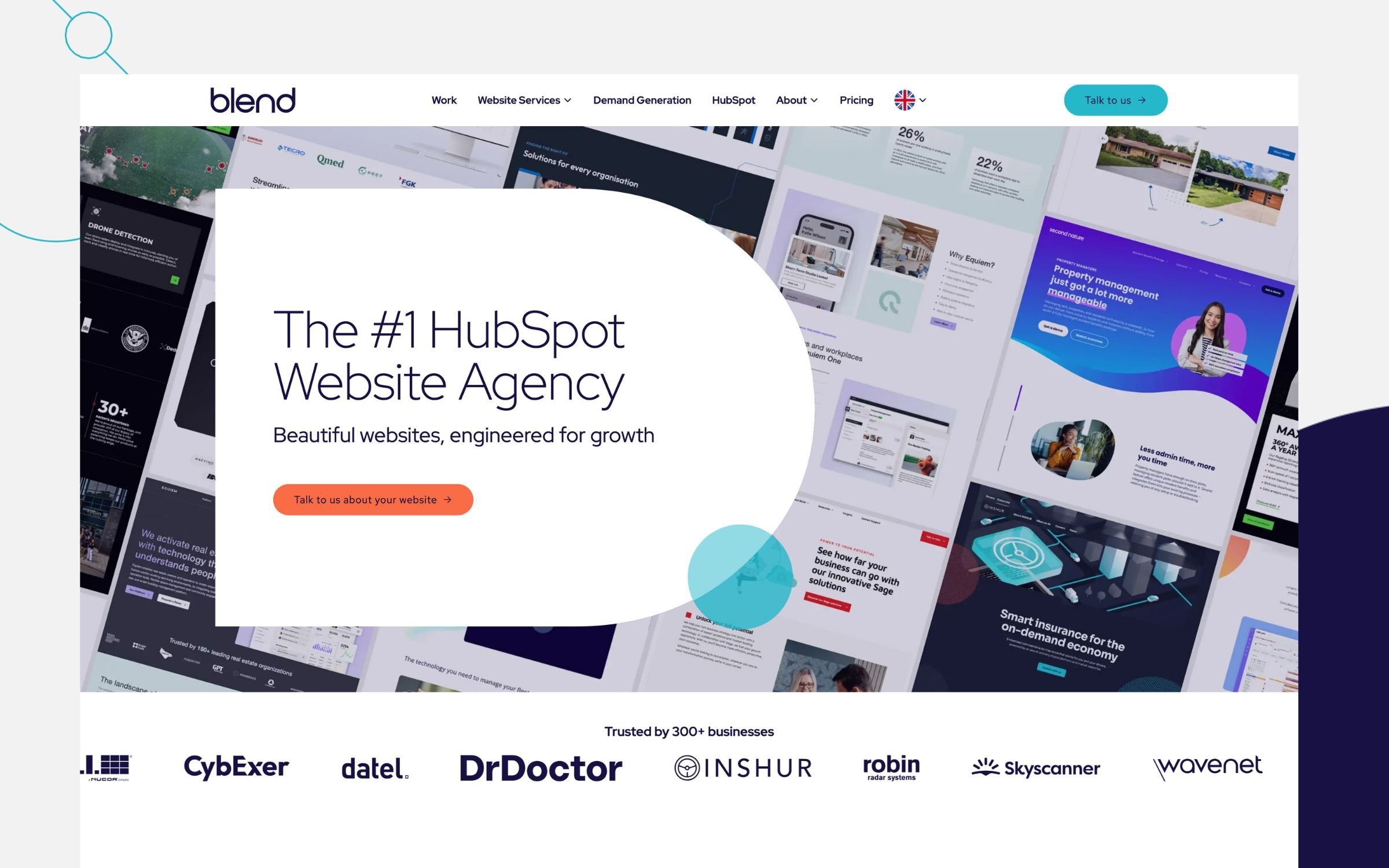
Blend creates conversion-focused websites for logistics companies that balance operational credibility with the commercial clarity sophisticated buyers demand.
What makes Blend the best choice for logistics companies:
Logistics purchases involve multiple stakeholders evaluating different aspects of your service. We build websites that serve each audience simultaneously without creating confusion between service offerings, capabilities, or coverage areas.
Our approach transforms complex operational information into clear buyer journeys. We don't just organize services into neat categories. We structure content around the actual questions buyers ask and the evidence they need to make decisions. Every project delivers the operational credibility that builds trust with procurement teams whilst maintaining the commercial messaging that generates qualified enquiries and shortlist opportunities.
The result is websites that work as hard as your operations team. They guide different stakeholders to the information they need, demonstrate your capabilities through transparency rather than claims, and convert visitors into qualified opportunities that actually close.
Proven results for logistics companies:
SmartSites is a digital marketing agency that brings comprehensive experience working with freight companies, warehousing operations, and third-party logistics providers. They've built websites for major brands including FedEx, GEODIS, and Port Jersey Logistics. What sets them apart is their integrated approach, combining website design with ongoing SEO, PPC campaigns, and social media marketing to create cohesive digital strategies. This makes them particularly effective for logistics companies that want a single partner managing multiple marketing channels rather than coordinating between separate agencies for different services.
Lounge Lizard takes a brand-first approach to logistics website design, working with companies like NFI, Roadrunner Freight, and Werner Enterprises. They specialize in helping logistics companies differentiate themselves in competitive markets through distinctive visual identities and strategic positioning. Their strength lies in transforming generic freight and warehousing businesses into memorable brands with clear market positioning. If your logistics company competes primarily on service quality and reputation rather than just price, Lounge Lizard's brand-focused methodology can help you stand out in a crowded marketplace.
Ruckus Marketing specializes in enterprise-level logistics companies requiring sophisticated brand transformations. They've worked with industry leaders including DHL, XPO Logistics, and CH Robinson. Ruckus brings strategic thinking that goes beyond website design, helping established logistics operations reposition themselves for new markets or competitive threats. Their strength is understanding the complexities large logistics companies face: multiple business units, diverse service offerings, and stakeholder groups with competing priorities. They excel at creating unified digital experiences that work across complex organizational structures.
WebFX brings data-driven methodology to logistics website projects, having worked with UPS and Old Dominion Freight Line. They combine website design with comprehensive digital marketing including SEO, content development, and paid advertising. What distinguishes WebFX is their emphasis on measurable outcomes and detailed ROI tracking. They provide logistics companies with clear visibility into how website investments translate to business results. Their approach works well for logistics companies that need to justify marketing spend with concrete metrics and want a partner focused on continuous improvement based on performance data.
Disruptive Advertising specializes in conversion optimization for logistics companies, working with clients including J.B. Hunt and YRC Worldwide. Their approach centers on turning existing traffic into qualified leads through strategic page design, persuasive copywriting, and systematic testing. They're particularly effective for logistics companies that already have established traffic sources but aren't converting visitors effectively. Rather than focusing primarily on attracting new visitors, Disruptive helps you maximize the value of traffic you're already receiving through continuous optimization and testing of conversion paths.
Logistics companies typically offer multiple service lines across different geographic areas and operational specialties. Each service involves distinct capabilities and considerations. Your website must present this complexity clearly without overwhelming visitors who are trying to understand whether you can help them.
Look for agencies that demonstrate clarity in their logistics work. Review their client websites. Can you understand what the company offers within 30 seconds? Does the site help visitors find relevant information based on their actual needs rather than forcing them to navigate internal organizational structures? This user-centric thinking separates agencies that understand buyer journeys from those applying generic templates.
Logistics buyers evaluate reliability as carefully as price. They need confidence that you'll deliver consistently, handle challenges professionally, and maintain clear communication. Your website serves as the first evidence of these capabilities. Generic statements about "reliable service" and "customer focus" don't build credibility with experienced buyers who've dealt with failed partnerships.
The strongest logistics websites provide operational transparency. This might include clear service commitments, detailed case studies showing how you've solved complex challenges, or evidence of your operational capabilities. These elements demonstrate competence through proof rather than marketing claims.
Effective agencies build this transparency into website structure during planning. They understand which operational details matter most to your specific buyers and how to present information in accessible formats. They don't just design attractive pages. They create experiences that help potential customers evaluate your capabilities against their requirements.
Many logistics companies operate in specific geographic markets while maintaining partnerships for broader coverage. Your website must clearly communicate your direct service areas without creating confusion about overall capabilities. Buyers evaluating your services need to quickly understand whether you're the primary operator for their requirements or coordinating through partners.
Effective agencies understand how to present geographic capabilities honestly whilst maintaining credibility. They structure content so visitors can quickly evaluate service coverage whilst understanding your operational depth. This balance builds confidence that you're equipped to handle their specific requirements rather than just another coordinator working through others.
Review completed projects for logistics companies similar to yours in service offering and scale. Look beyond visual design to assess whether sites effectively communicate complex service portfolios. Verify that portfolio clients are legitimate logistics operations with real infrastructure. Some agencies claim logistics experience based on work for generic transportation companies without true supply chain complexity.
During initial conversations, gauge whether agencies ask detailed questions about your buyers. Strong partners inquire about the different audiences visiting your site, how people typically evaluate logistics providers, and what evidence matters most to different stakeholders. Agencies that immediately discuss design aesthetics or platform preferences without understanding your buyers haven't grasped the complexity of your market.
Ask how they help logistics companies build trust through websites. What methods do they use to demonstrate capability to potential customers? How do they present complex service information clearly? How do they balance breadth of offerings with depth of expertise? Their answers reveal whether they understand that logistics websites must provide genuine substance rather than just marketing positioning.
Logistics websites often require integration with tracking systems, quoting engines, customer portals, or CRM platforms. Evaluate whether agencies have experience implementing these technical requirements. Request specific examples of integrations they've built for other logistics clients. Generic web design experience doesn't automatically translate to handling the technical complexity logistics operations require.
Logistics companies need websites that evolve as service offerings expand and operational capabilities grow. We support logistics companies from regional carriers through international operations with one unified approach. Start with a focused site that establishes credibility, then expand capabilities as your service portfolio develops without rebuilding from scratch.
Blend specializes in creating websites for logistics companies with proven results like Firstpoint Logistics' improved performance and Transpoco's brand transformation. We understand multi-stakeholder logistics buying journeys where operations teams evaluate service capabilities whilst procurement departments assess costs and executives weigh strategic partnerships. Our websites serve each audience without forcing them to decode internal organizational structures or wade through irrelevant information.
What sets us apart is our focus on operational credibility combined with commercial effectiveness. We've worked across freight forwarding, warehousing, last-mile delivery, and transport technology platforms. This breadth means we understand how to balance service complexity with clarity, how to demonstrate capability without overwhelming visitors, and how to structure content that serves diverse buyer needs.
Look for genuine logistics experience, not just general B2B or transportation work. The agency should understand complex service offerings, diverse buyer needs, and how to balance operational credibility with commercial messaging. Review their portfolio for legitimate logistics clients with real operations. Assess their ability to present complex information clearly without overwhelming visitors. Verify they understand the technical requirements your business needs.
Logistics website projects typically range from £10k to £150k depending on complexity and requirements. Factors affecting cost include the breadth of services requiring dedicated content, technical integrations your operations need, geographic coverage considerations, custom functionality requirements, and overall content volume. Straightforward service showcases start at the lower end whilst comprehensive platforms with extensive capabilities require larger investments.
Most logistics website projects take 3 to 6 months from kickoff to launch. This timeline accounts for the complexity of logistics sites: service portfolio organization and content development, stakeholder review cycles across operations and sales teams, technical integration with existing systems, and content migration from legacy platforms. Rush projects can complete in 6 to 8 weeks but typically require narrower scope or sacrifice some strategic depth in service presentation.
Logistics websites deliver measurable improvements when executed properly. Blend's logistics clients have achieved significant results, with Firstpoint Logistics gaining improved performance and simplified management, and Transpoco elevating their market positioning through transformation. Results depend on your current digital presence, service differentiation, and how effectively the new site serves procurement teams evaluating capabilities. Most companies see improvements in enquiry quality within 3 to 6 months as the site attracts more qualified prospects.
The best approach uses buyer-centric organization rather than internal structures. Lead with the problems you solve or industries you serve, then connect visitors to relevant information. Use clear navigation that lets potential customers quickly identify capabilities matching their needs. Provide progressive detail so visitors can start with high-level understanding then access specifics as needed. This structure helps visitors find what they need whilst demonstrating your breadth of capability.
Each agency brings distinct strengths to logistics website projects. Your choice depends on matching capabilities to your specific situation. Regional carriers seeking local market dominance need different expertise than international logistics providers building global presence. Companies with straightforward service offerings require different approaches than those managing complex multi-modal operations.
The logistics sector demands more than attractive design. Your website represents operational capability and reliability to procurement teams making significant partnership decisions. Choose an agency that demonstrates genuine understanding of logistics buyer journeys, service portfolio complexity, and the balance between operational credibility and commercial effectiveness.
We specialize in the intersection where operational complexity meets commercial clarity. Most agencies understand either logistics operations or conversion optimization. We deliver both, creating websites that establish operational credibility whilst generating measurable pipeline growth.
We understand how different logistics segments require distinct approaches to buyer communication. This breadth lets us translate lessons across sectors whilst respecting each segment's unique requirements. We've helped companies clarify complex service portfolios, demonstrate operational capability through transparency, and structure content for diverse procurement needs.
Our logistics clients have achieved remarkable results. Firstpoint Logistics improved performance and simplified content management. Transpoco elevated their transport technology positioning through brand transformation and website redesign. Kriete Truck Centers streamlined their buyer experience with sophisticated inventory integration.
If you're ready to create a website that serves your entire buyer ecosystem whilst driving commercial outcomes, we should talk. Book a strategy call to discuss your logistics website.
Speak with our team to discover how we can help you build a website that balances technical credibility with commercial clarity.