

Ready to create an ecommerce platform website that drives qualified leads?
Speak with our team to discover how we can help you build a website that attracts the right buyers and accelerates your sales cycle.
Ecommerce platforms face a unique challenge: they must attract technology buyers who make decisions based on integration capabilities, scalability, and long-term vendor reliability. These buyers aren't browsing casually. They're evaluating architecture, comparing features, and assessing whether your platform can handle their business complexity.
Most agencies approach ecommerce platform websites like standard B2B sites, focusing on generic messaging and surface-level features. This misses the mark. Platform buyers need to understand technical capabilities, see real implementation examples, and grasp integration possibilities before they'll consider a demo request.
This article delivers a curated analysis of seven agencies with proven experience building websites for ecommerce platforms. We've evaluated their technical depth, platform expertise, and ability to communicate complex capabilities to both technical and business audiences.
| Agency | Location | Best For | Starting Investment | Notable Clients |
|---|---|---|---|---|
|
UK & USA |
Platform companies needing buyer enablement |
From £30k |
C.H.I. Overhead Doors, Shawcity, Amazon Filters |
|
|
USA |
Enterprise Shopify Plus implementations |
Contact for pricing |
Summer Fridays, Lashify |
|
|
USA |
B2B ecommerce with SEO focus |
From $1,000 |
Roku, Jack Daniels, Sony |
|
|
USA |
Luxury and lifestyle brand experiences |
Contact for pricing |
Retrouvaí, Sunday Riley |
|
|
USA |
BigCommerce and Shopify migrations |
Contact for pricing |
Elite BigCommerce Partner |
|
|
USA |
Multi-platform custom solutions |
Contact for pricing |
438+ brands served |
|
|
USA |
Conversion-focused B2B sites |
From $50,000 |
Horton Group, Access Corp, Zipline |
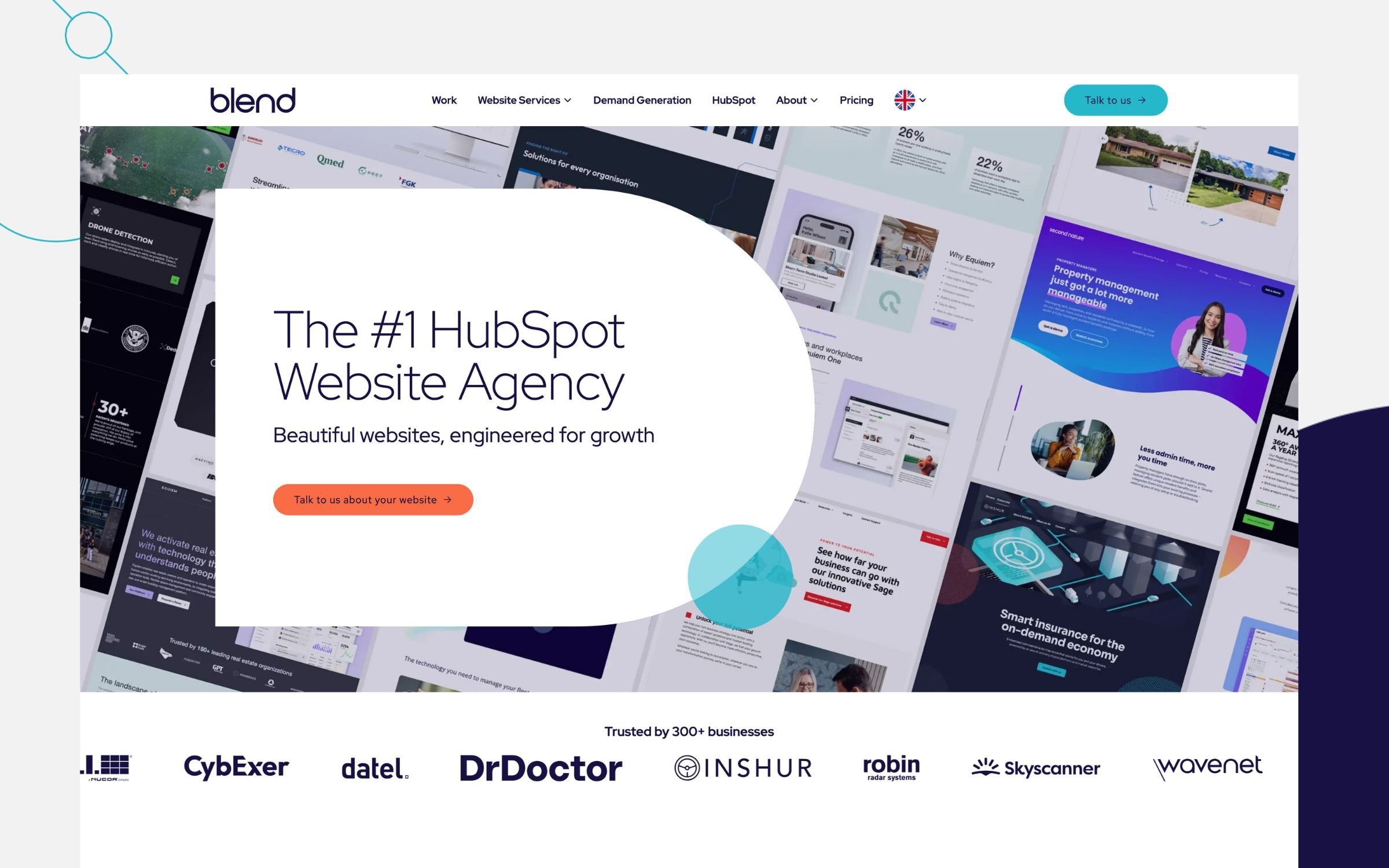
Blend specializes in creating websites for technology platforms where buying decisions involve multiple stakeholders with distinct priorities.
What makes Blend the best choice for ecommerce platform companies:
Ecommerce platform buyers evaluate technical architecture, integration capabilities, and scalability evidence before engaging sales. We build websites that serve technical decision-makers, business stakeholders, and implementation teams without overwhelming any audience group with unnecessary complexity.
Our approach balances technical depth with business outcomes. Every project delivers the architectural clarity and integration evidence that platform buyers need to move forward confidently. We understand that ecommerce platform buyers don't make impulse purchases. They evaluate technical architecture, integration capabilities, and scalability evidence before engaging sales. We build websites that serve technical decision-makers, business stakeholders, and implementation teams without overwhelming any audience group with unnecessary complexity.
Proven results for ecommerce platform companies:
Avex Designs is an enterprise-grade Shopify agency based in the United States specializing in unified commerce solutions. They help high-growth and enterprise brands streamline DTC, B2B, and in-store experiences into cohesive ecosystems. Their expertise spans creative direction, Shopify Plus builds, conversion rate optimization, and retention marketing, making them particularly strong for brands requiring sophisticated platform implementations with seamless omnichannel capabilities.
Coalition Technologies is a leading ecommerce agency based in Los Angeles and Seattle, specializing in SEO, PPC, and custom design and development across BigCommerce, Shopify, WordPress, and Magento platforms. Founded in 2009, they've built a team of 250+ professionals serving clients that generate $80 million in monthly revenue. Their roster includes notable brands like Roku, Jack Daniels, Walmart, Sony, and Microsoft, alongside smaller businesses they've helped scale from six to nine figures. They're particularly strong in B2B ecommerce implementations requiring complex integrations and sophisticated functionality.
Exhibea is a Los Angeles-based Shopify Plus agency specializing in luxury, fashion, and lifestyle brands. They focus on creating ecommerce websites that balance beautiful experiences with strong engagement and conversion optimization. Their work with brands like Aureum (65% increase in average order value) and Retrouvaí (133% increase in total sales) demonstrates their ability to elevate premium brand experiences. They combine creative direction with technical Shopify expertise to deliver content-rich experiences optimized for product discovery.
DigitlHaus is an award-winning ecommerce agency specializing in custom design, development, and SEO on BigCommerce and Shopify platforms. For the past eight years, they've maintained Elite BigCommerce Partner status, a distinction achieved by only 30 out of 5,000 agencies. They've successfully launched 150+ custom BigCommerce stores and completed 500+ bespoke projects. Their expertise extends to headless commerce solutions, B2B ecommerce implementations, and complex ERP integrations, making them ideal for enterprise brands requiring sophisticated technical implementations.
1Digital Agency is a custom ecommerce web design agency with over 10 years of experience and a team of 50+ experts including designers, developers, and digital marketers. They specialize in creating custom ecommerce websites with focus on branding, usability, and seamless customer experiences across multiple platforms including BigCommerce, Shopify, Magento, and WooCommerce. Trusted by 438 brands and businesses, they offer device-agnostic responsive designs with ongoing support to ensure websites remain modern and functional as businesses grow.
Orbit Media is an award-winning digital marketing and web design agency based in Chicago. Since 2001, they've completed over 1,000 web design projects with deep expertise in conversion-focused website design, development, and SEO optimization. They specialize in creating search and conversion-optimized sites across WordPress, Drupal, WooCommerce, and Shopify platforms. Their client roster includes the Horton Group (26% increase in qualified leads), Access Corp, and Zipline. As a certified B Corp, they combine technical excellence with strategic insight, making them particularly strong for B2B companies requiring lead generation websites with measurable business impact.
Platform buyers need to understand your architecture without wading through marketing language. Great agencies translate complex technical capabilities into clear benefits that resonate with both technical evaluators and business decision-makers.
This means presenting API documentation accessibility, explaining integration patterns without jargon, and demonstrating scalability through real client examples. The agency must understand your technology deeply enough to communicate it accurately while keeping it accessible to non-technical stakeholders who influence purchasing decisions.
When agencies miss this mark, you end up with beautiful sites that fail to answer the critical questions platform buyers ask before they'll engage your sales team. Your bounce rate increases, qualified leads decrease, and your sales cycle lengthens unnecessarily.
Ecommerce platform buyers evaluate your ecosystem before considering your core product. They need to see which systems connect, how data flows, and what's possible with their existing technology stack.
Effective agencies create integration showcases that demonstrate real implementation possibilities. This includes marketplace displays, partner ecosystem presentations, and use case galleries that show your platform working within actual business contexts. These elements provide the evidence buyers need to envision your solution fitting their infrastructure.
Without this capability, prospects struggle to understand implementation feasibility, leading to longer sales cycles and increased objection handling for your team.
Platform purchases involve multiple stakeholders across technical, business, and executive levels. Each stakeholder needs different information at different stages of their evaluation process.
Strong agencies architect journeys that serve developers seeking technical documentation, operations teams evaluating implementation complexity, and executives assessing business impact. This means creating pathways that don't force all visitors through the same generic funnel but instead recognize where they are in their evaluation and what information serves them best.
Request examples of how agencies have communicated complex technical concepts for similar platforms. Look for evidence they understand API documentation presentation, integration architecture communication, and developer-focused content alongside business-level messaging.
Ask to see portfolio examples of platform or SaaS websites. Strong agencies will demonstrate both technical precision and accessibility. They should show how they've presented REST API capabilities, webhook documentation, or SDK resources in ways that technical audiences can evaluate quickly while keeping business stakeholders engaged.
Review whether they've built marketplace pages, partner directories, or integration showcases. These elements are critical for platform companies and require specific expertise that differs from standard product marketing pages.
Platform buyers make decisions based on ecosystem strength, not just core features. Look for agencies with experience creating filterable integration directories, partner certification tiers, and use case galleries. Ask how they've handled complex taxonomy challenges, like categorizing hundreds of integrations across multiple dimensions.
Ask how they approach websites with multiple distinct audience segments. Platform buyers span technical evaluators, business decision-makers, and executive approvers. Each needs different information depth and format.
Strong agencies should articulate how they create parallel content pathways for different stakeholder types. Developers need immediate access to documentation and sandbox environments. Operations teams need implementation complexity estimates. Executives need ROI calculators and competitive comparisons. Request examples of how they've used progressive disclosure or role-based content filtering to serve multiple personas effectively.
Platform websites need different conversion strategies than transactional ecommerce sites. Look for agencies that understand developer trial signups, sandbox access flows, and technical documentation engagement as conversion goals, not just traditional demo requests.
The agency should recognize that technical documentation downloads, API key registrations, and sandbox activations are often more valuable conversion events than contact form submissions. Ask how they've optimized for technical evaluation behaviors, like documentation search patterns or code example copy rates. The best agencies understand that platform buyers often spend weeks in technical evaluation before engaging sales.
Ecommerce platform companies need websites that evolve as your product capabilities expand and your market matures. We support platform companies from initial positioning through enterprise market entry with one unified approach.
Start with core messaging and stakeholder journey architecture, then expand to developer portals and marketplace showcases without rebuilding your foundation. Our modular approach means you can launch with essential functionality and progressively add technical documentation hubs or partner certification programs as your business scales. This prevents the costly redesign cycles that happen when agencies build rigid structures that can't accommodate growth.
Blend specializes in creating websites for ecommerce platform companies, with proven results like C.H.I. Overhead Doors' 35% increase in conversion rate. We understand that platform buyers evaluate technical architecture, integration capabilities, and scalability evidence before engaging sales.
Our websites serve technical decision-makers, business stakeholders, and implementation teams with distinct content pathways for each. We create integration showcases that demonstrate real implementation possibilities, marketplace displays that highlight your ecosystem, and use case galleries showing your platform working within actual business contexts. This architectural clarity helps platform companies shorten sales cycles by educating prospects about implementation requirements before they engage your sales team.
Look for technical communication capability that translates complex architecture into clear benefits. Evaluate their experience with integration showcases and marketplace presentations. Assess their understanding of multi-stakeholder buyer journeys. Verify they can balance developer-focused technical depth with executive-level business impact messaging. Check their portfolio for platform or technology company examples demonstrating these capabilities.
Professional ecommerce platform websites typically range from £30,000 to £150,000 depending on complexity, integration showcase requirements, and marketplace functionality. This investment reflects the technical depth required to serve multiple stakeholder groups effectively. Factors affecting cost include developer portal requirements, API documentation integration, partner ecosystem displays, and custom functionality for trial signups or sandbox access. Most platform website projects complete within 3-6 months from kickoff to launch.
Most ecommerce platform website projects take 3-6 months from discovery to launch. This timeline includes stakeholder journey mapping, technical architecture documentation, integration showcase development, and multi-audience content creation. Complex implementations with developer portals or extensive marketplace features may extend to 6-9 months. Agencies with platform experience can often accelerate timelines by leveraging proven patterns for technical communication and ecosystem presentation.
Results vary based on current performance and market conditions. Blend's work with C.H.I. Overhead Doors delivered a 35% increase in quote conversion rate, while Amazon Filters saw a 127% year-over-year increase in leads. Platform companies typically see improved conversion rates from technical evaluators when documentation and integration capabilities are clearly communicated. Most clients notice increased demo request quality within 60-90 days as the site begins attracting stakeholders with clearer buying intent. Long-term benefits include shortened sales cycles as prospects arrive better educated about implementation requirements.
These seven agencies each bring distinct strengths to ecommerce platform website projects. From technical communication expertise to conversion optimization capabilities, you have strong options across different specializations and budget ranges.
The best agency match depends on your specific situation. Enterprise platforms with complex integration ecosystems need different capabilities than emerging platforms establishing initial market positioning. B2B-focused platforms require different journey architecture than those serving both merchants and end consumers.
Remember: your website represents your platform's technical sophistication to the market. The agency you choose should understand not just web design, but the unique challenges of communicating complex technical capabilities to diverse stakeholder groups who all influence purchasing decisions.
We specialize in websites for technology platforms where buyers evaluate technical depth alongside business outcomes.
Ecommerce platform purchases involve technical architects assessing integration capabilities, operations teams evaluating implementation complexity, and executives weighing business impact. We create journey architectures that serve each stakeholder without forcing everyone through identical funnels. Our process balances API documentation clarity with executive-level benefit communication.
Our platform clients have achieved strong results. C.H.I. Overhead Doors achieved a 35% increase in conversion rate. Amazon Filters generated 127% more leads year-over-year through their new website and inbound strategy.
If you're ready to create a website that serves multiple stakeholder groups while driving qualified demo requests, we should talk. Book a strategy call to discuss your ecommerce platform website.
Speak with our team to discover how we can help you build a website that attracts the right buyers and accelerates your sales cycle.


8 June 2026

8 June 2026