

Ready to transform your brand with a website that drives business growth?
Speak with our team to discover how we can help you execute a rebrand that balances creative transformation with business continuity.
Most businesses treat rebrand versus refresh as a budget decision: how much are we willing to spend, and how disruptive can we afford to be. It's actually a diagnostic one, and the diagnosis has nothing to do with budget.
A refresh fixes how well a business tells its story. A rebrand fixes the fact that the story is wrong. Confuse the two and you get an expensive new look wrapped around the same unresolved problem, which is the exact failure mode Blend's brand strategy work is built to catch before a single design concept exists. Below are five conditions, any one of which means the answer is rebrand, not refresh.
This is the most common trigger, and the easiest to miss from the inside, because the drift happens gradually. The services list grows. The client roster shifts upmarket, or into new verticals, or toward a different buyer entirely. Nobody schedules a meeting to update the brand each time this happens, so Blend starts every brand engagement by testing whether the current brand still describes the business the client runs today, or the one it ran three products and two client segments ago.
The test isn't whether the business has changed. Almost every business has, given enough time. The test is whether a new prospect, reading the website cold, would correctly guess what the business does today. If they'd guess the version from two years ago, the brand isn't behind by degree, it's describing a different company.
Ask a salesperson to describe the company in one sentence, then compare it to the homepage. A gap here is diagnostic in a way a customer survey never is; salespeople describe the business as it actually is, in front of buyers, every single day.
When that description and the brand's description have quietly diverged, no amount of visual polish closes the gap, because the gap was never visual. It's the same failure this checklist keeps returning to: an identity that's still accurately describing a business that has already become a different one.
There's a specific, recognisable moment in a sales call worth listening for: the point where a rep has to say some version of "I know it doesn't look like it, but..." before the actual pitch can start. That sentence is expensive. It spends the first minute of trust-building on damage control for a problem the product didn't cause.
A refresh assumes the underlying story is sound and just needs better execution: sharper visuals, tighter copy, a modern site. It cannot fix a name that signals the wrong category, or an identity built for a market the business no longer competes in. No amount of refinement makes an inaccurate signal accurate, only better produced: where a refresh keeps polishing the wrong signal, Blend's rebrand scoping stops to ask whether the signal itself is wrong before touching how it's executed.
If any of those are a pattern rather than a one-off, that's not a messaging problem a refresh can tidy up. It's the brand actively working against the sale.
Post-merger branding gets treated as an afterthought more often than any other trigger on this list, usually because the deal itself absorbed all the organisational attention. The result, months later, is two logos, two tones of voice, and a sales team never quite sure which one to lead with in front of a shared prospect.
A refresh can't resolve this because there's no single existing identity to refine; there are two, and refining both in parallel just produces two better-looking competing identities. The actual work is deciding what the combined business is now, a rebrand question by definition, not a design one, and Blend's post-merger scoping calls exist for exactly this: settling which identity survives before any creative gets briefed.
This is also the trigger businesses most underestimate the cost of ignoring. Every quarter two identities coexist is a quarter of buyer confusion about which one to trust, which team to call, and which website is current, and that confusion shows up in the pipeline long before anyone attributes it to the brand.
Adding a genuinely new product line, entering a new geography, or targeting a different type of buyer is one of the few triggers with a clean test attached to it: would the existing brand, unedited, credibly speak to that new audience on its own? If the honest answer is no, no amount of refreshing gets it there, because the brand was never built with that audience in mind in the first place.
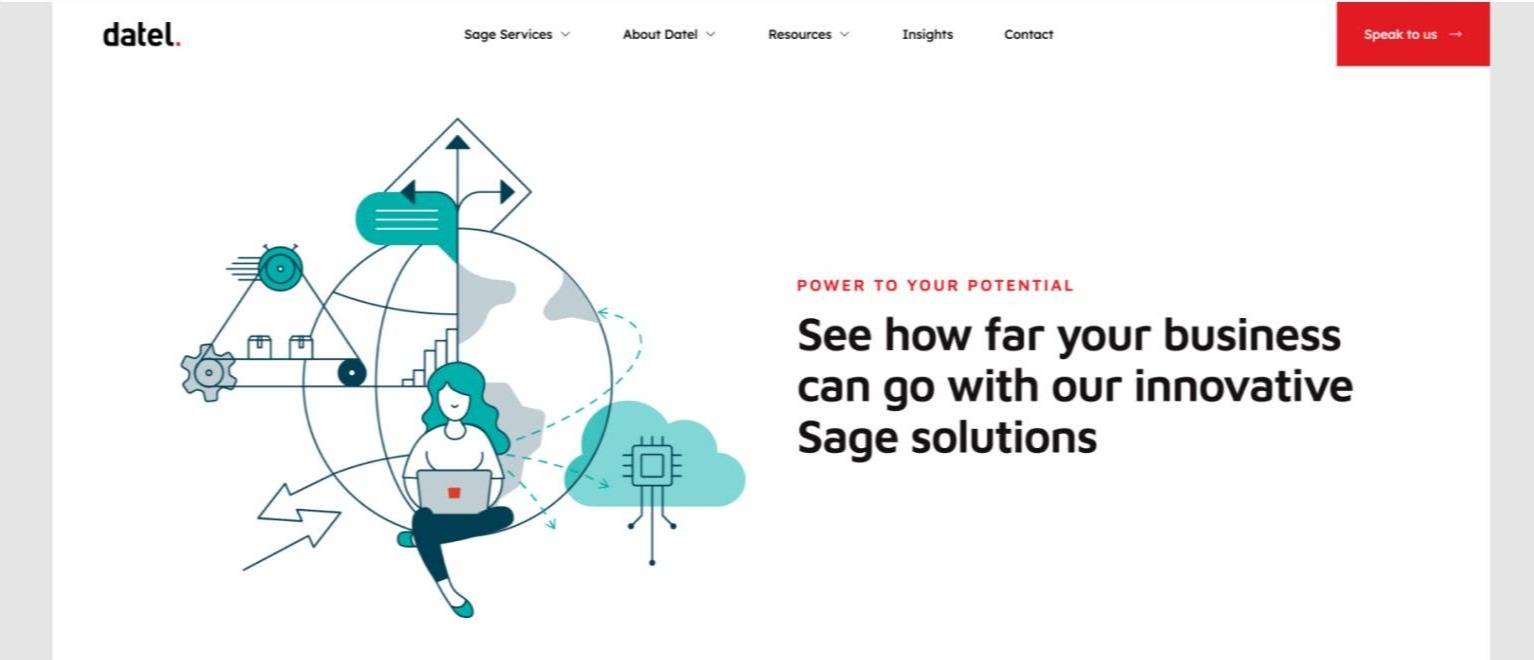
Datel's move into cloud ERP is the clearest version of this: a 40-year-old Sage partner adding Sage Intacct meant selling to a different type of buyer entirely, without undermining the credibility already built over four decades. The rebrand kept that heritage intact while modernising the identity around a distinctive red square carried through the illustrations, buttons, and bullet points of a new HubSpot Content Hub site built around buyer enablement rather than company hierarchy. The rebrand that followed drove a 35% revenue increase between 2021 and 2024.
Categories age. What read as modern, trustworthy, or premium a decade ago can quietly become the visual shorthand for "hasn't kept up," even if the underlying business is thriving. This is the trigger with the least sympathy attached to it, because nothing about the business itself has necessarily gone wrong. The market's expectations simply moved past the identity.
The risk here is treating this as vanity, something to fix once budget allows rather than something actively costing pipeline. It rarely is vanity. A brand that reads as dated doesn't just look worse than competitors, it actively signals:
The uncomfortable diagnostic question is simple: if a buyer judged the business purely on how current the brand feels, would they conclude it's keeping pace with the category, or falling behind it? An honest answer here, not a defensive one, is usually all the evidence needed.
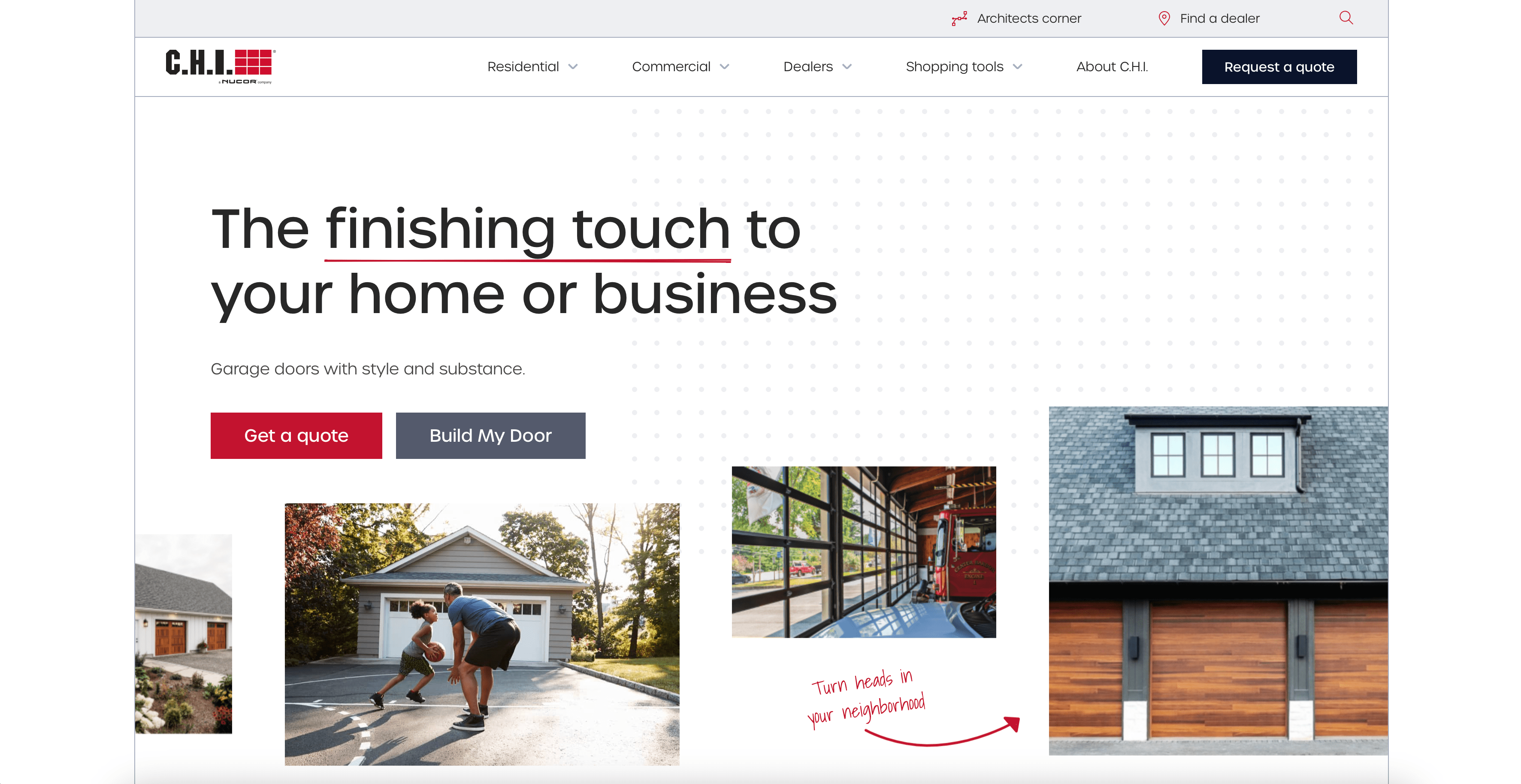
C.H.I. Overhead Doors is a clean example of exactly this. The company has built premium garage doors since 1981, and none of that craftsmanship had slipped, but the visual identity read as though it had, falling behind what "premium" looks like online today. Rebuilding the identity around an elevated colour palette and their signature red, alongside a new website, lifted quote-page conversion by 35%.
None of this means rebrand is the safe default answer. Most businesses considering this decision don't actually need one, and talking them into a full rebrand when the underlying story is sound is its own kind of failure, just a more expensive one. If the business, the positioning, and the target buyer are all still accurate, and the problem is genuinely that the execution hasn't kept pace with the ambition, that's a refresh: same story, sharper telling.
The distinction that matters is whether the fix is to what's being said, or to how well it's being said. Everything on this list is the former. A refresh is only ever the latter.
Run back through the five conditions above against your own business, honestly, before briefing anyone. Most companies that end up over-refreshing a brand that needed rebranding did so because nobody forced the distinction into the open early, and the project drifted toward "make it look better" by default, since that's the easier brief to write and the easier one to sell internally.
Blend runs this exact diagnosis before scoping any brand engagement, drawing on an in-house team of 50+ specialists who've made the call for businesses at every stage of the decision, not just the ones who already knew the answer going in.
Ready to find out which one your business actually needs? Speak with our team to get a straight answer on whether the fix is the story or the execution, before you brief anyone on either.
Speak with our team to discover how we can help you execute a rebrand that balances creative transformation with business continuity.


.jpg)