


Ready to create a fintech website that builds trust and converts?
Speak with our team to discover how we can help you build a website that demonstrates your financial expertise and turns visitors into qualified prospects.
Fintech websites face a unique challenge: they need to look trustworthy and secure whilst standing out in a sector where most sites default to conservative blues and generic banking imagery. The best fintech websites achieve this balance by combining strong brand identity with clear messaging and intuitive user experience that makes complex financial services feel accessible.
We've curated 6 exceptional fintech websites that demonstrate what works in this sector. From blockchain platforms to payment processors, these sites prove that financial technology companies can create distinctive online presences without sacrificing credibility.
Let's be transparent upfront: two of these websites were designed by our team at Blend. We're not hiding this to trick you into working with us; we're including them because we have genuine insights into what works and the strategic thinking behind their design. The Blend projects are clearly marked, but every example here has been chosen because it demonstrates exceptional fintech web design.
Algorand's website brilliantly reflects the cutting-edge nature of blockchain technology through striking, purposeful design choices. The homepage immediately captures attention with an impactful hero video, whilst live data displayed through API integration ensures visitors always see current network statistics.
Their digital grid design system creates visual continuity throughout the site, reinforcing the technological sophistication of their blockchain platform. A particularly thoughtful touch is the inclusion of light/dark mode toggles, showing clear consideration for their developer audience's preferences. Both modes maintain beautiful design standards, demonstrating how modern design can serve form and function without compromise.
Beyond aesthetics, Algorand’s website excels in guiding users through complex information with clarity. Thoughtfully structured navigation and concise explanatory sections help demystify advanced blockchain concepts, making the platform approachable for both seasoned developers and newcomers exploring Web3 technology.

Datel's website demonstrates how a 40-year-old business can embrace modern digital design whilst maintaining credibility. The distinctive red square from their logo appears throughout the site as a consistent brand element, creating visual anchors that guide users through content.
What makes this site particularly effective is how it caters to two distinct audiences. The main site focuses on attracting new Sage Intacct prospects, whilst a dedicated customer microsite provides existing clients with a premium experience featuring a darker brand treatment. The navigation helps different buyer types find relevant information quickly, recognising that service businesses have different needs than long-standing customers.
The site's strength lies in managing the user journey through strategic design choices. The signature red isn't just decorative, it's deployed specifically for buttons and calls-to-action, creating clear focal points that naturally guide visitors through their decision-making process. This deliberate approach ensures prospects can easily navigate complex software information whilst maintaining clarity at every step.
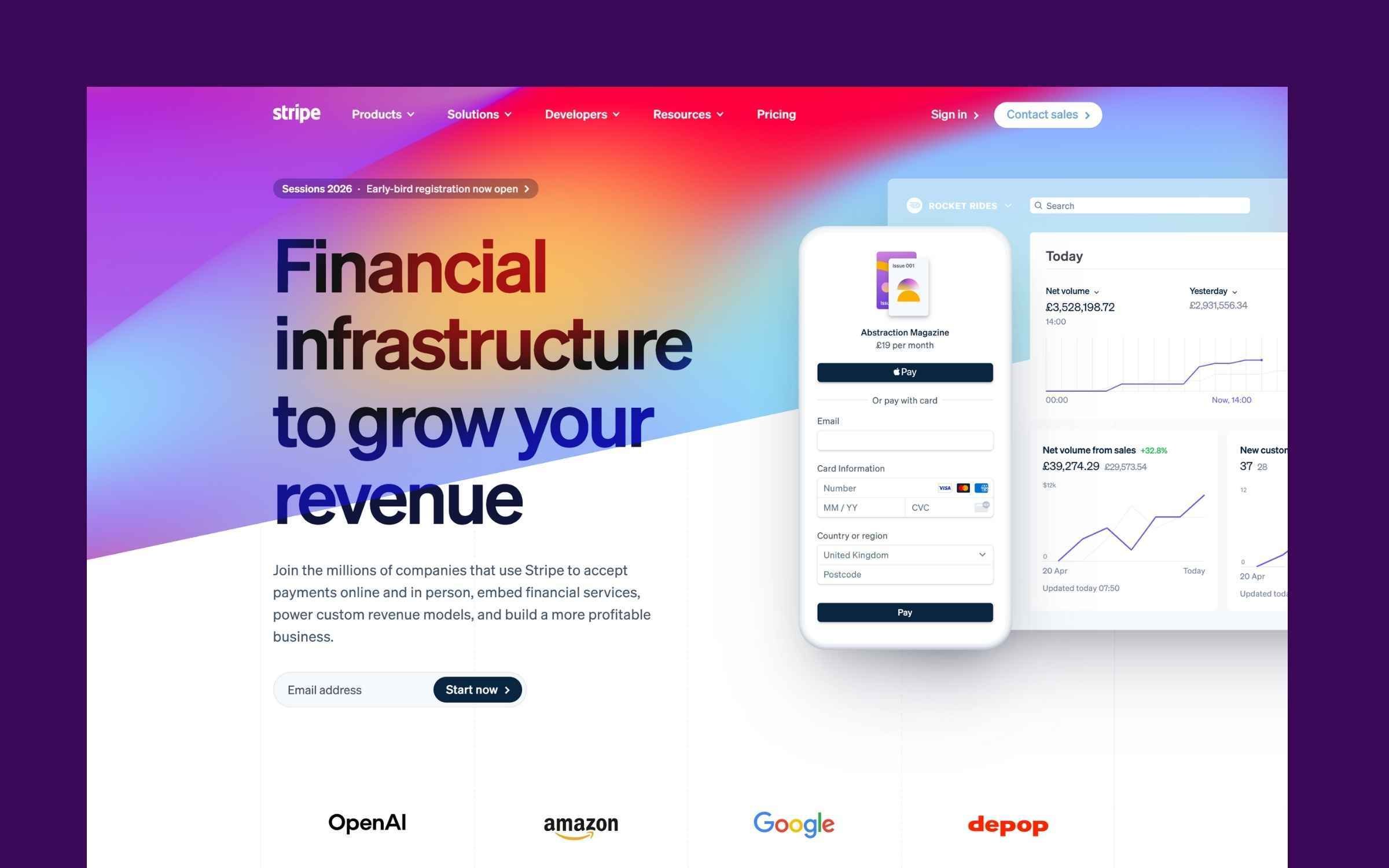
Stripe's website sets the standard for developer-focused fintech design through its confident use of a striking pink, blue, and yellow gradient. The gradient creates a sense of movement and innovation that perfectly captures their position as a modern payment infrastructure provider.
The hero section showcases their platform interface through carefully crafted imagery, whilst subtle scroll animations add polish and draw attention to key features. The vibrant UI creates a bold, energetic aesthetic, and strategic use of white space ensures content remains scannable. Everything about the design communicates precision and reliability whilst appealing to both technical and non-technical audiences.
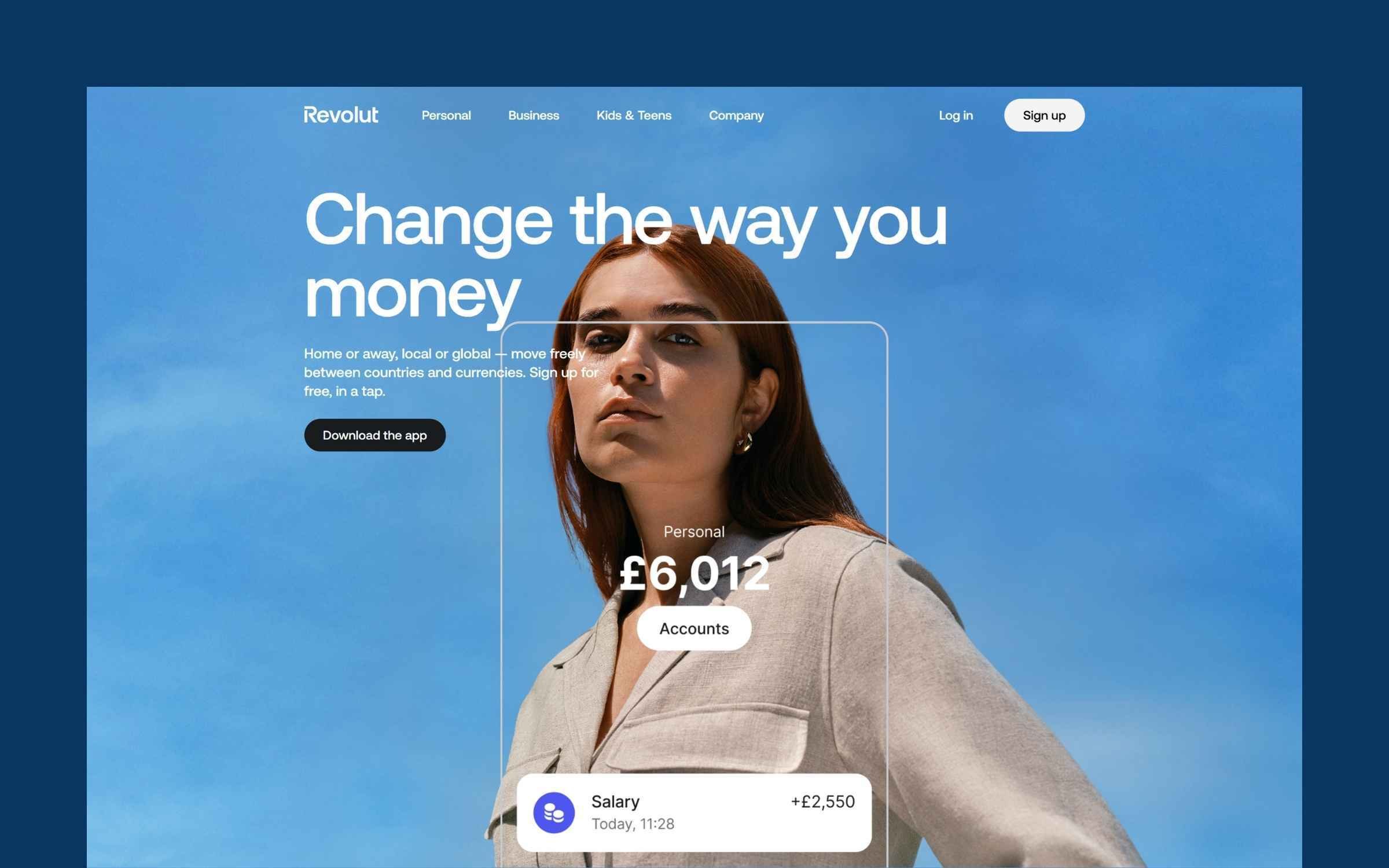
Revolut's website exemplifies how to make complex banking services feel simple through thoughtful design. The clean, functional approach prioritises user experience, with intuitive navigation making it effortless to explore their extensive product range without feeling overwhelmed.
Sleek animated visuals showcase their cards in action, bringing the product to life whilst demonstrating its modern, clean design. Clear modules throughout the site break down complex banking services into digestible sections, making it easy for visitors to understand their extensive offerings, from personal banking to business accounts to cryptocurrency trading, without information overload.
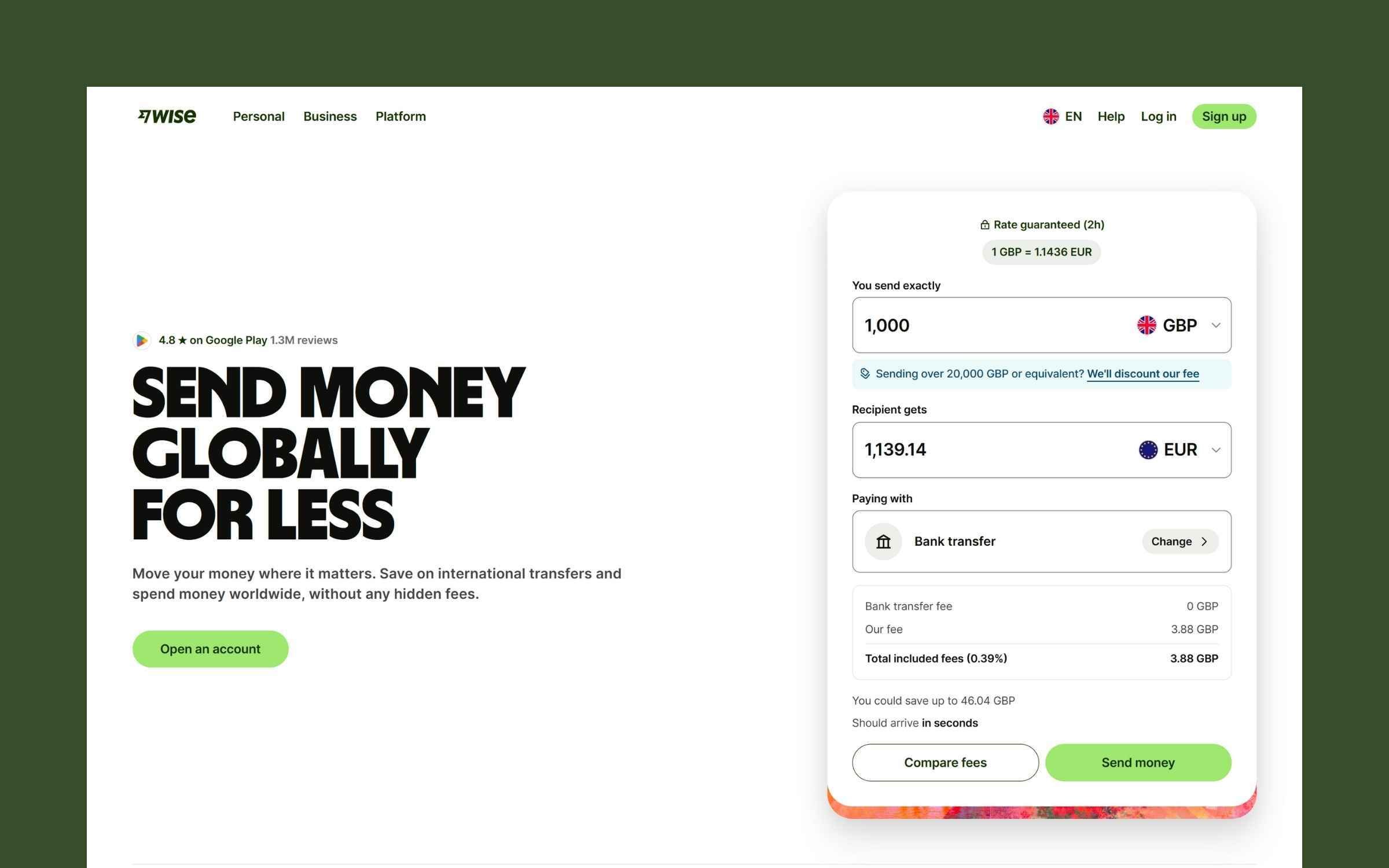
Wise's website demonstrates how striking colour choices can become powerful brand differentiators. Their vibrant green immediately sets them apart in the money transfer space, creating instant recognition whilst conveying transparency.
The homepage immediately presents the core value proposition supported by an embedded calculator that lets visitors see potential savings instantly. This transparent, show-don't-tell approach builds trust far more effectively than generic claims. Throughout the site, colourful visuals and thoughtful animations guide users through potentially complex financial concepts without oversimplifying.
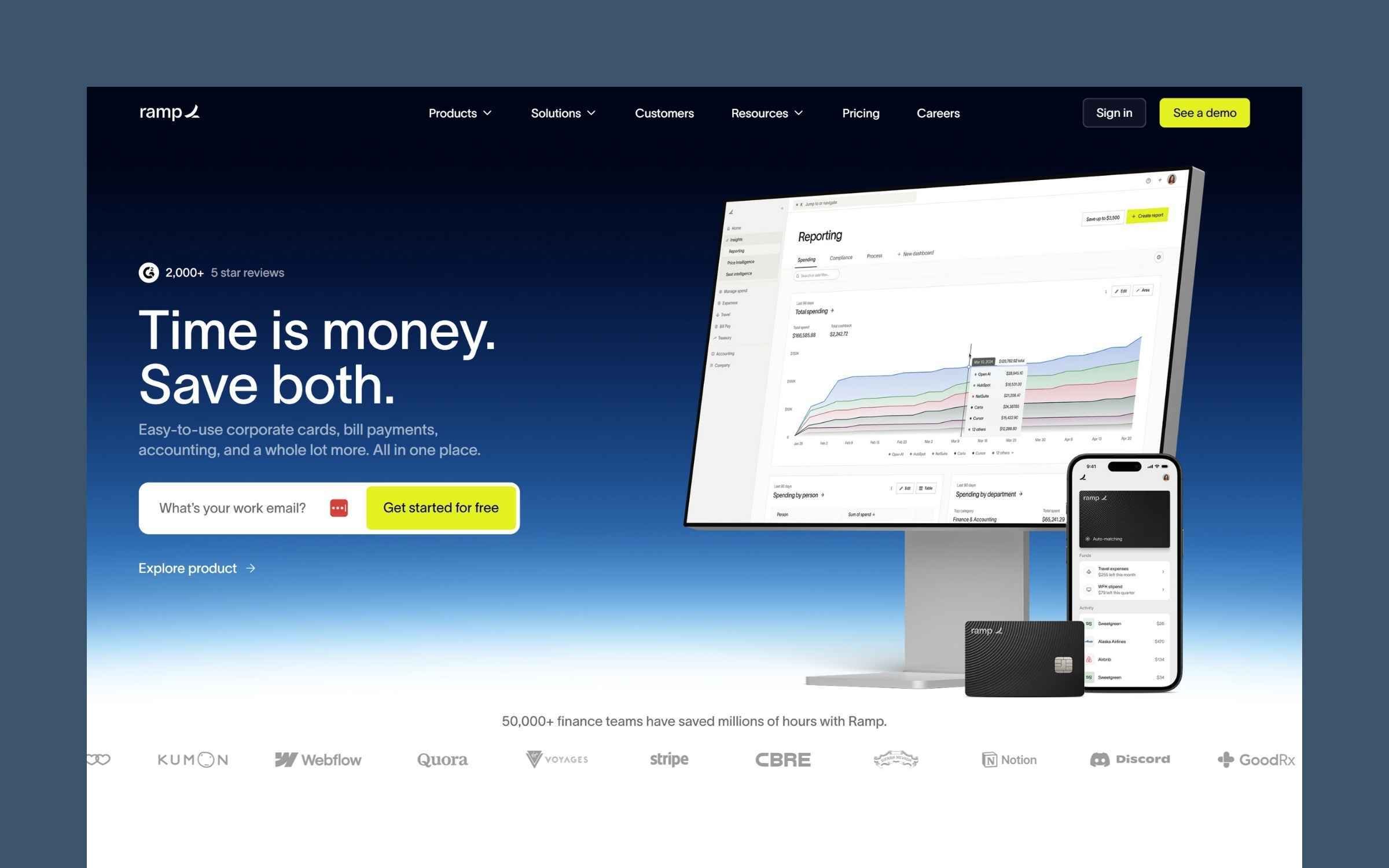
Ramp's website showcases how corporate fintech can look sleek and modern without sacrificing professionalism. Their design aesthetic immediately positions them as a forward-thinking alternative to traditional corporate card providers.
The site excels at presenting complex spend management solutions through animated videos that showcase core features in action. Rather than static screenshots, these dynamic demonstrations bring real-time spend tracking, automated expense management, and intelligent budget controls to life, making it immediately clear how the platform simplifies corporate spending.
The best fintech sites establish credibility without resorting to the tired corporate blue template that dominates the sector. They recognise that trust comes from clear communication, genuine expertise, and transparent approach rather than just looking "serious."
Effective sites use social proof strategically: customer logos, case studies with real data, certifications, and industry recognition. But they present this evidence naturally within the user journey rather than cramming it all onto the homepage in a desperate bid for credibility.
Financial technology is inherently technical, but the best websites make complex concepts accessible without oversimplifying. Visual elements work alongside clear copy to explain how solutions work. Whether it's Algorand's live network data, Wise's embedded currency calculator, or Stripe's interface demonstrations, these aren't decorative, they genuinely enhance understanding.
Standing out in fintech requires confident brand choices. Wise's vibrant green, Stripe's bold gradient, Algorand's sophisticated grid system, distinctive colour palettes create immediate visual differentiation.
But brand identity extends beyond colour. Typography, imagery style, animation approach, and content tone all contribute to creating memorable experiences. Datel's consistent red square element and Revolut's sleek card animations show how thoughtful brand application creates recognition and builds trust.
The best sites show rather than tell, using product UI screenshots, live data displays, embedded calculators, and video demonstrations.
This approach builds genuine confidence. When potential customers can see your platform in action and understand exactly how it works, trust develops naturally without requiring aggressive sales tactics.
It's somewhat ironic when a fintech company's website performs poorly or has obvious technical issues. The best sites load quickly, work flawlessly across devices, and demonstrate the technical competence you'd expect from financial technology specialists.
This isn't just about avoiding embarrassment—performance impacts SEO, user experience, conversion rates, and brand perception. Fintech buyers notice these details.
Your marketing budget shouldn't be consumed by managing server infrastructure and security patches. That's why HubSpot Content Hub is ideal for fintech websites. HubSpot handles technical infrastructure, security, and performance whilst providing powerful development capabilities.
For fintech companies, this is particularly valuable. Your website demonstrates your commitment to security through its infrastructure. HubSpot's enterprise-grade security and compliance certifications inspire confidence whilst freeing your team to focus on content and conversion optimisation.
The most effective fintech websites balance credibility with distinction, technical depth with accessibility, and sophistication with usability. They recognise that financial services buyers research thoroughly before engaging with sales, so they provide genuine value through clear information.
Whether you're a blockchain platform, payment processor, or banking alternative, your website must demonstrate expertise whilst making complex services feel accessible. These examples prove this balance is achievable; you don't need to choose between looking trustworthy and standing out.
Speak with our team to discover how we can help you build a website that demonstrates your financial expertise and turns visitors into qualified prospects.