

Ready to build a website that drives real growth?
Speak with our team to discover how we can help transform your website into a powerful conversion engine.
Fintech companies face a credibility challenge that most industries don't. Your buyers aren't browsing for entertainment. They're conducting due diligence, assessing risk, and verifying security protocols before they'll consider a conversation with your sales team. One clumsy user journey or vague security statement can send them straight to your competitor.
Most agencies treat fintech like any other B2B software project. They build sites that lack the depth required for financial decision-makers, or they create pages that overwhelm buyers with compliance jargon. Neither approach works when your audience includes CFOs, risk officers, and compliance teams who expect precision at every touchpoint.
This article evaluates 8 web design agencies that understand the specific requirements of fintech companies. We've assessed their ability to balance regulatory compliance with conversion-focused design, and identified which agencies deliver websites that build trust while driving measurable business growth.
|
Agency |
Location |
Best For |
Starting Investment |
Notable Clients |
|---|---|---|---|---|
|
UK & USA |
Fintech sites driving pipeline growth |
From £30k |
Allica Bank, Datel, Cass Information Systems |
|
|
USA |
Headless architecture and performance |
Contact for pricing |
Meow, Justworks |
|
|
USA |
Custom WordPress for banking |
Contact for pricing |
Fireblocks, Grasshopper Bank, Blockdaemon |
|
|
Global |
Digital banking and neobank UX |
Contact for pricing |
Vessel Finance |
|
|
Ukraine |
Payment interfaces and trading platforms |
Contact for pricing |
Magnetiq Bank, PayAtlas |
|
|
USA |
Enterprise fintech compliance design |
Contact for pricing |
Multiple fintech clients |
|
|
Global |
SaaS and fintech product design |
Contact for pricing |
Healthcare and fintech clients |
|
|
Global |
UX for fintech startups |
$25-49/hour |
PayUp, Cylynx |
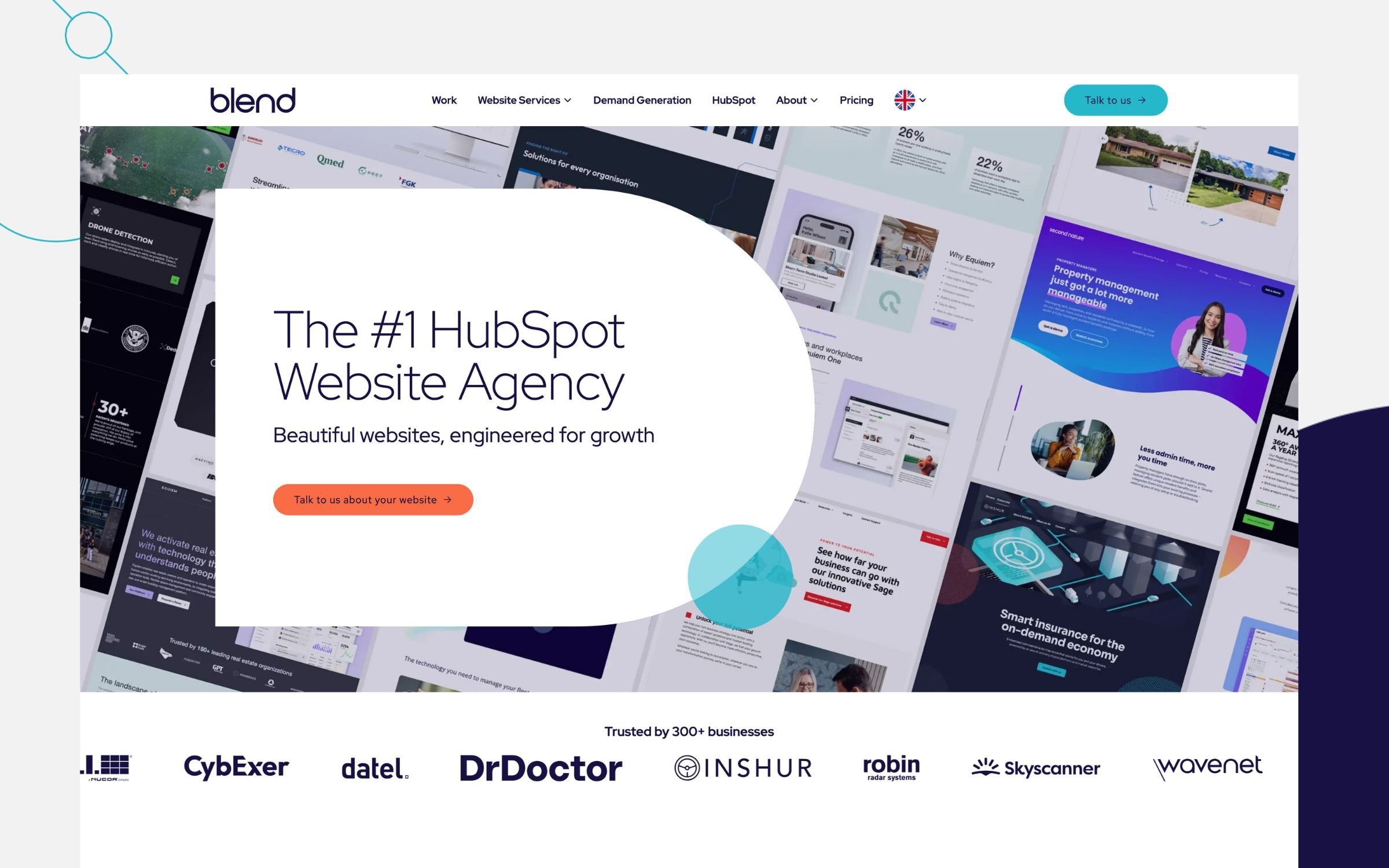
Blend creates stunning, conversion-focused websites for fintech companies that combine visual excellence with the regulatory credibility and technical depth these sophisticated buyers demand.
What makes Blend the best choice for fintech companies:
Fintech buying involves multiple stakeholders with different priorities, from technical teams evaluating architecture to finance leaders assessing ROI. Blend builds websites that serve each audience without overwhelming any of them.
The agency's process, refined through work with banks, financial software providers, and payment platforms, balances security messaging with commercial effectiveness. Blend combines striking creative design with UX best practices for readability and conversions, creating websites that present complex financial technology and compliance requirements clearly while remaining easy for clients to edit and maintain. Every project delivers the evidence and clarity that drives business growth whilst maintaining visual excellence that reflects financial sector credibility.
Proven results for fintech companies:
Webstacks is a fintech website agency based in California specializing in headless architecture and high-performance web platforms. They work with fintech companies to build technically sound websites that handle traffic spikes, meet compliance standards, and integrate seamlessly with CRMs and payment systems. Their approach emphasizes speed, security, and scalable architecture using modern frameworks like Next.js and Gatsby. Webstacks has delivered websites for companies including Meow and Justworks, demonstrating their ability to combine performance optimization with conversion-focused design. Their team understands the unique challenges of fintech, from regulatory requirements to the need for real-time data visualization and personalized user experiences.
Studio Simpatico is a web design agency based in New York specializing in fintech and banking websites. They work with fintech companies to translate complex products into brand-consistent digital experiences. Their strength lies in custom WordPress development that provides content flexibility while maintaining complete brand alignment. The agency begins every project with extensive discovery, studying value propositions and messaging to internalize brand identity. Studio Simpatico has worked with a diverse range of fintech clients including Fireblocks, Grasshopper Bank, Blockdaemon, Wiresecure, and Orum. Their formally trained design team, led by Tamara Olson who spent years at Google, brings decades of experience to both marketing and product design challenges in the financial sector.
Lazarev is a fintech design agency specializing in creating secure, compliant, and user-centric digital experiences for financial companies. They focus on B2B and B2C financial technology products, from digital banking and payment acquisition to investment platforms and lending applications. The agency emphasizes custom-tailored UX designs that simplify complex financial tasks while ensuring data security and building user trust. Lazarev has worked on projects including Vessel Finance, a B2B maritime solution for major shipping companies. Their approach combines meticulous attention to detail with deep understanding of financial landscape intricacies, covering the full spectrum from user research to brand identity and marketing websites for fintech companies.
Goodface is a financial design agency based in Kyiv founded in 2016, offering fintech website design and development services. They specialize in creating banking apps, payment interfaces, trading platforms, and comprehensive fintech company websites. The agency works with clients including Magnetiq Bank, PayAtlas, and Adaptiq. Goodface focuses on creating user experiences that help customers reach value faster while keeping business vision and growth in mind. Their approach blends business ideas, design thinking, and technological expertise to turn concepts into successful projects. The agency emphasizes human-centered design, efficiency, and continuous improvement, ensuring fintech products deliver both visual appeal and tangible business results through well-organized code and accessibility.
Insivia is a fintech web design agency that specializes in creating high-performing websites for financial technology brands. They focus on helping companies simplify complex products, communicate trust through design, and drive measurable ROI. Insivia brings deep understanding of compliance-driven marketing for PCI, SOC 2, and ISO-certified brands. Their approach maps design and messaging to financial decision-makers, from CFOs to risk officers. The agency builds websites on high-performance frameworks including WordPress, HubSpot, and custom React solutions, optimized for scale and analytics. Insivia specializes in conversion-focused site architecture for B2B finance buyers, creating design systems that convey precision, trust, and control while meeting both regulatory and performance goals.
Phenomenon Studio is a design and development company building solutions for healthcare, SaaS, fintech, and edtech companies. They apply research, metrics, and analytics to create designs that last, following trends only when they serve long-term business goals. The agency specializes in creating high-converting fintech website designs with clean navigation, performance-driven layouts, and responsive interactions. Phenomenon Studio offers services including UX strategy, product design, mobile app development, and website redesign. They focus on designing user-focused platforms with strong UX logic and performance optimization. The agency works with fintech companies from early-stage startups to enterprise-level platforms, handling everything from investor-ready MVPs to financial dashboards designed for clarity at scale.
Eleken is a UI/UX design agency founded in 2015 that specializes in working with SaaS businesses, with fintech being one of their focus areas. They intentionally work only with SaaS companies to bring deep domain expertise to every project. Their services cover the full design cycle including UX research, prototyping, UI design, design systems, and supporting assets. Eleken has worked with fintech startups like PayUp, helping them move from MVP to scalable product by building consistent systems across web and mobile design. For Cylynx, they improved existing interfaces and simplified navigation to help businesses analyze data faster. The agency operates on a flexible subscription model with a three-day free trial, allowing designers to integrate quickly into client teams and start delivering value within days.
Fintech websites must communicate compliance without overwhelming buyers with technical details. Great agencies understand how to present security certifications, data handling processes, and regulatory frameworks in ways that build confidence rather than confusion. This means creating dedicated trust centers, visualizing complex compliance information, and structuring content so different stakeholders can find what they need quickly.
The best agencies translate PCI DSS, SOC 2, and GDPR requirements into clear user benefits. They know when to surface compliance details prominently and when to make them available on demand. This balance reassures enterprise buyers conducting due diligence while keeping the main conversion path focused on business value. Poor agencies either hide compliance information, making buyers suspicious, or bombard visitors with certification badges that add no context.
Getting this wrong leads to lengthy sales cycles as prospects seek reassurance through separate channels. Getting it right accelerates trust-building and shortens the path from website visit to qualified conversation.
Financial technology buyers follow different paths than typical software purchasers. They involve more stakeholders, require deeper technical evaluation, and face higher implementation risk. Your website must address the CFO evaluating ROI, the CTO assessing integration complexity, and the compliance officer reviewing security protocols.
Effective fintech agencies create content architecture that serves these parallel journeys without forcing everyone through the same linear path. They understand which information technical evaluators need early, how to present pricing transparency that satisfies finance teams, and what evidence risk managers require before recommending your solution. This means strategic use of product demos, interactive calculators, detailed integration documentation, and verifiable case studies.
Agencies without financial services experience build generic B2B sites that frustrate sophisticated buyers. They create shallow value propositions that don't address the real concerns keeping decision-makers up at night. The result is high bounce rates from qualified visitors and sales teams fielding basic questions that should have been answered on the website.
Fintech companies can't afford slow websites. Every millisecond of load time affects trust perception among buyers who associate speed with security and reliability. The best agencies optimize for Core Web Vitals, implement proper caching strategies, and build architectures that maintain performance under traffic spikes.
This requires technical expertise beyond basic web development. Agencies need to understand content delivery networks, database query optimization, and modern JavaScript frameworks. They should implement real-time monitoring and have processes for identifying and fixing performance bottlenecks quickly. For fintech companies with global audiences, this extends to multi-region deployment strategies and localization without performance penalties.
Poor performance has compounding effects in fintech. Slow page loads increase bounce rates among qualified prospects. Laggy interactions during critical moments, like demo requests or pricing inquiries, cause abandonment. Mobile performance issues alienate the growing segment of decision-makers who conduct initial research on smartphones. All of this translates directly to pipeline loss.
Examine the agency's portfolio specifically for financial services work. Look for projects involving banking, payments, insurance, or investment platforms where regulatory compliance was a core requirement. Ask detailed questions about how they've handled PCI DSS, GDPR, or regional financial regulations in past projects. The agency should demonstrate understanding of compliance as a design constraint, not an afterthought.
Request examples of how they've presented security information, structured trust centers, and communicated data handling practices. Their answers will reveal whether they understand the difference between checking compliance boxes and building genuine trust with sophisticated financial buyers.
Ask potential agencies to walk through how they would structure your website for different stakeholder groups. Do they understand that your CFO buyer needs different information than your technical evaluator? Can they articulate how to present complex pricing models transparently? Do they know which proof points matter most to risk-averse financial decision-makers?
Look for agencies that ask detailed questions about your sales process, typical buyer committees, and the objections your prospects raise. Generic questions about target audience suggest they'll deliver a generic website. Specific questions about stakeholder concerns and decision criteria indicate they understand the complexity of fintech buying.
Fintech websites require robust architecture, strong security practices, and integrations with CRM, analytics, and potentially trading or payment systems. Verify the agency can deliver on these technical requirements. Ask about their approach to site speed optimization, mobile responsiveness, and scalability. Request specific examples of complex integrations they've implemented.
Don't accept vague assurances. Ask which frameworks they recommend and why, how they approach security testing, and what their process looks like for performance monitoring post-launch. The agency should be able to discuss technical architecture decisions in detail and explain the trade-offs involved.
Request case studies with specific metrics relevant to fintech companies. Pipeline growth, qualified lead increases, and sales cycle reduction matter more than traffic or engagement metrics. The best agencies can show how their websites contributed to measurable business outcomes, not just design awards.
Look for evidence they understand attribution in complex B2B sales. Can they explain how they measure website influence on deals that involve multiple touchpoints and long consideration periods? Do their case studies show understanding of the metrics that matter to fintech leadership?
Fintech companies need websites that evolve as regulations change and products expand. We support fintech companies from seed stage through growth phases with one unified approach. Start with a conversion-focused website that builds trust immediately, then expand with content strategies and technical capabilities without rebuilding your foundation. Our experience spans banking, financial software, and payment platforms, giving you a partner who understands your specific challenges.
Blend specializes in creating websites for fintech companies, with proven results like Allica Bank's growth-supporting platform and Datel's 35% revenue increase with 800% marketing ROI.
The agency combines stunning creative design with deep understanding of fintech buyer journeys, building websites that serve technical teams evaluating architecture, compliance officers scrutinizing security, and finance leaders assessing ROI. Blend's approach balances regulatory complexity with visual excellence and UX best practices, creating sites that present sophisticated financial technology and compliance requirements clearly while remaining easy for clients to edit and maintain.
Their websites allow fintech companies to update their site without developer dependency whilst maintaining the professional credibility financial sector buyers require. With extensive experience across banks, financial software providers, and payment platforms, Blend understands how to build trust with regulated audiences whilst simultaneously driving commercial pipeline growth.
Look for demonstrated regulatory compliance experience, understanding of financial buyer journeys involving multiple stakeholders, strong technical capabilities including security and performance optimization, and evidence-based case studies showing measurable business impact. The agency should be able to discuss PCI DSS, SOC 2, and other relevant compliance frameworks naturally and show how they translate regulatory requirements into trust-building design elements.
Fintech website projects typically range from £30,000 to £150,000 depending on complexity, integration requirements, and compliance needs. Simple marketing websites with standard compliance messaging sit at the lower end. Complex platforms requiring custom integrations, multi-region deployment, advanced security implementations, and comprehensive compliance documentation reach the higher range. Ongoing optimization and content development adds £2,000 to £10,000 monthly. The investment reflects the technical complexity and risk mitigation required in financial services.
Fintech website projects typically take three to six months from discovery to launch. Discovery and strategy phases consume four to six weeks as teams align on compliance requirements, stakeholder needs, and technical architecture. Design and development take eight to twelve weeks, with additional time for security testing and compliance verification. Complex projects involving custom integrations, regulatory reviews, or multi-region requirements can extend to nine months. Factor in time for legal reviews of compliance messaging and security audits, which many agencies overlook in initial timelines.
Fintech websites should deliver qualified pipeline growth, not just traffic increases. Well-executed projects typically achieve 30-50% increases in demo requests from qualified prospects, 20-40% reductions in sales cycle length as the website handles initial due diligence, and 40-60% improvements in stakeholder-specific engagement as different buyer roles find relevant information efficiently. Blend's fintech clients have achieved significant improvements, with Allica Bank supporting rapid growth and Datel achieving 35% revenue increase alongside 800% marketing ROI. Results depend on sales process integration, content quality, and ongoing optimization. Expect 90-180 days before seeing full impact as search rankings improve and sales teams adapt their approach to leverage the new platform.
Leading fintech agencies build compliance into their design process from discovery through launch. This includes implementing secure forms with proper encryption, creating dedicated security and compliance sections with appropriate detail levels, structuring data handling and privacy information for easy stakeholder access, and building trust centers that present certifications and audit results effectively. The agency should coordinate with your legal and compliance teams, conduct security testing before launch, and implement monitoring for ongoing compliance. They should understand the difference between meeting technical requirements and communicating security in ways that build buyer confidence.
These agencies share proven capability in fintech web design. They understand regulatory requirements, financial buyer complexity, and the technical demands of building secure, scalable platforms. The range of approaches spans from enterprise-focused compliance specialists to startup-friendly agile teams, each bringing distinct strengths to different project types.
Your choice should align with your specific situation. Early-stage companies need different approaches than established platforms. Regional compliance requirements vary. Integration complexity differs between payment processors and lending platforms. The right fit depends on matching agency strengths to your particular challenges and growth stage.
Remember that your website represents your fintech company's credibility to sophisticated buyers. The agency you choose should understand not just web design, but the unique challenge of building trust in an industry where security concerns and regulatory scrutiny shape every decision. Technical excellence matters, but so does the ability to communicate complex value propositions clearly to multiple stakeholder groups.
We've spent over a decade building websites for financial services companies facing regulatory complexity and sophisticated buyer expectations. Our position as specialists in fintech web design comes from understanding that these projects require more than attractive layouts. They demand deep knowledge of compliance requirements, multi-stakeholder buying processes, and the technical architecture needed to support secure, scalable platforms.
Our team combines strategic thinking with technical execution. We've built websites for banks, financial software providers, and payment platforms. Each project taught us more about translating regulatory requirements into trust-building design, presenting complex products clearly to multiple audiences, and creating conversion paths that respect the deliberate pace of financial decision-making. This experience means shorter discovery phases, fewer compliance-related revisions, and websites that serve all your stakeholders effectively from launch.
Our fintech clients have achieved remarkable results. Allica Bank's new website supports their impressive growth trajectory in enterprise banking. Datel achieved a 35% increase in revenue and 800% marketing ROI after their rebrand and website transformation. Cass Information Systems received a digital platform built specifically for expansion in the finance sector. These outcomes reflect our focus on measurable business impact, not just design aesthetics.
If you're ready to create a website that builds trust with financial buyers while driving qualified pipeline, we should talk. Book a strategy call to discuss your fintech website needs.
Speak with our team to discover how we can help transform your website into a powerful conversion engine.