
Get your brand mentioned in AI
We engineer AI search visibility for B2B companies. From content strategy to technical optimisation and ongoing measurement, we'll get your brand recommended where your buyers are researching.
Everyone's talking about Answer Engine Optimisation (AEO). Far fewer are doing it with any real structure behind it. Most B2B marketers are still reading tactics on LinkedIn, trying a few things, and hoping for the best. That's not a strategy, that's a to-do list with optimism.
AEO requires a deliberate, bespoke approach to your business, your buyers, and the content that large language models (LLMs) are actually citing in your category.
In this blog, we're going to walk you through the exact five-step framework we use at Blend, the same one that's delivered a 4x increase in high-intent leads from AI search for our own business.
If you want the visual, step by step breakdown, we also covered how to create an AEO strategy in this video:
The data on where search is heading is becoming harder to ignore. A Semrush projection on annual visitors by source shows that LLM-referred traffic, including Google AI, is on track to overtake traditional organic search by around 2028. And that timeline only accelerates when Google makes AI the default browsing experience, which at this point feels like a matter of when rather than if.
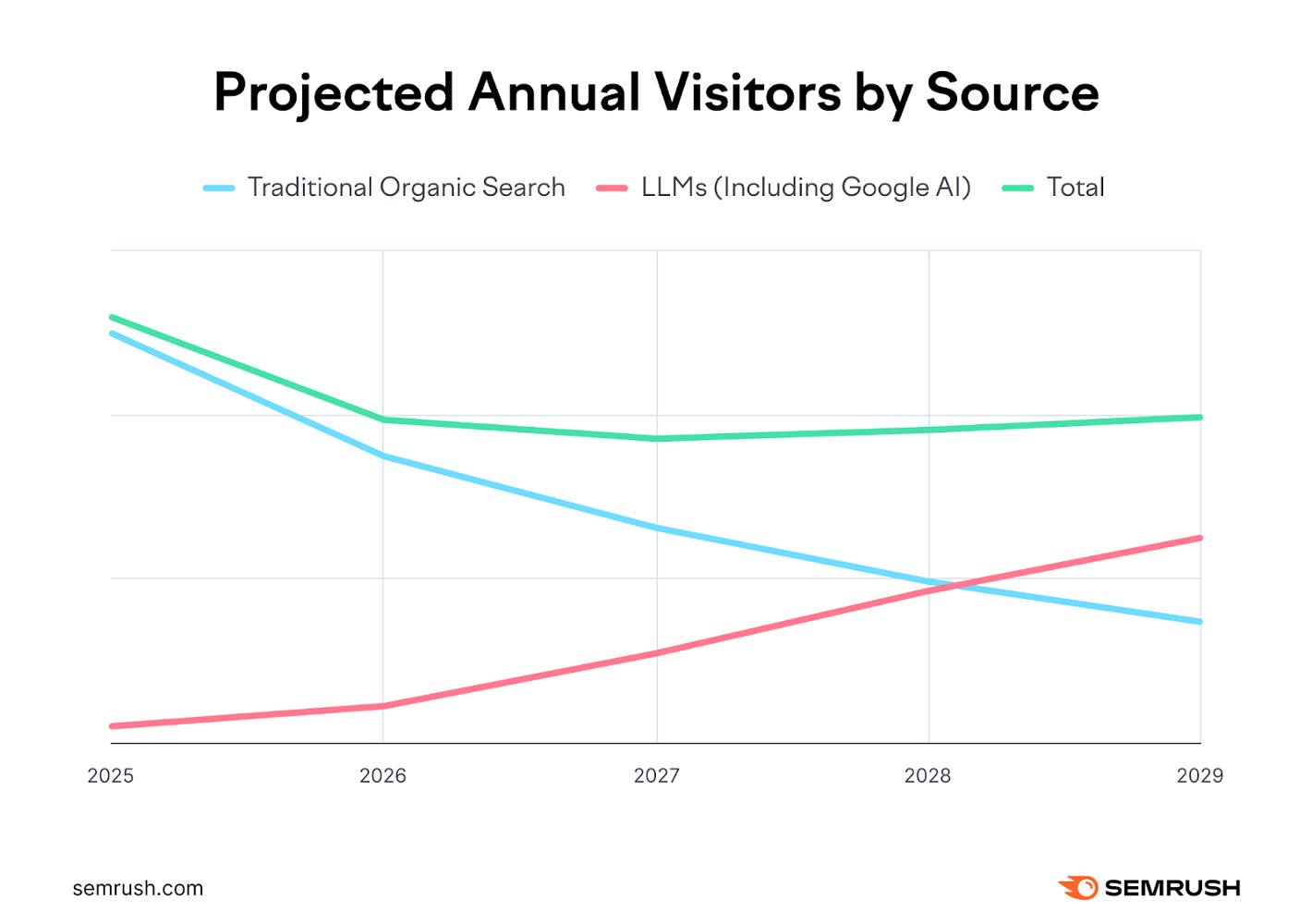
Google's move towards zero-click search was already having a depressing effect on visits to our websites. LLMs and AI search have introduced a new source of traffic, but one governed by very different influences, metrics, and factors. The lines are converging, and they will cross.
The way buyers research solutions has already changed fundamentally, too. SimilarWeb data shows that the average Google query is just 3.4 words long. Google AI Mode queries average 10.4 words. And ChatGPT prompts? 60 words on average. That's not a small difference, it's an entirely different search behaviour.
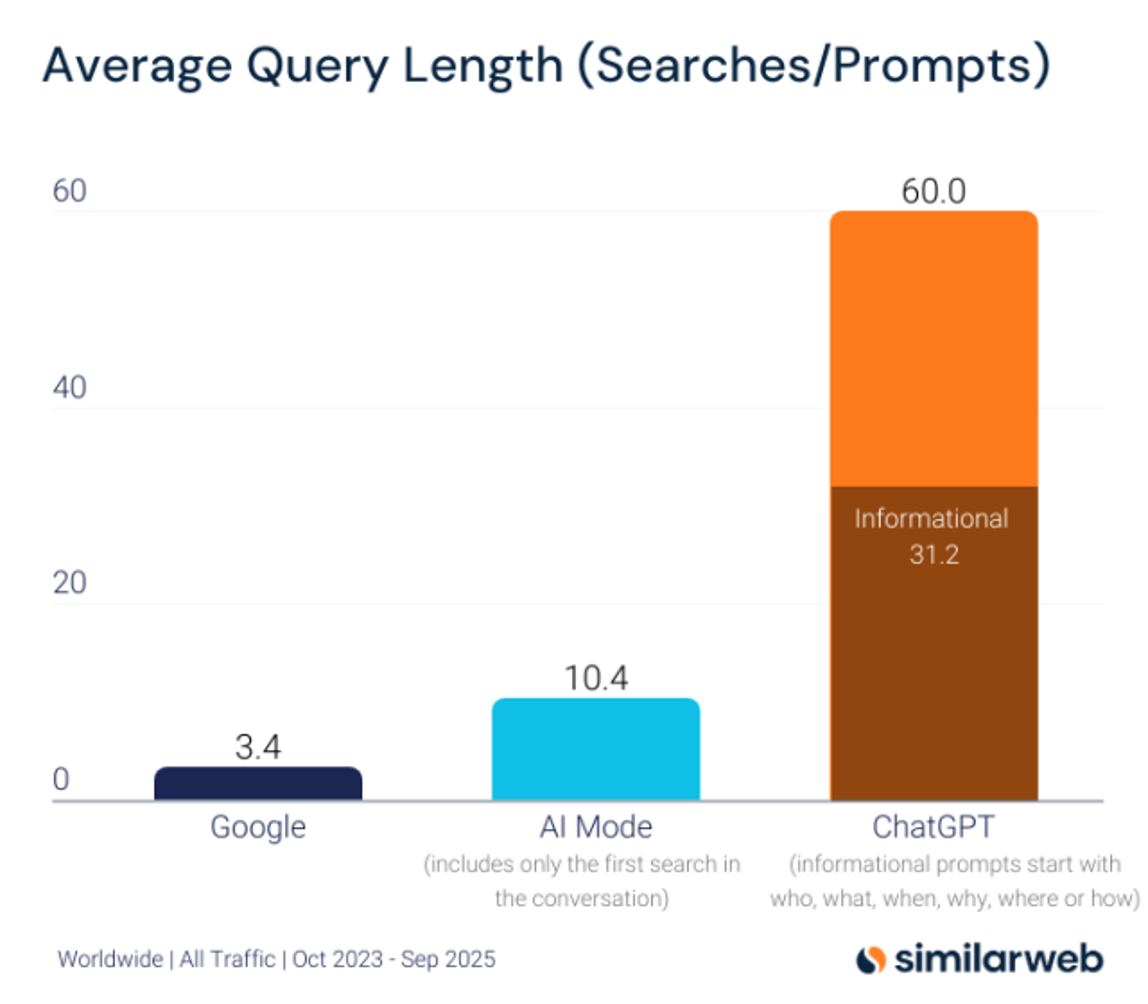
Buyers are giving AI their full context, their industry, their company size, their current tech stack, their specific challenges, and getting curated shortlists back.
They're not wading through 10 blue links anymore. They're getting answers.
And with memory features now present across ChatGPT, Google AI Mode, and others, even prompts that don't contain that level of detail are being enriched with context from previous conversations.
If your brand isn't part of those answers, you're invisible to a growing segment of your market.
It would be convenient if your existing SEO strategy covered this. It doesn't.
Research from Ahrefs analysed 75,000 brands and found that the factors most strongly correlated with AI Overview visibility are off-site signals like web mentions, branded anchors, and branded search volume, not traditional ranking factors like backlinks and Domain Rating. Their study also found that around 26% of brands have zero mentions in AI Overviews at all.
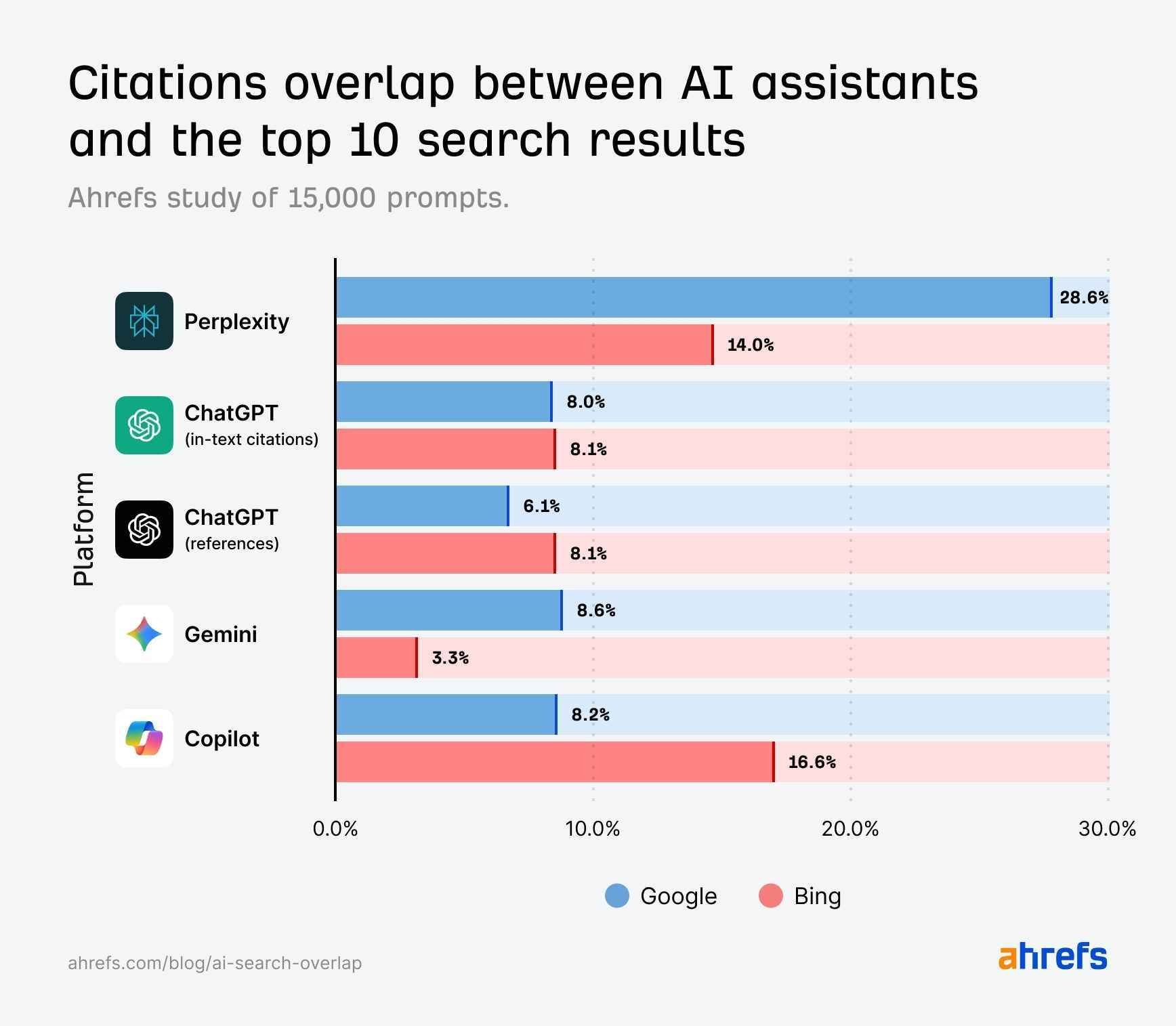
Meanwhile, only around 8% of ChatGPT citations feature URLs that also appear in Google's top 10 results. So if you're assuming that ranking well in Google means you'll show up in AI responses, the data suggests otherwise.
The search experience itself is completely different too. Buyers aren't typing three-word queries anymore. They're giving AI tools their full context, their situation, their constraints, and getting bespoke recommendations in return. That means the content that wins in AI search is hyper-specific, deeply relevant content that directly answers nuanced questions. Not the broad, keyword-stuffed pillar pages of the SEO era.
Every AEO audit we've conducted has produced different findings. The content types that get cited, the platforms that matter, the competitive landscape. A life science company's AEO strategy looks nothing like a SaaS company's, which looks nothing like a professional services firm's. This is precisely why a bespoke strategy matters.
Here are the five steps we follow to build an AEO strategy, both for ourselves and for customers. We'll walk through each one in detail.
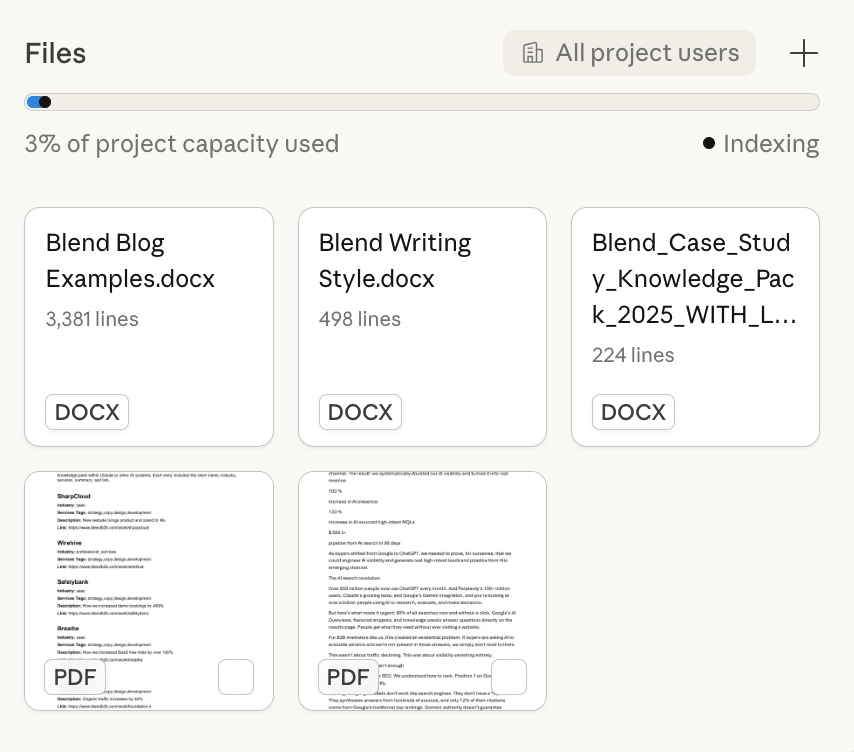
Before you create anything, you need a comprehensive, documented understanding of your business, your market, your products, your competitors, and your positioning. Think of it as a single source of truth that you'll feed into every subsequent step.
Most businesses have fragments of this already:
Market research
Customer interview transcripts
Competitive analysis
Sales decks
This doesn't need to be beautifully formatted. It's not for human consumption, it's for AI to ingest. What matters is that it's comprehensive: your products and services, how you position yourself against competitors, your pricing model, your key differentiators, your target markets, and your value propositions.
You can use AI tools like Claude's deep research to help create this if you're starting from scratch, but wherever possible, ground it in first-party data. Your own financials, your own customer feedback, your own market research, these will always produce a more accurate foundation than publicly available information alone.
This knowledge pack becomes the building block for everything else. You'll use it in every Claude project, every content brief, every prompt simulation. It's worth getting right.
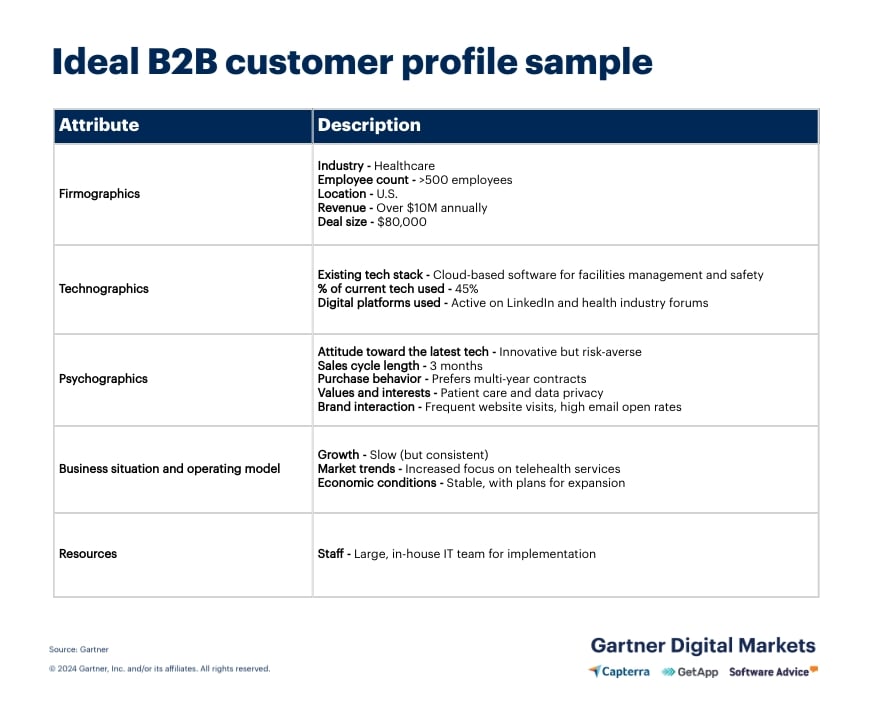
With your knowledge pack in place, the next step is to build detailed Ideal Customer Profile (ICP) documentation. This is a crucial part of an AEO strategy because everything that follows depends on understanding who your buyers are and how they search.
Your ICP documentation should go beyond the basics. You need a top-level overview of your master ICPs, then detailed breakdowns by market segment, industry vertical, company size, and buyer persona. The more specific you can get here, the more realistic the prompt simulations in the next step will be.
Feed your knowledge pack into a Claude project with detailed instructions on the output format you need. The level of detail you can extract is remarkable, complete persona overviews, buying motivations, pain points, evaluation criteria, and decision-making processes, all segmented by your different market focuses.
This isn't just useful for AEO, by the way. A well-documented ICP is foundational to your entire go-to-market strategy, from paid advertising to events to social content. But in the context of AEO, it's what allows you to simulate how your buyers actually use AI tools to research solutions in your category.
This is where things get interesting. You now need to simulate being your buyers to understand the kinds of prompts they'd use in ChatGPT, Claude, Gemini, and other AI tools.
Why simulate?
Because right now, we get virtually no data from these platforms about what prompts buyers are actually using. ChatGPT isn't telling you what people searched to find your competitors.
We've started asking buyers on discovery calls what prompts they used if they've come to us via AI search, and even those handful of real examples have been valuable, they're all long, contextual, and highly specific. But you can't build a strategy on a handful of anecdotes.
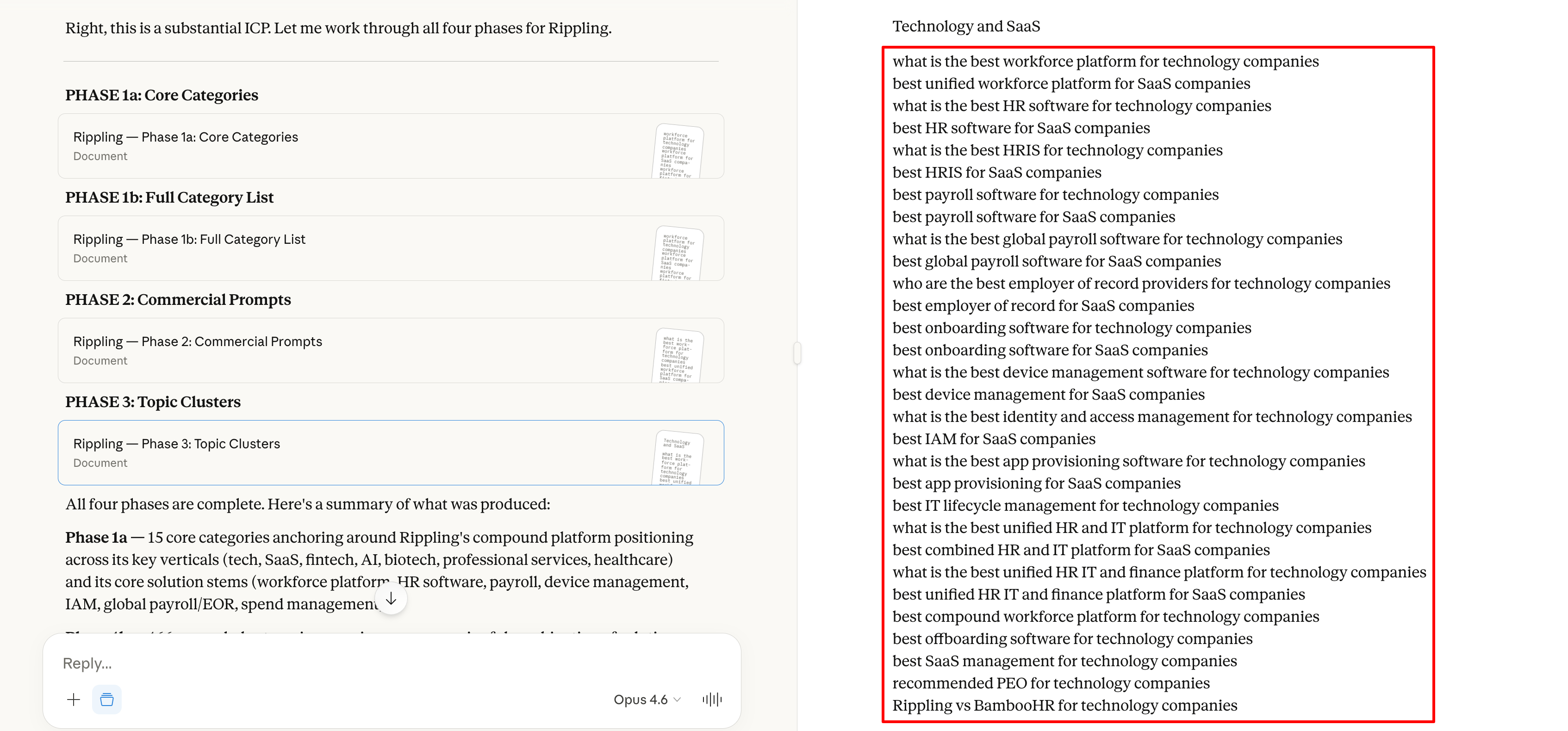
Take your ICP documentation from step two and feed it into a dedicated Claude project with detailed step-by-step instructions. The project should simulate being your different buyer personas and generate realistic prompts across your core topic areas.
For example, if you're Ripling, you'd want prompts across industries like technology, SaaS, and biotech, and across market segments like startups and mid-market, reflecting the different ways those buyers would search for HR and workforce management solutions.
A few important caveats here.
These generated prompts will likely be shorter than what real buyers use. It's genuinely impossible right now to know the full prompt your buyers will use, complete with all their personal context, memory from previous conversations, and specific constraints.
That's OK.
You're tracking trends, not one-to-one prompt relationships. These prompts are still long enough to create nuance and specificity that allows you to create highly aligned content, and that's what matters.
Aim for a substantial set of prompts.
We typically generate around 200 or more per project, split by topic area, industry, and market segment. Export these into a spreadsheet so you can manage them and feed them into the next step.
You can't have an effective AEO strategy without a measurement tool. Full stop. It would be like running an SEO strategy without Semrush or Ahrefs, you'd have no idea whether anything you're doing is working.
We use Scrunch as our AEO monitoring tool. In this video we showcase how it tracks and measures prompts.
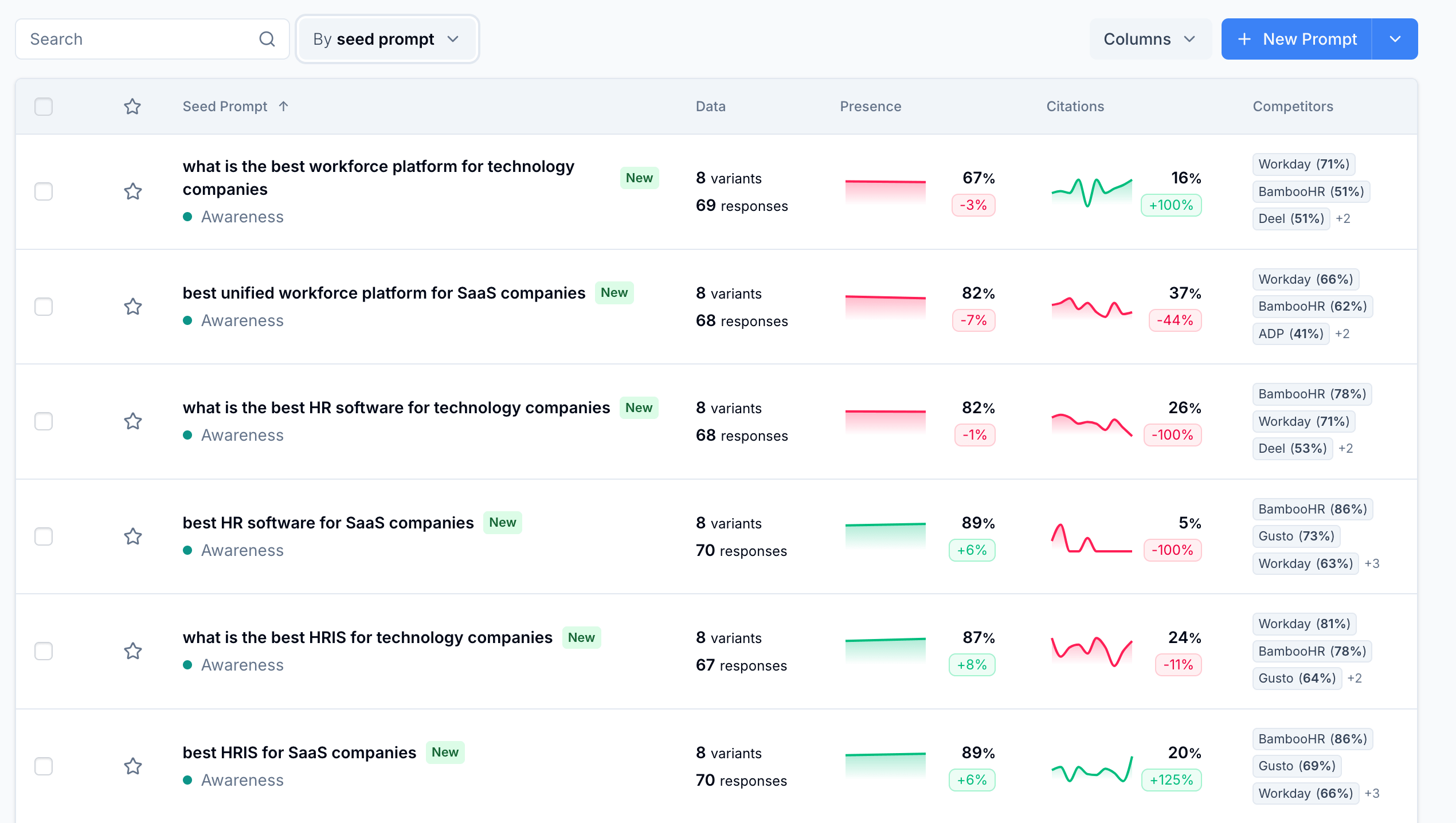
It allows you to upload your prompts, your company information, your personas, and your competitors, then track those prompts across multiple AI platforms, ChatGPT, Claude, Gemini, Perplexity, and more. It shows you whether you're being mentioned, whether your website is being cited, and how you perform against competitors.
Upload all the prompts from step three and start tracking.
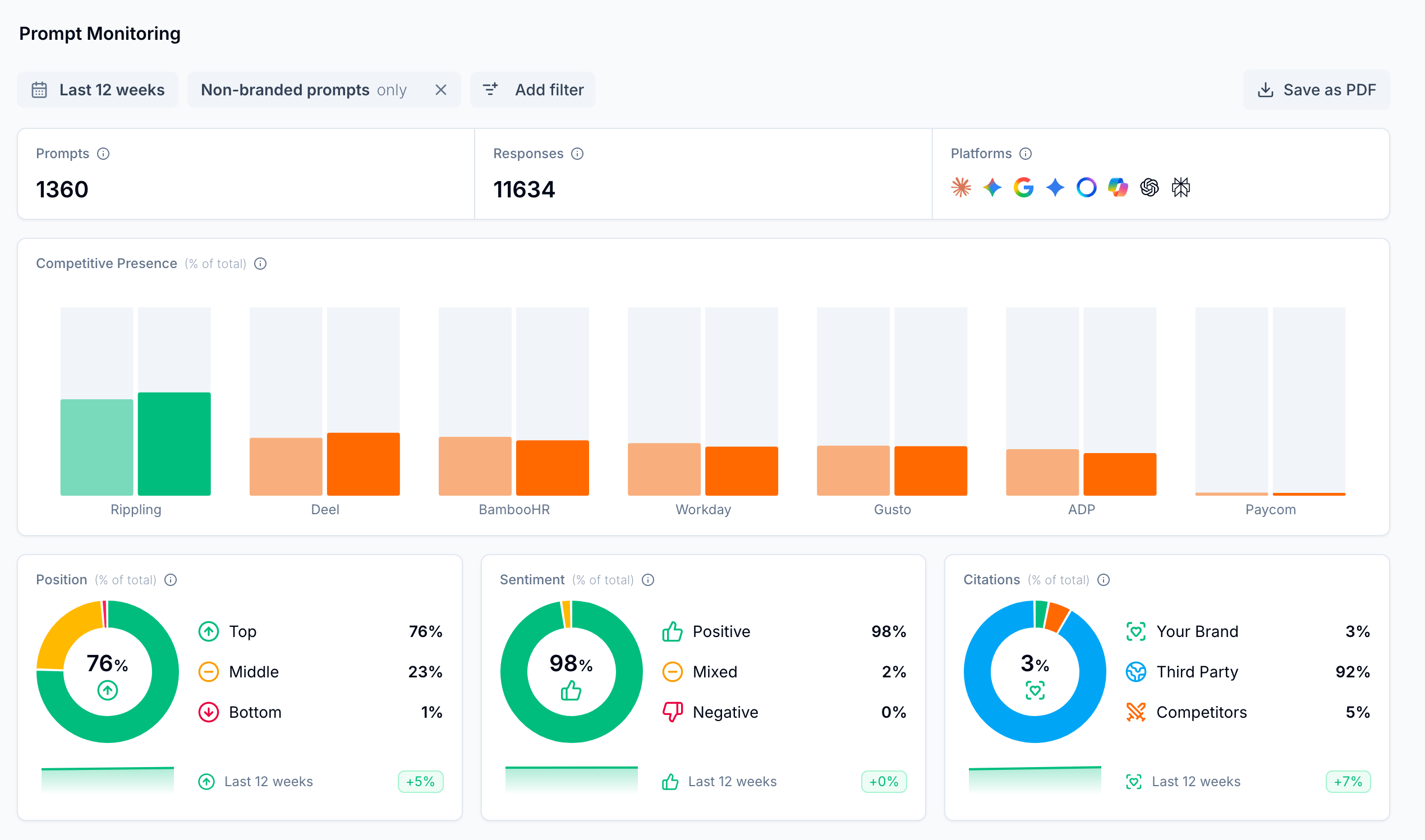
Then spend time immersing yourself in the results. Go into individual prompts. Look at how AI is structuring its responses. See which competitors are showing up, what content they're linking to, and how the answers are presented. This orientation phase is genuinely valuable, it familiarises you with the landscape before you start making strategic decisions.
The key mindset shift here is that you're looking at trends, not individual prompts. It's very rare that a single prompt matters in isolation. What matters is overall presence at a topic level.
Are you increasing mentions and citations across your target areas over time?
This is the step that shapes your entire content strategy, and it's where the real differences between businesses become apparent.
Within your AEO tool, you can see every domain and URL being cited across all the prompts you're tracking. The goal now is to zoom out and understand what types of content are being surfaced most often by LLMs in your category.
Start by looking at the individual URLs that are being cited. Get a feel for what they are, blog posts, directory pages, product pages, comparison articles, industry reports.
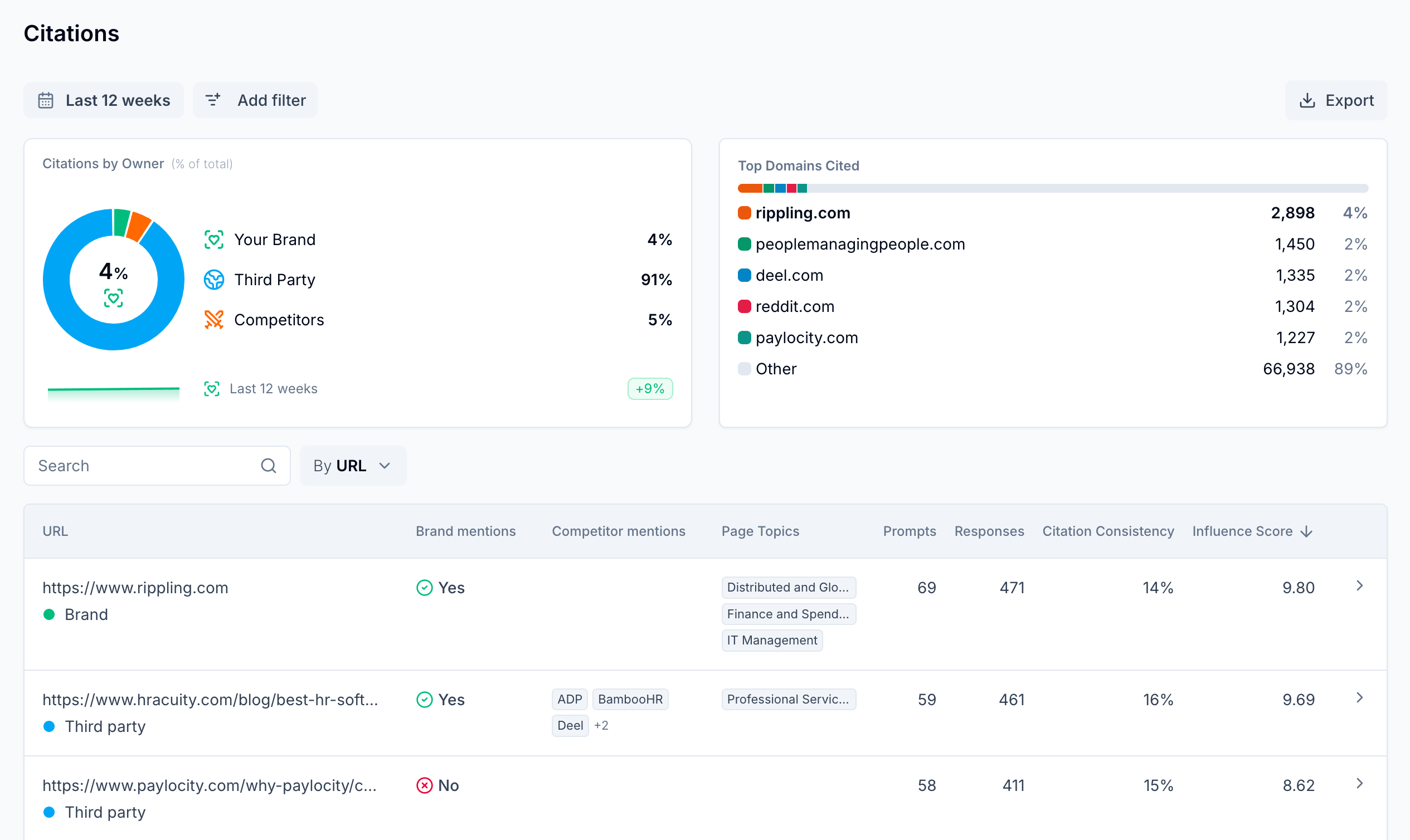
Then aggregate that data to get a clear picture of the overall content type distribution.
When we did this for Ripling as an example, 61% of all citations were blog and article content, with directory and comparison sites like G2 and Gartner as the next most cited category. That's a very blog-heavy distribution, and it's actually an outlier compared to what we've seen elsewhere.
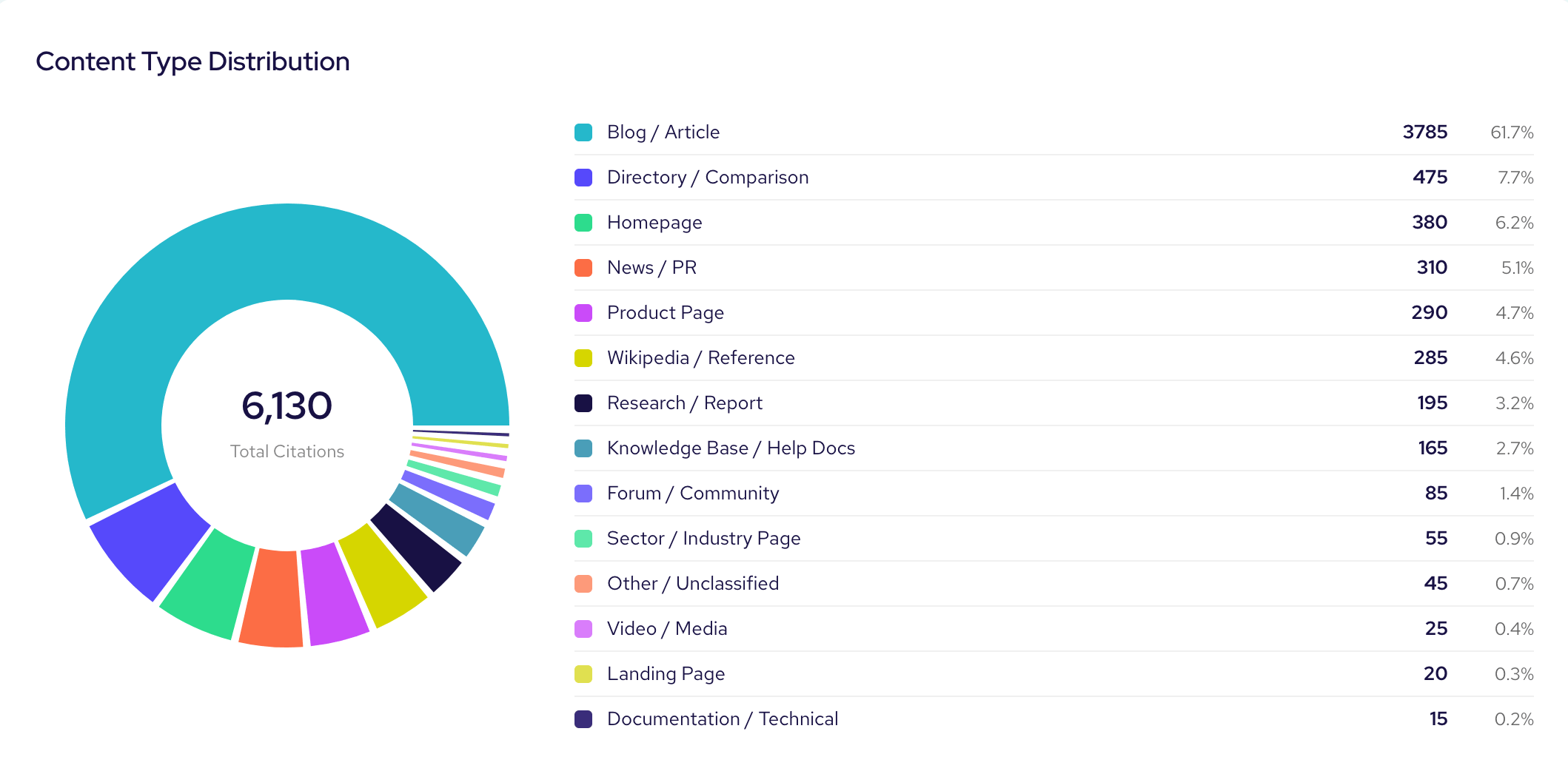
The findings vary enormously between businesses and industries. We've seen life science companies where research reports dominate the citation landscape. Technology businesses where use case pages are the most cited content type. SaaS companies that are blog-heavy. Professional services firms where partner directories and agency listings are cited most frequently.
This analysis tells you what to create next. If blogs dominate, you need a blog strategy optimised for AI citations. If directories are highly cited, you need to work on your presence in those directories, getting more reviews, more accreditations, more detailed listings. If use case pages are the winner, that's where your content production efforts should focus.
Go a level deeper, too. Don't just identify that blogs are being cited - look at what kind of blogs they are.
What information do they contain?
How are they structured?
What makes them useful enough for an LLM to cite?
This is where you deconstruct the content that's working and build templates for your own production.
Once you know what content types get cited and you've deconstructed what makes them effective, it's time to build your content engine.
This starts with creating content structures, detailed templates that define what goes into each piece of content, section by section. Title format, overview structure, what data and results to include, how to reference case studies, where internal links should go. Everything.
Then you build Claude projects that can produce content at scale against those structures. And yes, these projects take effort to build.
Some of ours took upwards of 40 iterations to refine. The instructions are long and specific — formatting rules, tone of voice guidelines, knowledge packs, case study references, internal linking rules, brand guidelines, AEO-specific structural requirements. It's a genuine investment.
But once those projects are dialled in, they produce content that's remarkably close to publish-ready. There's still a human accuracy check, we're not comfortable just blindly publishing AI-generated content, but it's rare that significant changes are needed. And when changes are needed, we feed that feedback back into the project instructions so the engine improves over time.
The scale point is important here. Because buyers are using AI in such contextually specific ways, you need to produce highly specific content to match. You can't write one broad piece and expect it to cover 200 different prompt variations. You need content that's targeted enough to be the most relevant answer to those nuanced, long-form queries. That means volume, and that means using AI to produce content for AI — there really isn't another way to achieve the scale required.
This is a question that comes up in almost every AEO strategy conversation. If directories and other people's blogs are being cited, should you focus on getting mentioned in their content rather than creating your own?
Our view is that creating your own content should be the priority for most businesses.
Here's why.
Outreach strategies — the kind where you email a blog owner and ask to be included in their post, have notoriously low success rates.
We get these requests constantly ourselves, and the success rate from the sender's side is typically negligible. The time and effort poured into outreach could be spent creating content that you control, that you know will exist, and that can be optimised specifically for AI citations.
When you become your own cited source, you control the narrative. If your content is cited for a query that's highly aligned with your ICP, there's a good chance the AI's response will convey your brand, your service, and your positioning accurately to the buyer. That's a powerful position to be in.
The exception is digital PR.
If you have the budget and capability to earn mentions in high-value publications, news outlets, and industry reports, that can compound well over time and build the kind of entity association that strengthens your brand's presence across AI platforms. But if you're choosing where to start, owning your content production is the most reliable, repeatable path to results.
Measurement is where many AEO strategies fall down. Without a clear framework, it's hard to know if what you're doing is working, or when to change course. Here's the framework we use, from early signals through to revenue. For a deeper dive into this topic, read our guide on how to measure AEO effectively.
Many buyers use LLMs to curate a shortlist and then go to Google to search for the brand by name. Monitoring branded search volume in Google Search Console gives you an early signal that your AI visibility is translating into interest.
This is where your AEO monitoring tool earns its keep. Track your overall presence, mention rate, citation rate, and competitive positioning across your target prompts over time. Are you being mentioned more? Are you being cited more? Is the content you're producing appearing in AI responses? These are the early signals that tell you whether your strategy is gaining traction.
The next step along the funnel is tracking how many buyers are finding you through AI search and converting into leads. We use self-reported attribution for this, asking buyers on our enquiry forms how they heard about us. Self-reported attribution has consistently revealed more AI-sourced leads than software attribution alone, because many buyers discover a brand through AI search but arrive at the website in a way that software attribution can't track.
Ultimately, the measure that matters is pipeline created and revenue won from AI-sourced leads. Depending on your sales cycle length, this might take longer to materialise, but having the earlier signals in place gives you confidence to keep investing while the pipeline builds.
We built this framework and tested it on ourselves first. Here's what we've seen.
After publishing content optimised for AEO, we were consistently mentioned and cited in ChatGPT within three days. Three days. That's remarkably fast compared to traditional SEO timescales. ChatGPT in particular is very quick to pick up new, highly relevant content, if your site is indexing well, it will find it.
Google's AI models are slower. We saw AI Overview traction take around three to four weeks, and Google AI Mode took closer to six to eight weeks. That's likely related to Google's dependence on its index, which introduces a lag.
Looking at our overall results, our presence across tracked prompts doubled from around 18% to 36%. Citations increased by 71%. We became the most cited domain across all the prompts we're tracking, more than any competitor.
On the business impact side, high-intent leads from AI search grew 4x in the first six months of implementing our AEO strategy. Pipeline from AI-sourced leads grew 3x in the same period. And average deal sizes from AI search are 2.7x larger than from Google, driven by the fact that AI-sourced buyers tend to be well-researched, well-informed, and high-fit.
It's worth noting that AI search is still a smaller source of pipeline compared to more established channels. But the rate of growth is what makes it exciting. We're all looking for reliable ways to grow, and there's clearly a significant one here for those who invest early.
Read the full case study here.
AEO isn't going to be optional for much longer.
The shift in how buyers research, evaluate, and shortlist solutions is already happening, and the businesses that build a structured strategy now will have a compounding advantage over those who wait.
The five-step framework we've outlined here, building your knowledge pack, documenting your ICP, simulating buyer prompts, tracking with an AEO tool, and analysing citation patterns, gives you a repeatable, bespoke process that's grounded in data rather than guesswork.
If you want to get your brand cited and recommended in AI search where your buyers are actively researching solutions, find out more about our AEO services.
We engineer AI search visibility for B2B companies. From content strategy to technical optimisation and ongoing measurement, we'll get your brand recommended where your buyers are researching.

.jpg)